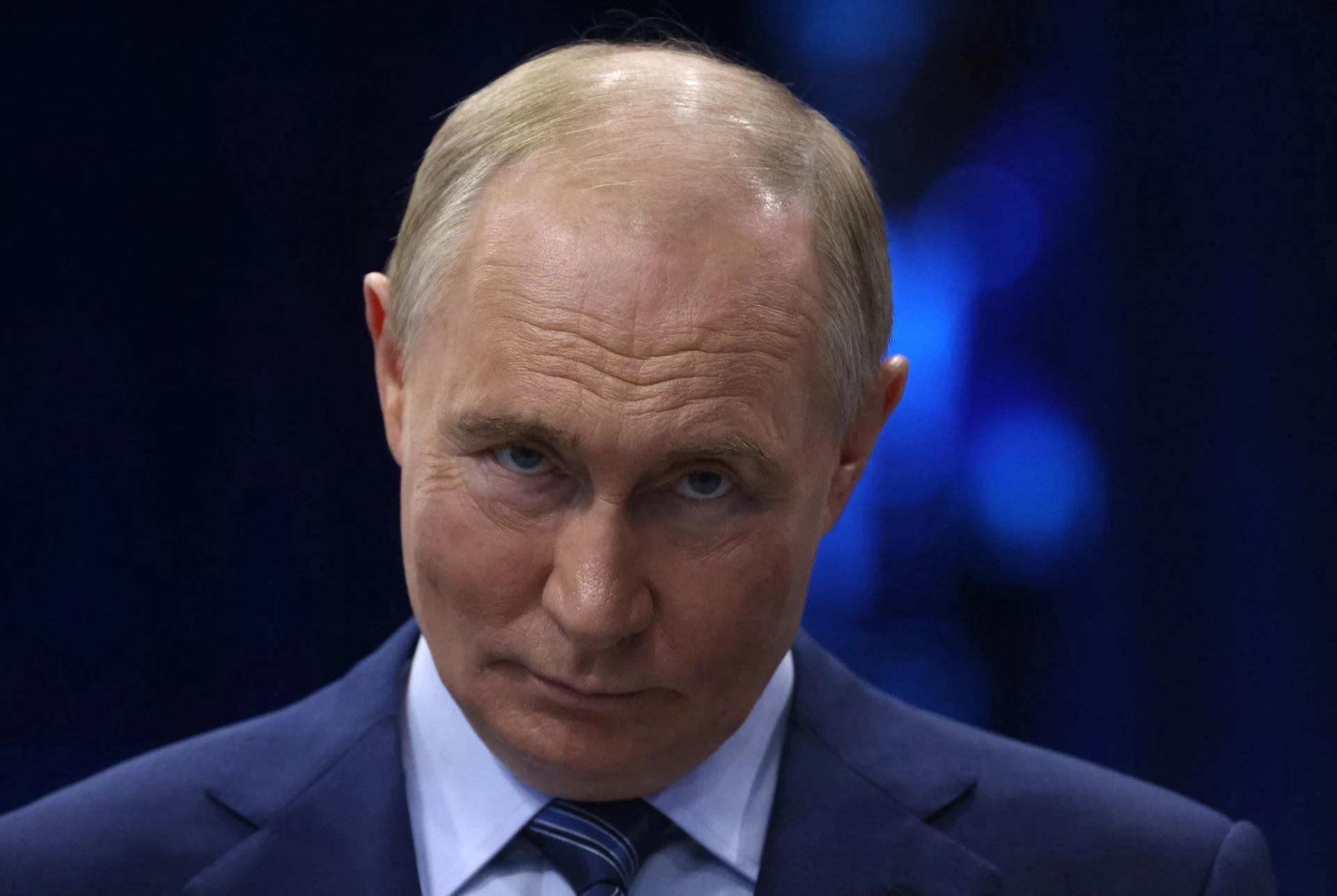
Russian President Vladimir Putin in Moscow, Russia, on July 8, 2024. (Contributor / Getty Images)
Washington, D.C. — Among the 3.5 million pages of Epstein-related records the U.S. Department of Justice published in early February 2026, one FBI document stands out: a confidential informant’s claim that Jeffrey Epstein served as a personal “wealth manager” for Russian President Vladimir Putin. The allegation has ricocheted across newsrooms worldwide. But a closer reading of the files reveals something more complicated than a single bombshell. It shows a man who spent years chasing proximity to the Kremlin, sometimes with real contacts, often with bluster, and always with motives that remain murky.
What the DOJ actually released
The document dump, mandated by a federal court order tied to long-running litigation over Epstein’s sex-trafficking crimes, includes FBI interview summaries, internal memos, email printouts and travel records. The Justice Department framed the release as part of a broader transparency push, though critics have questioned the inconsistent redaction of names throughout the cache.
The sheer volume matters. At 3.5 million pages, the collection is too large for any single newsroom to digest quickly, which means new revelations are still surfacing weeks after the initial publication. The Putin allegation is the most headline-grabbing so far, but it is far from the only Russia-related thread in the files.
The FBI informant’s claim
The “wealth manager” allegation appears in a summary of an FBI interview with a confidential human source. According to Washington Post reporting on the files, the source described Epstein as someone who handled sensitive financial assets for Putin and for figures connected to former Zimbabwean leadership, rather than merely socializing with powerful people.
Multiple outlets have since repeated the claim. None, however, have pointed to bank records, contracts or seized ledgers within the 3.5 million pages that independently confirm Epstein actually managed Putin’s personal fortune. In FBI practice, confidential human source reports are leads, not conclusions. They are recorded to guide further investigation, and a single-source allegation of this magnitude would ordinarily require substantial corroboration before being treated as established fact.
The Kremlin has not publicly addressed the specific “wealth manager” allegation as of late March 2026.
A paper trail of obsession
Where the files are more concrete is in documenting Epstein’s sustained campaign to build Russian connections. Putin’s name appears in the records over a thousand times, according to a Yahoo News analysis, scattered across emails, travel discussions and financial pitches rather than concentrated in any single narrative.
One striking set of emails shows Epstein writing to Thorbjørn Jagland, then the Secretary General of the Council of Europe, arguing that he could help Putin’s government “find its way out of its economic isolation.” In another message, Epstein floated the idea of a “sophisticated Russian version of bitcoin,” positioning himself as a bridge between Kremlin interests and Western financial innovation. The emails, first detailed by Bloomberg, portray a man who saw a face-to-face meeting with Putin as both a personal trophy and a business opportunity.
Other documents show Epstein cultivating relationships with Russian business figures, at least one of whom had been awarded a state medal by Putin. He made repeated approaches to Russian intermediaries and, in one instance, claimed a woman from Moscow was blackmailing him and that he needed help from a Russian official to resolve the situation. Whether that claim was true or simply another lever to deepen his Russian contacts is unclear from the available records.
Chasing Putin or managing his money?
The tension at the center of the Russia material is straightforward: was Epstein a genuine financial operative for the Kremlin, or was he an aggressive self-promoter who inflated his connections?
Tracy Walder, a former CIA officer and FBI special agent, argued in a televised analysis that the files suggest Epstein was chasing Putin far more than the other way around. “Jeffrey Epstein was weirdly obsessed with Putin,” Walder said, a reading that aligns with the emails and meeting requests showing Epstein pushing hard for contact rather than quietly managing an existing portfolio.
A Moscow Times analysis reached a similar conclusion, warning that the material shows both genuine contacts and a pattern of self-promotion, and that the picture remains deeply incomplete. Epstein’s known financial history offers some context: his only confirmed major client relationship was with retail billionaire Les Wexner, and the mechanics of his broader wealth have never been fully explained. The idea that he simultaneously ran money for the Russian president is not impossible, but it would represent a dramatic expansion of what has been documented about his financial operations.
The risk of distraction from victims
While the Putin angle dominates headlines, human rights officials worry that the spectacle is pulling attention from the people the files are supposed to serve: Epstein’s victims.
The UN Office of the High Commissioner for Human Rights issued a statement in February 2026 arguing that the flawed handling of the release risks undermining accountability for “grave crimes.” Under international criminal law, the office noted, crimes against humanity include sexual slavery, rape, enforced prostitution and trafficking. The statement criticized the inconsistent redaction process, which left some names exposed while shielding others, fueling speculation without providing the evidentiary foundation needed for prosecution.
That concern applies directly to the Putin narrative. When a single-source allegation circulates widely without corroboration, it can overshadow the core question the files were meant to answer: how Epstein’s network enabled systematic sexual abuse, and whether anyone beyond his already-convicted associates should face charges.
What can be said with confidence
As of late March 2026, the Epstein files and credible reporting on them support several concrete points:
- Epstein actively pursued contacts with Russian elites and repeatedly sought a direct meeting with Putin.
- He pitched himself to European officials, including Thorbjørn Jagland, as someone who could help Russia navigate economic isolation, and proposed a Russian cryptocurrency concept.
- He cultivated relationships with Russian business figures, some of whom had personal ties to Putin’s circle.
- An FBI confidential human source described him as a “wealth manager” for Putin and for figures connected to former Zimbabwean leadership.
- No public banking documents, sanctions filings or financial records in the 3.5 million pages independently confirm that Epstein managed Putin’s personal assets.
The gap between the informant’s claim and the available evidence is significant. It is possible that further review of the files, or investigations prompted by them, will close that gap. It is equally possible that Epstein’s Russia story will end where so many of his relationships did: with a man who talked a bigger game than the records can support. For now, the “wealth manager” allegation remains what it was when the FBI first recorded it: a single source’s account, unverified by independent evidence, sitting inside a case file that raises far more questions than it answers.
About the Author