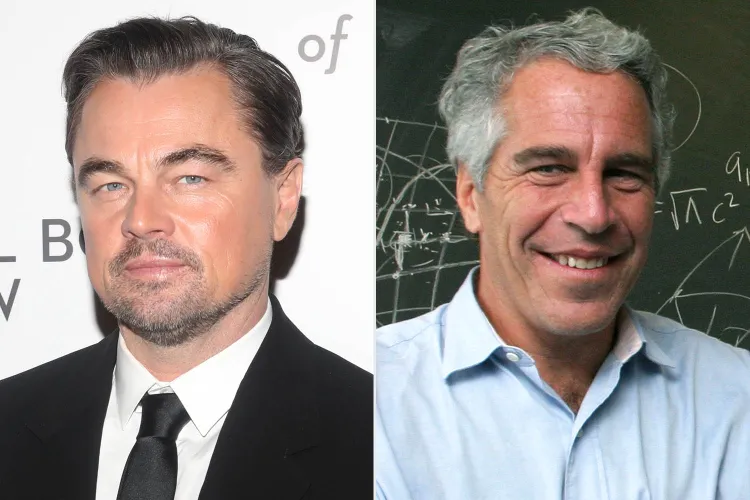
Leonardo DiCaprio on January 13, 2026; Jeffrey Epstein in 2004. Credit : Udo Salters/Patrick McMullan via Getty; Rick Friedman/Rick Friedman Photography/Corbis via Getty
Credit : Udo Salters/Patrick McMullan via Getty; Rick Friedman/Rick Friedman Photography/Corbis via Getty
In early 2025, the U.S. Department of Justice released a massive trove of records connected to Jeffrey Epstein, the disgraced financier who died in federal custody in August 2019. Among the millions of pages made public, one 2009 email has drawn outsized attention: a message in which former British politician Peter Mandelson asks Epstein to help find international sponsors for Leonardo DiCaprio. The document does not suggest DiCaprio did anything wrong, but it offers a sharp illustration of how Epstein positioned himself as a global fixer and why any name that surfaces near his can set off a firestorm.
The 2009 email: what it actually says
The email, dated June 12, 2009, was sent from an account attributed to Peter Mandelson, a former UK Secretary of State for Business who had his own well-documented social ties to Epstein. In the message, Mandelson asks Epstein whether he can think of anyone in “india china, japan, etc” who might be interested in backing DiCaprio as a commercial sponsor. He adds that if Epstein happens to see the actor, he could raise the idea directly, according to People magazine’s reporting on the released files.
The tone is casual and transactional. Mandelson treats Epstein not as a financier managing investments but as a well-connected middleman who could match wealthy overseas contacts with Hollywood star power. The email does not name a specific brand, film project, or charity. It frames the ask purely as a sponsorship opportunity.
How DiCaprio’s name appears in the broader release
DiCaprio is not the only celebrity referenced in the DOJ files. According to Stuff.co.nz’s review of the documents, investigators found that Epstein mentioned DiCaprio, Cate Blanchett, and Bruce Willis in emails and phone conversations as part of his sprawling social network. The references appear to reflect name-dropping and networking rather than any involvement in criminal activity.
The sheer volume of the release helps explain why so many recognizable names have surfaced. The DOJ has described the collection as containing more than three million pages of responsive documents spanning roughly two decades of Epstein’s financial and personal dealings. In a cache that large, even a single passing mention of a public figure can become a headline.
What the files do not show
The critical distinction, and the one most easily lost in social media churn, is between appearing in Epstein’s records and being implicated in his crimes. A fact check published by the Sunday Guardian concluded that nothing in the released documents ties DiCaprio to abuse, trafficking, or any cover-up. The records link his name to sponsorship discussions and Epstein’s habit of referencing celebrities in correspondence. That is the extent of it.
A representative for DiCaprio told People that the actor never had a phone call with Epstein and was not in direct contact with the financier about sponsorship deals. A representative for Blanchett issued a similar denial. There is no evidence in the files that the Mandelson sponsorship inquiry ever led to a deal or that DiCaprio responded to it in any way.
Epstein’s role as a global connector
The Mandelson email is less notable for what it says about DiCaprio than for what it reveals about Epstein’s operating method. Long before his 2019 arrest on federal sex trafficking charges, Epstein cultivated an image as someone who could open any door. He moved between politicians, hedge fund managers, academics, and entertainers, offering introductions and deal-making as a way to deepen relationships and accumulate leverage.
Mandelson’s request fits that pattern precisely. A senior British political figure, writing to a New York-based financier, asking him to tap contacts across three continents on behalf of a Hollywood actor. The email treats this kind of cross-border matchmaking as routine, which, in Epstein’s world, it apparently was.
That network is exactly what federal investigators spent years trying to map. The DOJ’s document release, compelled by congressional pressure and ongoing litigation, represents the most comprehensive public accounting of Epstein’s connections to date. As of March 2026, portions of the files continue to be reviewed and analyzed by journalists and researchers.
Why celebrity names fuel conspiracy theories
Every time a new batch of Epstein-related records becomes public, a predictable cycle plays out online. Names are pulled from context, screenshots circulate without the surrounding documents, and speculation fills the gap between what the files say and what people assume they mean. DiCaprio’s appearance in the 2009 email followed this pattern almost exactly: within hours of the documents surfacing, his name was trending on social media alongside unsubstantiated claims.
The dynamic is not unique to DiCaprio. Dozens of public figures, from politicians to tech executives, have had their names surface in Epstein-related filings over the years. In most cases, the mentions reflect the breadth of Epstein’s social circle rather than participation in his crimes. But the internet rarely waits for that distinction to be drawn, and the resulting noise can be nearly impossible to walk back.
For readers trying to separate fact from speculation, the most reliable guide remains the documents themselves and the reporting of outlets that have reviewed them in full, not isolated screenshots or viral threads.
About the Author