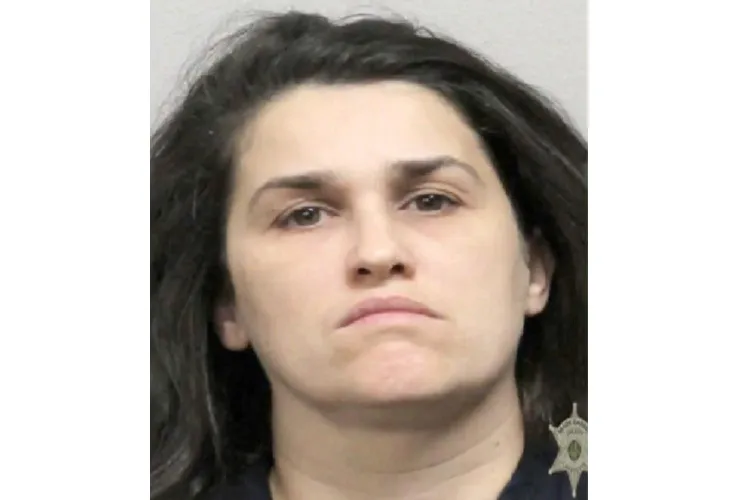
Christie Oster. Credit : Lafayette Parish Sheriff's Office
Credit : Lafayette Parish Sheriff’s Office
Juliana Belmonte, a Riverside County middle school teacher who was named a Teacher of the Year by the Jurupa Unified School District, was arrested in early 2026 and charged with 14 criminal counts alleging she sexually abused a former student over a period that prosecutors say stretched from middle school into high school, according to the Riverside County District Attorney’s Office and court filings first detailed by People.
The charges include multiple counts of lewd acts with a minor under California Penal Code Section 288, according to the criminal complaint. Belmonte has been removed from the classroom and placed on administrative leave. She has not entered a public plea, and her defense attorney has not commented in detail on the allegations. She is presumed innocent unless convicted.
How the allegations surfaced
The case opened after the former student disclosed the alleged abuse to someone outside the school, prompting a law enforcement investigation. According to the criminal complaint summarized in a February 2026 New York Post report, the student was approximately 14 years old when the alleged contact began.
Investigators say Belmonte used private messages and one-on-one meetings to build a relationship with the student that gradually crossed professional boundaries. Prosecutors describe the pattern as grooming: a process in which an adult incrementally normalizes inappropriate contact until a child no longer recognizes the behavior as abuse. The complaint alleges that encounters took place both on campus and off, including in Belmonte’s vehicle and at locations away from school grounds.
The number of counts, 14 in total, signals that prosecutors view the alleged conduct not as an isolated incident but as a sustained course of behavior. Authorities have not publicly identified the student, who is being treated as a victim of child sexual abuse under California law.
A community trying to reconcile two images
Belmonte’s Teacher of the Year recognition had been a point of pride for the Jurupa Unified School District. Colleagues praised her enthusiasm and her ability to connect with students. A photo from the award ceremony shared on a public Facebook page now circulates alongside her booking photo in news coverage, a contrast that has sharpened the sense of betrayal among parents.
Several families told local reporters they feel the district asked them to trust Belmonte with their children and then honored her without, in their view, adequate safeguards. Others have focused on supporting the alleged victim, who faces the prospect of reliving the abuse through interviews, hearings, and a potential trial.
Students who had Belmonte as a teacher have described confusion. Some say positive memories of her class now feel tainted. Advocates for abuse survivors say that reaction is common: when a trusted adult is accused, young people can begin to question every mentoring relationship, sometimes pulling away from the healthy ones they still need.
The Minnesota case that set the template
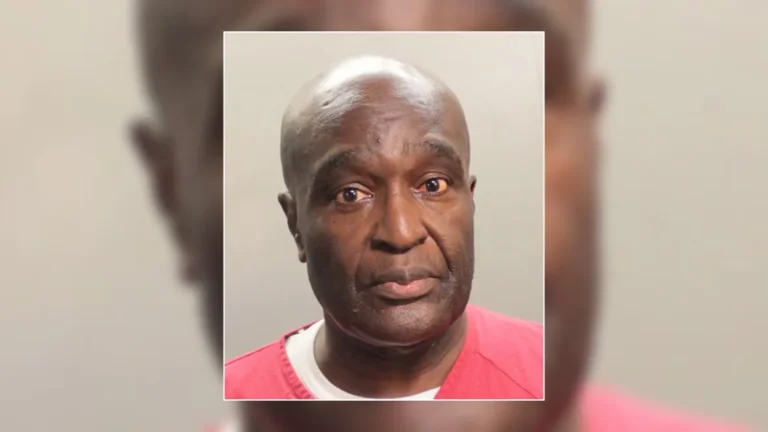
Belmonte’s arrest follows a strikingly similar case in Minnesota. Abdul Jameel Wright, a former Minnesota Teacher of the Year, was charged in Hennepin County with raping a 14-year-old student at Harvest Best Academy, a charter school in Minneapolis. Prosecutors allege the assault took place in St. Louis Park, a Minneapolis suburb, while Wright was still employed at the school, according to court documents reported by WSET.
Wright had been celebrated for his work with students of color and was widely regarded as a symbol of what effective, culturally responsive teaching could look like. The student told investigators that Wright used his position to create opportunities for private contact before escalating to sexual assault. His case has moved through pretrial hearings, and the prosecution is expected to call the teen as a witness.
The back-to-back prosecutions of two Teacher of the Year honorees have drawn attention from parents and child-safety advocates nationwide. Both cases share a core dynamic: an educator whose public reputation for building strong student relationships may have provided cover for predatory behavior.
What the cases reveal about oversight
Teacher of the Year awards are typically based on peer nominations, classroom observations, and community input. They are not background investigations. No state requires a fresh criminal or behavioral screening as part of the nomination process, and the awards carry no ongoing monitoring obligations.
That gap is now part of the public conversation. Parents in Jurupa Unified have asked the school board what vetting accompanied Belmonte’s nomination and whether any complaints or concerns about her conduct existed before the award was given. As of late March 2026, the district has acknowledged the arrest and confirmed Belmonte’s removal from the classroom but has not publicly addressed questions about the nomination process, citing the ongoing criminal investigation.
California law treats any sexual contact between a teacher and a minor student as a criminal act regardless of perceived consent. Under Penal Code Section 288, a conviction on even one count of lewd acts with a child under 16 carries a sentence of up to eight years in state prison. With 14 counts, Belmonte faces the possibility of a lengthy sentence if convicted.
What comes next
Belmonte’s case is expected to move to a preliminary hearing in Riverside County Superior Court in the coming weeks. Prosecutors will need to present enough evidence for a judge to determine whether the case should proceed to trial. Wright’s Minnesota case is on a parallel track, with trial preparation underway in Hennepin County.
For families in both communities, the legal process is only part of the fallout. Parents are pressing school boards for clearer policies on adult-student communication, including restrictions on private messaging between teachers and students through personal devices. Advocates say those conversations, while overdue, should not obscure the more immediate priority: making sure the students at the center of these cases receive the support and protection they need as the prosecutions move forward.
About the Author