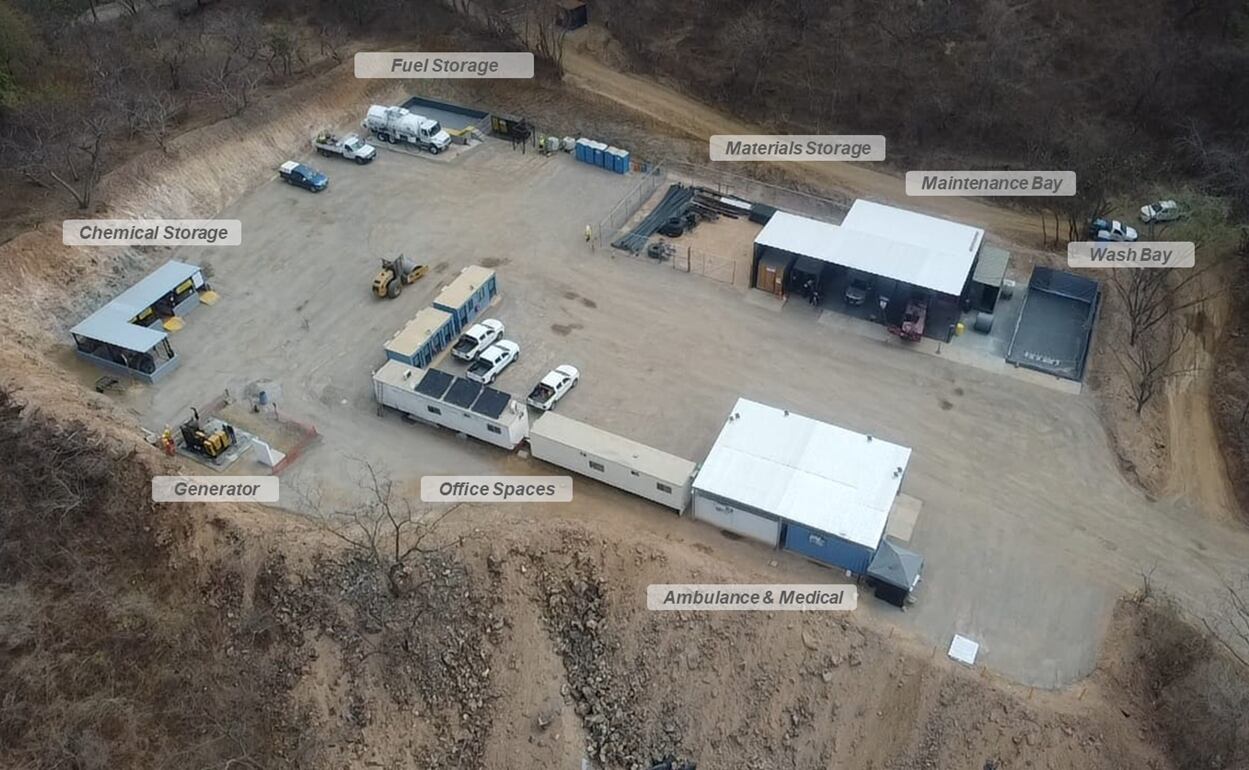
Image | vizsla hq Caption: Vizsla Silver Corp.'s Panuco mining project headquarters in Sinaloa, Mexico, is seen in an image, which includes text, from the company's website. The company said 10 of its employees were taken at one of its project sites near Concordia, Mexico. (Vizsla Silver Corp.)
Caption: Vizsla Silver Corp.’s Panuco mining project headquarters in Sinaloa, Mexico, is seen in an image, which includes text, from the company’s website. The company said 10 of its employees were taken at one of its project sites near Concordia, Mexico. (Vizsla Silver Corp.)
Ten employees of a Canadian mining company vanished on their way to work in northern Mexico, pulled from their vehicles by armed men and driven off into the hills. Mexican officials now say a faction of the Sinaloa cartel is likely behind the mass abduction, which has jolted a region that has long lived with cartel power but rarely seen foreign workers targeted so openly. Families are waiting for word, but so far there have been no ransom calls, no demands, and no clear sign of where the miners are.
The workers were headed to a silver project near Concordia in the state of Sinaloa when they were intercepted, according to company and government statements. The case has quickly become a test of how Mexican authorities protect foreign investment in cartel territory, and of how much risk mining crews must shoulder just to get to a job site.
The kidnapping in cartel country
The group of 10, all described as employees of a Canadian mining firm, disappeared after leaving their homes for a shift at the Panuco project, a silver and gold operation in the rugged mountains outside the town of Concordia. Company statements say the attorney general’s office received a report of the missing workers on Jan. 24 through a 911 call, after relatives realized the men had never arrived at work. Local media reports, echoed in official briefings, indicate that most of those taken were Mexican nationals employed by the Canadian operator, not foreign executives flown in for short rotations.
The mine’s owner, identified in multiple reports as Vizsla Silver Corp, has confirmed that 10 employees were abducted and that operations at the Panuco site have been disrupted while the search continues. The victims include engineers, at least one geologist, security staff and drivers, according to a company statement cited by MND Staff, which stressed that the firm is cooperating fully with investigators. A separate account by By Nina Kravinsky notes that Vizsla Silver has suspended some field work while it waits for guidance from authorities.
Cartel link, security response and families in limbo
Very quickly, attention turned to who could pull off such a brazen kidnapping in Sinaloa, a state whose name is synonymous with one of the world’s most powerful criminal organizations. A senior Mexican security official has publicly tied the case to a faction of the Sinaloa cartel known as the “Chapitos,” saying investigators believe that group is linked to the disappearance of the Canadian firm’s workers, according to Sinaloa cartel coverage. Another report framed the case more bluntly, stating that 10 Miners from Canada Were Abducted in Mexico, Possibly by Cartel Members, underscoring how quickly organized crime became the central theory.
Mexican security forces have tried to show they are not taking the case lightly. Federal authorities have deployed 1,600 troops to Sinaloa, according to a report that quoted Demian Bio and photographer Marco Ugarte, with officials describing “security response teams” combing the area around the mine. Another account from the same incident, attributed to Infobae, notes that families have not received extortion calls or ransom demands yet, a detail that only deepens the uncertainty around the kidnappers’ motives.
Mining, risk and the uneasy Canada–Mexico balance
The abduction has also thrown a harsh light on how foreign mining companies operate in parts of Mexico where cartels hold real power. The Panuco project, run by a Canadian firm in the hills of Panuco, is one of several Canadian-backed sites in Sinaloa that promise jobs and royalties in exchange for access to mineral-rich land. A detailed breakdown of the workforce by Canadian company statements suggests that most employees are local, which means the brunt of the danger falls on Mexican workers even when the capital is foreign. Another report on the same case, carried by 10 Canadian mine workers in Mexico, underlines that the victims were commuting along rural roads that locals have long considered risky.
Diplomatically, the case has nudged both governments to show they are engaged without inflaming tensions. Canadian officials have pressed for regular updates while publicly deferring to Mexican investigators, a posture reflected in coverage that describes the file as part of a broader Sinaloa and Mexico security challenge. Another angle, highlighted in a feature that categorized the story under Entertainment, Crime and Human Interest, leans into the personal toll on relatives who now live in a kind of suspended animation, waiting for a phone to ring. Parallel coverage on Says Official platforms repeats the framing that 10 Miners from Canada Were Abducted in Mexico, Possibly by Cartel Members, underscoring how the story has jumped from local crime blotter to an international flashpoint.
About the Author