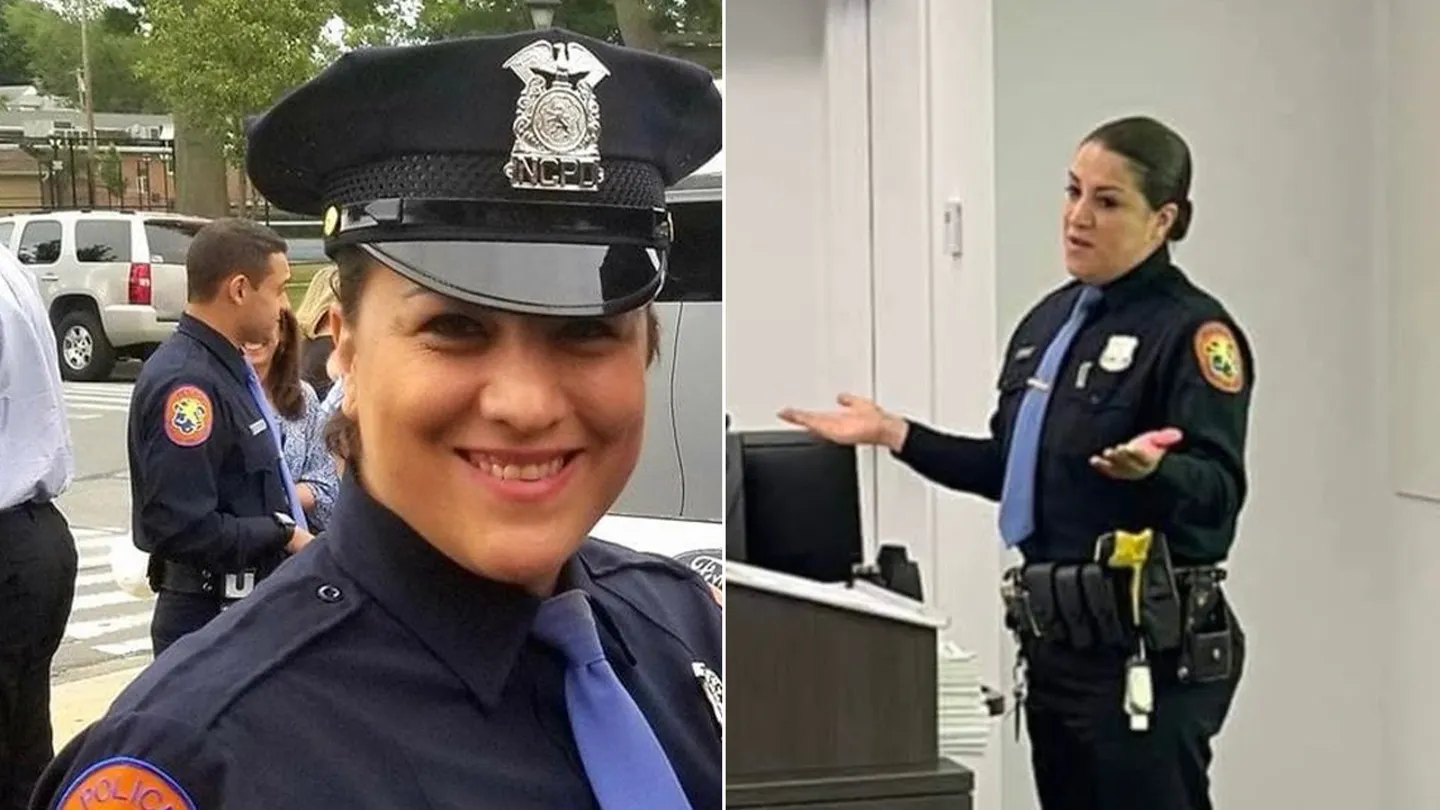
Nassau County Police Department Officer Patricia Espinosa gestures while speaking during a department-related event in an undated photo. (Nassau County PBA)
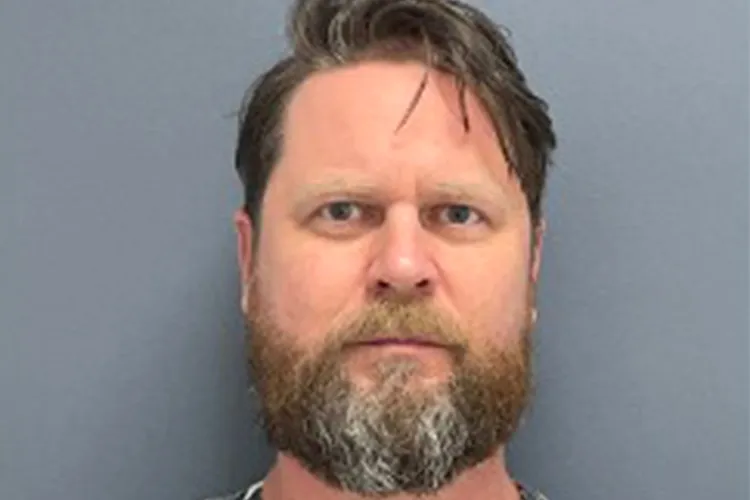
Nassau County Police Officer Patricia Espinosa, 42, was killed on the morning of March 20, 2025, when a Chevy Silverado ran a red light at the intersection of Hempstead Turnpike and Wantagh Avenue in Levittown, New York, and slammed into her 2019 Alfa Romeo. Espinosa, a wife and mother of two, was off duty and driving to work at the time. The driver of the Silverado, Jonathan Desmond, 34, of Massapequa, was arrested at the scene and charged with driving while intoxicated, according to the Nassau County Police Department.
Espinosa’s death has shaken her department, her community, and a wider circle of people who see in her story the randomness of impaired-driving fatalities. She left behind two young children and a husband who, friends say, built their family life around the demands of her badge and the routines of parenthood.
What Happened at the Intersection
According to police and ABC7 New York reporting, Espinosa was traveling through the intersection when Desmond’s Silverado blew through a red light at high speed and struck her Alfa Romeo. The force of the collision was severe enough that first responders were unable to save her. She was pronounced dead at the scene or shortly after arrival at a local hospital.
Desmond was taken into custody at the crash site. Police said they observed signs of intoxication and placed him under arrest. He was charged with DWI in connection with the crash. As of late March 2025, prosecutors had not publicly announced whether additional charges, such as aggravated vehicular homicide, would follow. The investigation remains active.
Espinosa had finished her morning routine at home, left her children, and was heading to her shift. Colleagues say that detail has been especially difficult to process: she was doing exactly what she did every workday.
Who Patricia Espinosa Was
Espinosa served with the Nassau County Police Department and was known among colleagues as someone who showed up early, handled unglamorous assignments without complaint, and stayed engaged with the people she was sworn to protect. Friends told reporters she remembered victims’ names long after calls ended and checked in on fellow officers after hard shifts.
At home, she was the parent who managed homework, school drop-offs, and bedtime routines around unpredictable police schedules. Those who knew her say she treated motherhood and police work with the same discipline and warmth. Social media tributes from department members and local organizations highlighted her role as a Latina officer who mentored younger colleagues and represented her community with pride. One unit’s Facebook post celebrated her as one of their “Latina queens,” describing her confidence and willingness to lift others up.
An Instagram tribute from a law enforcement page described Espinosa as “part of a true law enforcement family,” a phrase that resonated with officers and spouses across the region who saw their own households reflected in her story.
Community Response and Fundraising
Within days of the crash, tributes flooded social media and local news. NBC New York reported on the outpouring of grief from neighbors, fellow officers, and strangers who felt the weight of Espinosa’s story.
A fundraising campaign for the Espinosa family drew a rapid surge of donations. Fox News reported that contributions poured in from across the country, driven by both respect for her service and empathy for her children. Nassau County Executive Bruce Blakeman and Police Commissioner Patrick Ryder both publicly called the crash a “senseless act” and urged support for the family.
The Nassau County Police Benevolent Association also issued a statement honoring Espinosa’s service and emphasizing the loss felt across the department’s rank and file.
The Case Against Jonathan Desmond
Desmond faces DWI charges that could carry significant prison time if prosecutors pursue felony counts tied to Espinosa’s death. Under New York law, a DWI-related fatality can be charged as aggravated vehicular homicide, a class B felony carrying up to 25 years in prison, or as vehicular manslaughter in the second degree, a class D felony with a maximum of seven years.
As of late March 2025, court records had not yet reflected the full scope of charges. Prosecutors have not publicly disclosed Desmond’s blood alcohol content or whether additional evidence of impairment, such as drug testing, is part of the case. His next court appearance had not been publicly scheduled at the time of this reporting.
For Espinosa’s family, the legal process is secondary to a blunt reality: someone allegedly chose to drink and drive, ran a red light, and killed a woman on her way to work. Friends say the family is focused on their children and on getting through each day while the case moves forward.
The Broader Problem of Impaired Driving
Espinosa’s death has renewed a familiar but persistent conversation in Nassau County and beyond. According to the National Highway Traffic Safety Administration, alcohol-impaired driving crashes killed 13,524 people in the United States in 2022, the most recent year with finalized federal data. That figure accounts for roughly 32% of all traffic fatalities nationwide.
In New York, law enforcement agencies run regular DWI checkpoints and public awareness campaigns, particularly around holidays. Yet cases like Espinosa’s illustrate how often those efforts fall short. Advocates for stricter impaired-driving laws argue that penalties remain too lenient relative to the harm caused, especially when victims are parents of young children.
Remembering Officer Espinosa
Friends and colleagues want Espinosa remembered for how she lived. She was a working mother who wore a badge and still made it to school events. She was a mentor to younger officers and a steady presence on patrol. She was someone who, by all accounts, treated the people around her with care, whether they were victims on a call, colleagues on a tough shift, or her own kids at the dinner table.
Her family has not made extensive public statements, but the volume of community support suggests that Espinosa’s impact reached well beyond her household and her precinct. For now, the Levittown intersection where she was killed has become an informal memorial, with flowers, candles, and handwritten notes left by people who never met her but felt compelled to show up.
The criminal case against Jonathan Desmond is expected to continue through the spring of 2025. Updates on charges and court proceedings will be reported as they become available.
About the Author