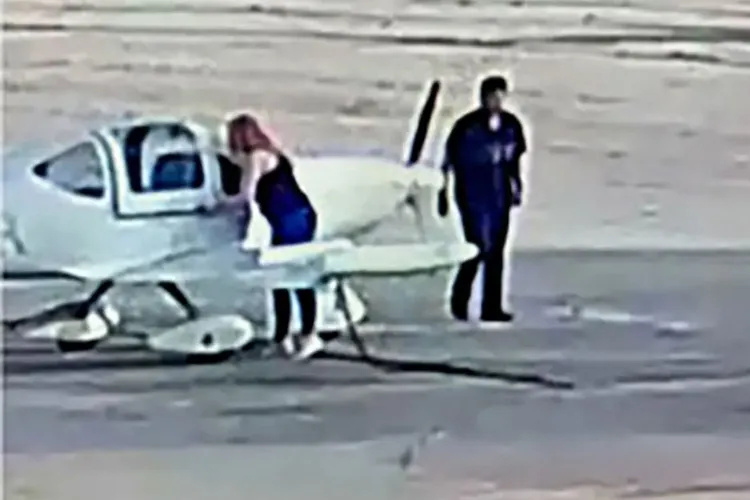
A photo of the suspect near a plane. Credit : FBI Los Angeles
Credit : FBI Los Angeles
A plane vanishes from Auburn, Washington
The case began when a privately owned small aircraft disappeared from Auburn Municipal Airport, a general aviation field about 30 miles south of Seattle. FBI agents were alerted after the plane’s owner reported it missing, and investigators soon began tracking reports of an unregistered aircraft turning up at municipal airports farther south, according to KIRO 7. Agents with FBI Los Angeles were told to watch for the aircraft. The plane eventually surfaced at a Southern California airport, and investigators determined it had been flown by someone who was not a registered pilot and appeared to be under the influence of methamphetamine, according to East Idaho News.Landing on meth, then going for a second plane
What happened next at Corona Municipal Airport turned a theft case into something far more serious. Prosecutors say Estoque landed the stolen plane, walked away from it, and then attempted to take control of a second aircraft on the field. Witnesses described a chaotic confrontation as the suspect, reportedly still high on meth, tried to force his way into another plane’s cockpit, according to the New York Post. The pilot of that second aircraft, identified in court documents as Alonzo Cesena Camacho, was trying to prepare for a flight when the encounter occurred, according to an AOL report citing court filings. Prosecutors are treating the attempted hijacking as a separate, serious offense. No one was physically injured during either the landing or the attempted hijacking. But investigators have stressed that an unlicensed, intoxicated person operating an aircraft in active airspace posed a grave risk to people on the ground and to other pilots. A small miscalculation on approach could have been catastrophic.How the FBI connected the dots
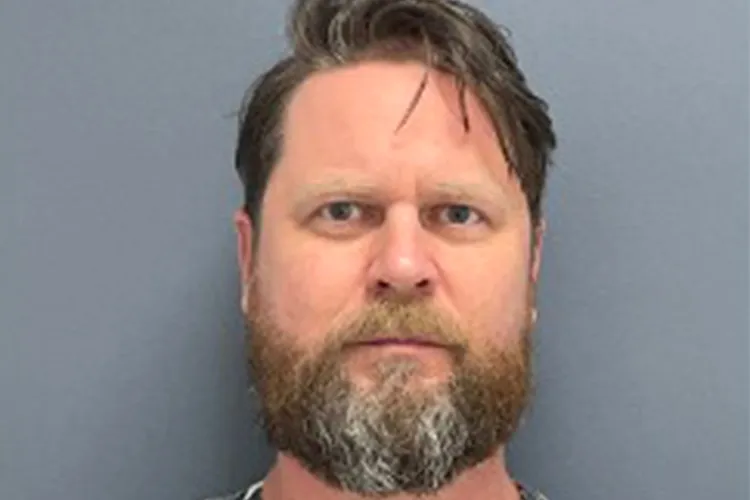
Linking the Auburn theft to the Corona incidents required coordination between FBI field offices in Seattle and Los Angeles. Agents matched the tail number of the plane that landed in Southern California to the one reported stolen in Washington, then identified Estoque through witness descriptions and airport surveillance, according to KIRO 7’s reporting. Estoque was arrested by federal agents in the Los Angeles area. He was charged with operating an unregistered aircraft while under the influence of methamphetamine, among other counts, and was released on bond after an initial court appearance. His bond conditions include travel restrictions and a prohibition on visiting airports, according to East Idaho News.A spotlight on general aviation security
The case has renewed questions about how vulnerable small airports are to exactly this kind of incident. Unlike commercial terminals, most general aviation airfields do not require passengers or pilots to pass through TSA screening. Many have unlocked gates, minimal surveillance, and aircraft parked in open tie-downs with little more than a door latch between a would-be thief and a flyable plane. The Aircraft Owners and Pilots Association has long encouraged private aircraft owners to use locks, remove keys, and secure hangars, but compliance is uneven. The TSA’s general aviation security guidelines are largely voluntary for smaller fields. Estoque’s alleged spree illustrates what can happen when those gaps are tested by someone willing to ignore every rule.What comes next
As of early February 2026, Estoque faces charges in multiple jurisdictions. Federal prosecutors will need to coordinate with local authorities in both Washington and California on how to sequence the cases. The most serious charge, attempted hijacking of an aircraft, carries significant federal prison time if convicted. It remains unclear how Estoque, who investigators say was not a registered pilot, knew enough to get a small plane off the ground and fly it several hundred miles. Court filings reviewed by multiple outlets have not addressed whether he had any informal flight training or prior experience with aircraft. That question is likely to surface as the case moves toward trial.About the Author