Abbey Barrett, who died in 2024. Credit : Courtesy of Justine Barrett
Credit : Courtesy of Justine Barrett
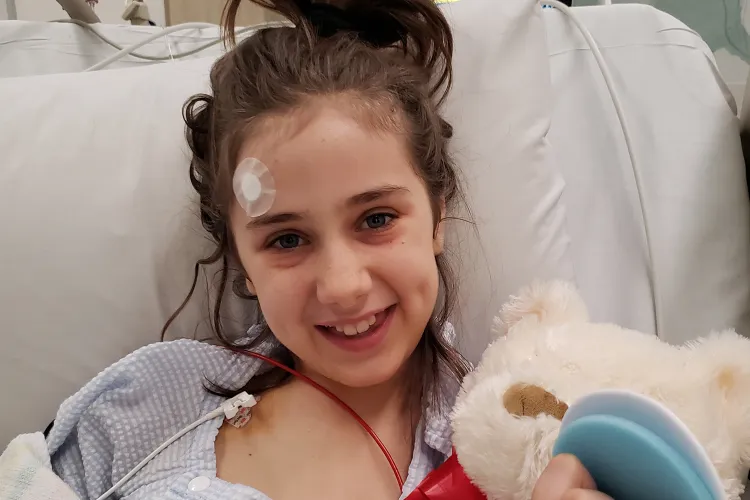
Mia Wilkinson was 11 years old when she was diagnosed with a brain tumor in Australia. Her parents, Brad and Kylie Wilkinson, have since spoken publicly about the months of vague symptoms that preceded that diagnosis — headaches, fatigue, subtle personality shifts — and the questions they wish they had asked sooner. In a detailed interview with People, the Wilkinsons shared their story not to assign blame, but to help other families recognize warning signs that are easy to dismiss.
By the time doctors ordered imaging, the tumor was the size of Mia’s fist and wrapped around her brain stem. She was later diagnosed with Li-Fraumeni syndrome, a rare inherited condition caused by a mutation in the TP53 gene that dramatically increases lifetime cancer risk. Mia died of her cancer, and her parents now advocate for earlier intervention and genetic awareness.
How Mia’s symptoms were mistaken for everyday childhood problems
Brad and Kylie Wilkinson have described a slow, confusing timeline. Mia’s headaches came and went. She was tired more often than usual. She seemed slightly off, but nothing pointed clearly to a medical emergency. The family did what most parents would: they attributed the symptoms to dehydration, screen time, or a difficult school term.
They visited doctors more than once, but Mia’s complaints were nonspecific, and no one initially suggested a brain scan. That delay is not unusual. According to Norton Children’s Hospital, pediatric brain tumors are rare and their early symptoms overlap with dozens of common childhood conditions, which can make timely diagnosis genuinely difficult.
Kylie Wilkinson has said the family sometimes felt they were being overly anxious. Looking back, she wishes she had kept a written log of every symptom and brought it to each appointment so that the pattern — not just the individual complaints — was visible to clinicians.
Why pediatric brain tumors are so difficult to catch early
Brain tumors are the most common solid tumor in children, yet they still account for a small fraction of pediatric illness overall. The American Cancer Society estimates that roughly 5,000 children and adolescents in the United States are diagnosed with central nervous system tumors each year. Because most pediatricians will see very few cases in an entire career, the index of suspicion can be low.
The brain’s complexity compounds the problem. A tumor pressing on one region may cause balance issues; in another location, it may trigger nausea, vision changes, or mood swings. MD Anderson Cancer Center notes that childhood brain tumors frequently cause changes in hearing, memory, learning, sight, smell, or emotions — symptoms that can easily be chalked up to behavioral or developmental issues rather than a growing mass.
Based on the location and behavior of Mia’s tumor — wrapped around the brain stem and inoperable — her cancer is consistent with what oncologists classify as a diffuse intrinsic pontine glioma, or DIPG, one of the most aggressive and least treatable childhood brain cancers. According to St. Jude Children’s Research Hospital, median survival after a DIPG diagnosis is approximately nine to eleven months, and fewer than 1% of patients survive five years.
The warning signs doctors want parents to watch for
Pediatric oncologists stress that no single symptom should cause panic, but a pattern of worsening or accumulating symptoms should prompt further evaluation. Johns Hopkins Medicine identifies eight key warning signs in children, including headaches that are frequent, worse in the morning, or accompanied by vomiting; seizures; vision problems; and unexplained changes in behavior or school performance.
Cancer Research UK highlights a similar cluster: persistent headaches, blurred or double vision, balance and coordination problems, and personality changes. Lurie Children’s Hospital of Chicago adds that headaches, seizures, vomiting, and coordination difficulties all warrant medical attention when they become frequent or intensify over time.
The critical point, clinicians say, is trajectory. A child who first complains of a dull headache, then starts bumping into furniture, then struggles to concentrate in class may be showing a progression that looks unremarkable at any single snapshot but tells a very different story when viewed as a sequence.
When reassurance is not enough: pushing for imaging
The Wilkinsons’ experience reflects a broader challenge in pediatric care. Parents cannot order MRIs, but they can advocate clearly. Clinicians at Norton Children’s acknowledge that because brain tumor symptoms mimic so many benign conditions, persistent or escalating complaints are the clearest signal that imaging may be justified.
Practical steps families can take, based on guidance from pediatric oncology teams and the Wilkinsons’ own advice:
- Keep a symptom diary. Record dates, times, severity, and any new complaints. Bring it to every appointment.
- Describe the pattern, not just the moment. A single headache is routine. Three months of worsening headaches paired with morning vomiting is not.
- Ask specific questions. “At what point would you recommend imaging?” is more productive than “Could this be serious?”
- Request a referral if symptoms persist. A pediatric neurologist can evaluate whether further workup is needed.
Li-Fraumeni syndrome: what the Wilkinsons want families to understand
After Mia’s diagnosis, doctors discovered she carried a mutation associated with Li-Fraumeni syndrome (LFS), a hereditary condition linked to the TP53 tumor suppressor gene. The National Cancer Institute describes LFS as a disorder that significantly increases the risk of developing several types of cancer, often at unusually young ages, including sarcomas, breast cancer, brain tumors, and adrenocortical carcinomas.
Kylie Wilkinson has said that if she had understood the implications of Li-Fraumeni syndrome earlier, she would have pursued genetic counseling and regular screening for Mia long before symptoms appeared. For families with a known history of early-onset or multiple cancers, that message is direct: ask a geneticist whether testing for TP53 mutations is appropriate, and if the result is positive, work with an oncology team to establish a surveillance plan.
Screening protocols for LFS patients, such as the Toronto Protocol, can include annual whole-body MRI, brain MRI, breast MRI (for adult women), and regular blood work. These scans do not prevent cancer, but they can catch tumors at earlier, potentially more treatable stages.
What Mia’s family hopes other parents will take away
The Wilkinsons are not telling parents to panic over every headache. They are asking families to pay attention when small symptoms start adding up, to document what they see, and to advocate firmly when something feels wrong. Their daughter’s tumor grew for months while her complaints were treated as routine. That is not a failure of any single doctor; it is a reflection of how easily serious illness can hide behind ordinary symptoms in children.
For families who already know they carry a genetic predisposition to cancer, the Wilkinsons’ message is even more urgent: do not wait for symptoms to become dramatic. Pursue genetic counseling, establish a screening schedule, and make sure every clinician involved in your child’s care knows the family history.
Mia Wilkinson’s story, as painful as it is, has already reached thousands of parents through her family’s willingness to speak publicly. If it leads even one family to push for an earlier scan or a genetic test, her parents have said, then sharing their grief will have been worth it.
About the Author