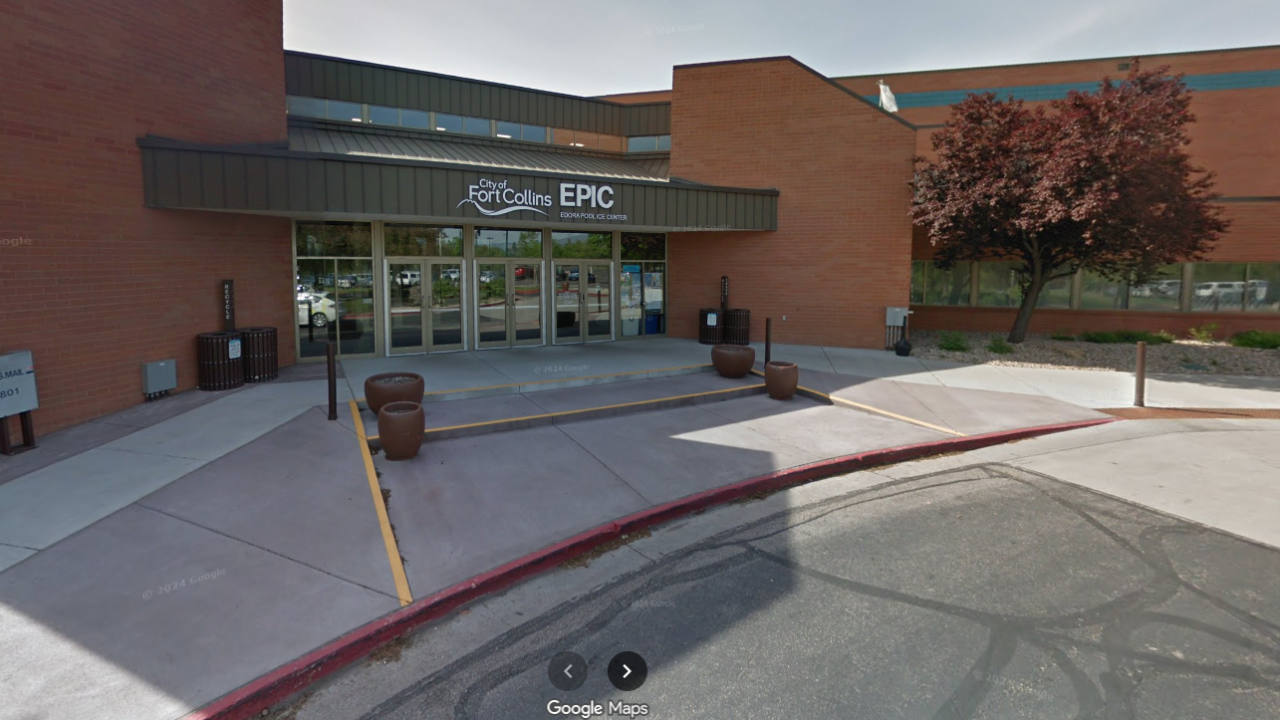
Photo by: Google Maps
The death of Daniel Lunas at the Edora Pool Ice Center has forced a city to confront how a routine task became a fatal workplace accident.
Daniel Lunas spent his shifts doing something most ice rink visitors barely notice: driving the resurfacing machine that keeps the ice smooth between skating sessions. On January 28, 2026, while operating the machine at the Edora Pool Ice Center in Fort Collins, Colorado, Lunas backed the heavy vehicle into an overhead door at the rink’s edge. He was critically injured and later died, according to the Fort Collins Coloradoan.
The crash turned a building that hosts birthday parties, youth hockey, and figure skating lessons into an emergency scene. It also raised urgent questions about safety protocols for heavy equipment in community recreation facilities, spaces that families and workers alike tend to think of as low-risk.
What happened at the Edora Pool Ice Center
Lunas was a Fort Collins Recreation Department employee working at the facility commonly known as EPIC. During what should have been a standard ice resurfacing run, the machine he was driving collided with an overhead door while in reverse. Emergency crews responded and transported Lunas for medical care, but he did not survive his injuries, as Denver7 reported.
Authorities have described the collision as a “tragic incident.” Neither the city nor law enforcement has indicated foul play or mechanical failure as a cause, though a full investigation is underway. The specific mechanism of how the overhead door impact proved fatal has not been publicly detailed.
Ice resurfacing machines, often called Zambonis after the dominant brand name, typically weigh between 7,000 and 10,000 pounds when loaded with water. Operators routinely steer them through narrow openings to enter and exit the rink surface, often in reverse, making doorways and access points some of the highest-risk zones in any rink facility.
EPIC closes, then reopens under a shadow
The City of Fort Collins shut down EPIC immediately after the crash. In a public statement, officials said the closure was made “in respect for the family” and to give staff time to process the loss of a colleague, according to KUNC, the regional NPR affiliate.
The rink reopened two days later, on Thursday, January 30. But the return to normal programming was anything but normal. Staff members who had worked alongside Lunas were back on the job in the same building where he died. Skaters and parents who arrived for scheduled sessions found a facility still absorbing the shock.
City leaders have not publicly characterized the incident as anything other than an accident. Still, the decision to pause operations, rather than reopen the next morning, signaled that officials recognized this required more than a maintenance report and a schedule adjustment.
A familiar face at a community hub
EPIC is one of Fort Collins’ most heavily used recreation facilities. The complex combines an ice rink with an aquatics center, so on any given afternoon, families with toddlers in swim diapers share the parking lot with teenagers hauling hockey bags. The rink hosts programs for the Fort Collins Figure Skating Club, adult league hockey, and public open-skate sessions that run late into winter evenings.
Lunas was part of the fabric of that daily life. People magazine reported that his family spoke publicly about their grief, and city recreation staff described him as a valued colleague. For rink regulars who saw the same resurfacer driver session after session, his death collapsed the usual distance between “staff” and “someone I know.”
Fort Collins Recreation Department officials offered public condolences to Lunas’ family and fellow employees. The tone across local and national coverage reflected a community that understood this was not an abstract workplace statistic but the loss of a specific person in a specific place that thousands of residents consider a second home.
The risks behind a familiar machine
To most spectators, the ice resurfacer is the friendliest piece of heavy equipment they will ever see up close. Kids wave at the driver. Adults check their phones. The machine’s slow, methodical laps feel about as dangerous as a riding lawnmower on a golf course.
That perception obscures real hazards. Operators work in confined spaces surrounded by dasher boards, player benches, and narrow gates. Backing through doorways, often the only way to exit the ice surface, requires precise spatial awareness. Overhead doors add another variable: if one is partially closed, improperly positioned, or if the driver misjudges clearance, the consequences involve tons of moving metal in a space with very little room for error.
Fatal incidents involving ice resurfacers are rare but not unprecedented. In most community rinks, resurfacer operators are recreation department employees, not industrial equipment specialists. Training requirements vary by municipality, and there is no single national standard governing who can drive these machines or how facilities must design their access points.
Safety questions the city now faces
The City of Fort Collins has said it is reviewing the circumstances of the collision and evaluating how to prevent a recurrence. A formal statement posted to the city’s website acknowledged the gravity of losing an employee at the facility.
That review will likely need to address several practical questions: Was the overhead door fully open at the time of the collision? Are backup cameras or proximity sensors installed on the resurfacer? Does the facility use spotters when the machine reverses through doorways? Are overhead doors equipped with auto-stop sensors that detect obstructions?
It is not yet clear whether the federal Occupational Safety and Health Administration (OSHA) has opened its own investigation. Under federal rules, OSHA can investigate any workplace fatality, and employers are required to report deaths within eight hours. Municipal employers in Colorado fall under state OSHA jurisdiction, which operates under a federally approved state plan. As of early March 2026, neither the city nor state regulators have publicly disclosed findings.
Across the ice rink industry, incidents like this one tend to prompt facility managers elsewhere to re-examine their own procedures. The question for Fort Collins, and for every community rink that operates similar equipment, is whether existing protocols treated the resurfacer as the industrial machine it is or as something closer to a golf cart.
Moving forward at EPIC
EPIC has returned to its regular schedule. The resurfacer still rolls out between sessions, smoothing the ice for the next group of skaters. But the routine now carries weight it did not have before January 28.
Staff who worked with Lunas watch the machine make its laps knowing what the job can cost. Parents who once smiled as their kids pressed their faces to the glass during resurfacing may see the moment differently now. The hum of the engine is the same. The context around it has changed permanently.
For Fort Collins, the hope is straightforward: that whatever the investigation reveals will lead to concrete changes, not just at EPIC but at rinks that face identical risks every day. Daniel Lunas deserves that much. So does the next person who climbs behind the wheel of a resurfacer and backs toward a doorway, trusting that the routine will hold.
About the Author