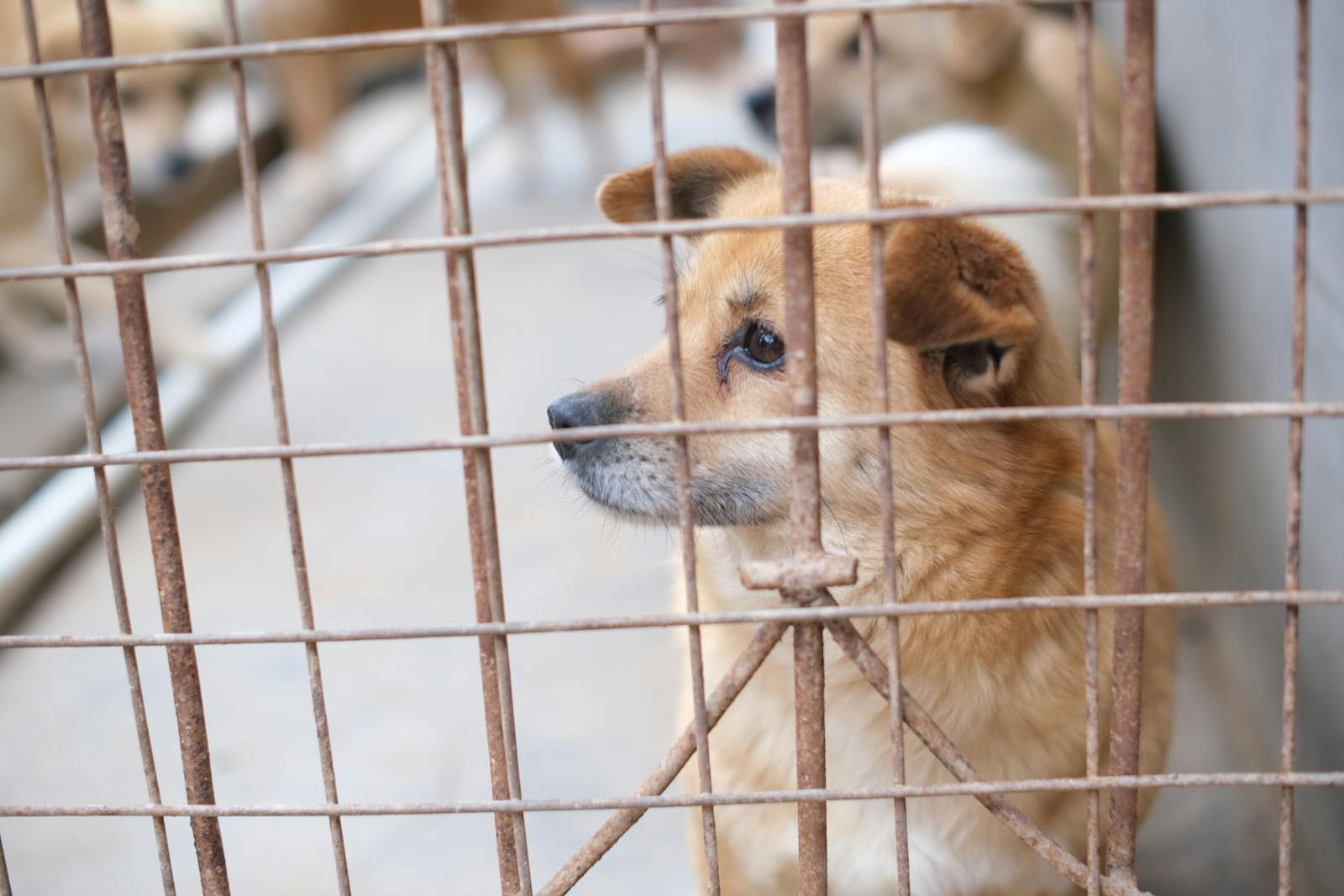
Photo by Mia X
Oregon treats animal cruelty as a serious felony, grants courts the power to ban convicted abusers from owning pets, and requires rescuers to reach animals trapped in disaster zones. North Dakota does none of those things. That contrast sits at the heart of the 2025 U.S. Animal Protection Laws Rankings published by the Animal Legal Defense Fund (ALDF), now in its 20th edition, which once again places Oregon first and North Dakota dead last among all 50 states.
The gap is not abstract. It determines whether a prosecutor can bring a felony charge after a dog is starved nearly to death, whether a judge can order psychological counseling for an offender, and whether a veterinarian who spots abuse has a legal duty to report it. For the five states anchoring the bottom of the list, the answer to most of those questions is still no.
How the ALDF rankings work
Each year, the Animal Legal Defense Fund reviews the animal protection statutes of all 50 states and ranks them across more than a dozen categories. These include the strength of felony cruelty penalties, protections extended to different species (pets, livestock, wildlife), standards for animal confinement, mandatory reporting requirements for veterinarians, and whether humane officers are empowered to investigate abuse independently. The methodology focuses on what is written into law, not on enforcement budgets or cultural attitudes, which means the rankings reflect legislative choices rather than on-the-ground outcomes.
The 2025 report also tracks emerging legislative trends: bans on cat declawing, statutes requiring the rescue of animals during natural disasters, and laws that allow the deputizing of humane officers. States that adopt these newer protections earn higher marks, which partly explains why some have climbed the rankings quickly in recent years.
The bottom five: North Dakota, Alabama, Idaho, Kentucky, Mississippi
North Dakota holds the 50th spot for the third consecutive year. According to the ALDF’s state-specific breakdown, the state lacks felony penalties for many forms of cruelty, offers limited protections for animals beyond household pets, and does not mandate that veterinarians report suspected abuse. The pattern is not a one-year anomaly; North Dakota has lingered near the bottom of these rankings for most of the past decade.
Alabama ranks 49th, followed by Idaho at 48th, Kentucky at 47th, and Mississippi at 46th. The five states share common weaknesses: narrow definitions of what counts as criminal cruelty, limited felony options for first-time offenders, broad exemptions for agricultural practices, and few tools for courts to intervene before a situation turns fatal.
Kentucky’s position is especially well-documented. The state spent more than a decade at or near the bottom of multiple ranking systems. A DVM360 analysis noted that Kentucky had been ranked the worst state for animal protection for 11 consecutive years in one scoring framework, a streak driven by limited felony coverage and minimal legal tools to address neglect or abandonment. Idaho, meanwhile, has drawn local criticism for lagging behind on reforms like cat declaw bans that have gained traction in other Western states.
What weak laws look like in practice
The practical consequences of a low ranking show up in courtrooms and on farms. In a state where animal cruelty tops out as a misdemeanor, the maximum penalty might be a fine of a few hundred dollars and little or no jail time. Compare that to Oregon, where aggravated animal abuse is a Class C felony carrying up to five years in prison, and where courts can issue lifetime bans on animal ownership.
Weak statutes also limit who can act. In states without mandatory reporting laws, a veterinarian who suspects abuse during a routine exam faces no legal obligation to alert authorities, and may even worry about liability if they do. In states without provisions for deputizing humane officers, investigations depend entirely on local law enforcement, which may lack training or bandwidth to prioritize animal cases.
Farm animals face an additional layer of vulnerability. Many bottom-ranked states exempt “standard agricultural practices” from their cruelty statutes, a carve-out so broad that it can shield conditions most people would consider inhumane. The ALDF rankings penalize states for these exemptions, which is one reason agricultural states tend to cluster near the bottom.
The states getting it right, and the ones catching up
Oregon has held the top spot for years, buoyed by comprehensive felony penalties, strong protections across species, mandatory reporting for veterinarians, and progressive provisions like disaster-rescue requirements. But the 2025 report makes clear that strong animal protection laws are not limited to the Pacific Northwest.
Illinois has topped a separate ranking by the same methodology for over a decade. California and Massachusetts score highly for confinement standards and bans on extreme cosmetic procedures. Maine, Colorado, and Washington consistently appear in the top tier.
The most striking story in the 2025 edition belongs to Nevada and Tennessee, which the ALDF names as the year’s most improved states. Both passed new legislation strengthening cruelty penalties, tightening confinement standards, and expanding the authority of humane officers. Their climb is significant because it undercuts a common assumption: that rural or agriculture-heavy states are locked into weak protections. Nevada and Tennessee prove that legislative will, not geography, is the deciding factor.
Why some states stay stuck
If Nevada and Tennessee can modernize their codes, why can’t North Dakota or Alabama? Advocates point to several reinforcing factors. Agricultural lobbying remains powerful in states where livestock production is a major economic driver; any reform that might touch farming practices faces organized opposition. In Kentucky, where the horse racing and breeding industries carry enormous political weight, lawmakers have historically been reluctant to broaden cruelty definitions in ways that could invite scrutiny of established operations.
There is also a philosophical divide. Some state legislatures still treat animals primarily as property, which makes cruelty a matter of property damage rather than a standalone moral and legal concern. Shifting that framework requires not just new bills but a change in how lawmakers talk about the issue, something that tends to happen only when public pressure makes inaction politically costly.
That pressure may be building. When outlets like People magazine publish headlines naming the worst states, residents and local media take notice. In Idaho, the ALDF ranking has started appearing in statehouse coverage as a political liability rather than a niche animal-welfare talking point. In North Dakota, the three-year streak at the bottom has drawn attention from editorial boards that previously ignored the issue.
None of that guarantees reform. But the trajectory of states like Nevada and Tennessee suggests that the rankings themselves can function as a catalyst, giving advocates a concrete, annually updated benchmark to hold lawmakers accountable. For the five states at the bottom of the 2025 list, the question is no longer whether the rest of the country is watching. It is whether that attention will be enough to move the needle before the next report card arrives.
About the Author