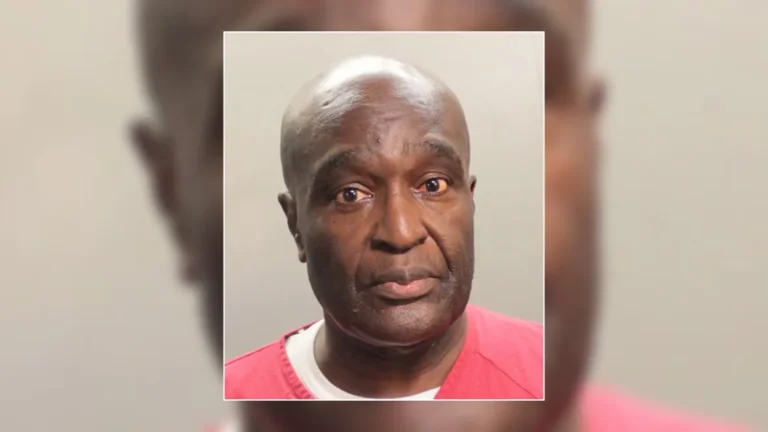
Matt Lauer; Brooke Nevils. Credit : Peter Kramer/NBC/NBC Newswire/NBCUniversal via Getty; T.JACKSON / BACKGRID
Credit : Peter Kramer/NBC/NBC Newswire/NBCUniversal via Getty; T.JACKSON / BACKGRID
When Brooke Nevils’ memoir hit shelves in February 2026, it did something years of headlines had not: it gave her full, unfiltered account of what she says happened with Matt Lauer in a Sochi hotel room in 2014. “Unspeakable Things: Silence, Shame, and the Stories We Choose to Believe” is not a summary of old allegations. It is 300-plus pages of specific, graphic detail about an encounter Nevils calls rape and Lauer has repeatedly called consensual. The book has reignited a public clash that never really ended, and it raises questions that go well beyond one hotel room.
The accusation at the center of the book
Nevils, a former NBC News employee, first made her allegation against Lauer in 2017, triggering his firing from the “Today” show. Her account became public in greater detail in 2019 through Ronan Farrow’s book “Catch and Kill.” But in “Unspeakable Things,” she writes on her own terms for the first time, describing the encounter during the 2014 Sochi Winter Olympics and the workplace dynamics she says made it impossible to refuse Lauer’s advances.
“There was only pleasing Matt Lauer,” she writes, a line that captures her central argument: that consent cannot be meaningful when one person controls the other’s career, reputation, and standing inside a powerful institution. She describes waking up in “undeniable pain,” finding her underwear and the sheet beneath her “caked with blood,” and struggling to walk or sit afterward, according to USA Today’s account of the memoir.
The book does not stop at the physical. Nevils writes about the psychological aftermath: the shame, the silence she maintained for years, and the way NBC’s corporate culture discouraged anyone from challenging its biggest star. She describes a workplace that prized loyalty to on-air talent above almost everything else, connecting her experience to the broader pattern of institutional complicity that the Me Too movement exposed across media, entertainment, and other industries.
The fallout Nevils faced after going public
Nevils’ identity as Lauer’s accuser leaked before she was ready to go public. The Hollywood Reporter noted that after her name became public, she spent time in a psychiatric facility while trying to cope with the pressure of media scrutiny and the internal fallout at NBC News. Her career in television effectively ended.
She has spoken about that cost publicly, including in a television interview where she recounted the most graphic parts of her story. That decision to go into detail drew both support and criticism, but it reflects the book’s core argument: that euphemisms and vague language have long shielded powerful men while forcing survivors to carry the most painful specifics in private.
Lauer’s reaction: anger, then resignation
Lauer, who has denied raping Nevils since the allegation first surfaced, is not taking the memoir quietly. Sources close to him told People magazine that he is “not happy” about the book and feels blindsided by the level of detail and the renewed media cycle. Those same sources described him as “devastated and very bitter,” while also saying he has “come to terms with bad press” and no longer expects his reputation to recover.
One quote attributed to Lauer through a friend stands out: “I have spent the long dark nights of the last several years trying to figure out where I belong in this world.” According to Yahoo Entertainment, he also feels that some people are using his situation “for their own sadistic purposes,” language that frames him as a target rather than an instigator.
That framing is consistent with how Lauer has responded at every stage of this story.
A pattern of denial and counterattack
Lauer’s first public statement after his firing in November 2017 struck a conciliatory note. He expressed “sorrow and regret for the pain I have caused,” according to The New York Times, while also saying that some of what was being reported about him was “untrue or mischaracterized.”
By October 2019, the tone had shifted entirely. After Farrow’s “Catch and Kill” named Nevils and detailed her allegation, Lauer released a lengthy written rebuttal in which he denied raping her, described their encounters as part of an ongoing consensual affair, and accused Nevils of lying. He also attacked Farrow directly, later publishing an opinion column in Variety in which he accused the journalist of shoddy reporting and factual errors.
Lauer’s attacks on Farrow gained some traction after other journalists, including those at The New York Times, raised questions about Farrow’s sourcing and methods. But those critiques of Farrow’s process did not discredit Nevils’ underlying account, which she had also shared with NBC’s internal investigators and, later, with multiple news organizations independently.
The arc from partial apology to aggressive denial to simmering resentment at a memoir shows someone who has never accepted Nevils’ version of events, even as the cultural ground has shifted beneath him.
Where Nevils stands now
Nevils is now a writer and mother of two. She has been open about the personal cost of publishing the book, telling People that she worries her children will one day be “tortured” by the memoir and the public reaction to it. She published it anyway, she said, because she wanted her account to exist in her own words rather than filtered through corporate investigations, legal statements, and other people’s books.
A separate People profile describes how she has tried to build a life outside the “Today” show orbit while still being defined in the public imagination as “Matt Lauer’s accuser.” The memoir is her attempt to expand that identity, to be understood as more than a single allegation.
What remains unresolved
No criminal charges were ever filed against Lauer. NBC’s internal review, conducted after his firing, concluded that management had no prior knowledge of his behavior, a finding that critics, including Nevils, have questioned. Lauer has faced no legal consequences beyond losing his job and his public standing.
That leaves two irreconcilable accounts. Nevils has put her name, her body, and her mental health on the public record, arguing that consent cannot exist when pleasing a powerful figure feels like the only viable option. Lauer insists the relationship was consensual and views the ongoing scrutiny as punishment that has already exceeded any reasonable measure.
“Unspeakable Things” does not resolve that conflict. What it does is shift the terms. For years, Nevils’ story was told in fragments: a corporate investigation here, a paragraph in someone else’s book there, a leaked name she never chose to make public. Now it exists as a complete narrative, written by the person who lived it. Whether readers find it persuasive or not, it is no longer someone else’s story to tell.
About the Author