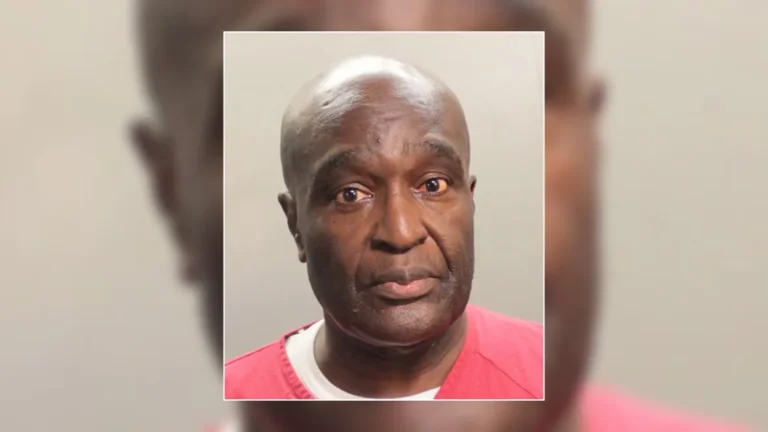
File:Steve Tisch Headshot.jpg
What the emails actually say
The messages come from files released as part of the ongoing federal review of Epstein’s network. In them, Epstein acts as a broker, identifying women he believed matched Tisch’s preferences, setting up introductions, and checking in afterward. In one exchange reported by ABC News, Epstein tells Tisch he has found someone suitable, then later writes that Tisch had done “very well” with her. In another, Epstein refers to a woman as “a shared interest friend,” phrasing that suggests an ongoing arrangement rather than a one-off social introduction. Perhaps the most scrutinized line: Tisch, in one message, asks whether a particular woman is “pro or civilian,” an apparent attempt to determine whether she was a sex worker before agreeing to meet her. That detail, reported by ABC News, has drawn sharp criticism from survivor advocacy groups and commentators who say it reveals how casually powerful men in Epstein’s circle treated women as commodities. Tisch had previously described his connection to Epstein as limited. The volume of the correspondence and its familiar tone make that characterization difficult to defend. In a statement released after the emails surfaced, Tisch said he “deeply regret[s] associating with” Epstein, but he has not addressed the specific content of the messages in detail.Why this hits the Giants so hard
Steve Tisch is not a silent investor. He has served as the Giants’ chairman and co-owner alongside the Mara family for decades, and his public profile extends well beyond football. He is also an Academy Award-winning producer, best known for “Forrest Gump,” and a prominent philanthropist in Los Angeles and New York. That dual identity as a cultural figure and sports executive means the scandal lands in two industries at once. For the Giants specifically, the timing compounds the damage. The franchise has struggled on the field for most of the past decade and has leaned on its legacy, four Super Bowl titles, a reputation for doing things “the right way,” to maintain its standing with fans and sponsors. An ownership figure linked to Epstein’s network of exploitation undercuts that brand in a way that losing seasons never could.The NFL’s response and the owner-discipline question
NFL Commissioner Roger Goodell confirmed during Super Bowl week in February 2026 that the league was reviewing Tisch’s ties to Epstein. That public acknowledgment was notable on its own. The league typically handles owner-related matters behind closed doors, and Goodell’s willingness to address it on camera signaled that the NFL views the emails as a serious reputational problem, not a tabloid sideshow. The league does have precedent for disciplining owners, though it has applied that power unevenly. Indianapolis Colts owner Jim Irsay was suspended for six games and fined $500,000 in 2014 after a DUI arrest. More recently, the NFL effectively pressured Washington Commanders owner Dan Snyder into selling the franchise in 2023 following years of workplace misconduct allegations and a congressional investigation. Neither case maps perfectly onto Tisch’s situation, but both show the league is willing to act when an owner becomes a sustained liability. As of March 2026, the NFL has not announced any disciplinary action against Tisch. The Giants, for their part, have kept public comments to a minimum. A team spokesperson declined to discuss internal deliberations or confirm whether the franchise has launched its own review.The ownership restructuring
What the Giants have confirmed is a plan to restructure ownership. According to reporting by Front Office Sports, Steve Tisch and his siblings intend to transfer their stakes in the team into trusts for their children. The move would shift financial ownership to the next generation while keeping the Tisch family’s overall share intact. The timing raises obvious questions. The restructuring discussions became public less than six weeks after the Epstein emails were released, and multiple outlets have framed the transfer as a direct response to the fallout. A Giants spokesperson confirmed the broad outline of the plan but would not say whether the Epstein revelations accelerated it. Critically, reports indicate that Tisch would remain chairman of the board even after the financial transfer, preserving his role in football operations and major business decisions. That distinction between financial ownership and operational control has fueled skepticism. Critics, including several prominent sports columnists, have argued that moving shares into trusts while keeping the same person in charge amounts to a cosmetic fix rather than genuine accountability.The broader reckoning
The backlash has extended well beyond Giants fandom. Survivor advocacy organizations have cited the Tisch emails as further evidence that Epstein’s operation depended on a network of willing participants, men who benefited from his introductions and asked few questions about the women involved. Even if every woman referenced in the correspondence was an adult acting of her own volition, advocates argue, the transactional language and the power imbalance embedded in the arrangement reflect a culture that enabled Epstein’s worst abuses. There is also a fairness question that the NFL will eventually have to answer. The league’s personal conduct policy has been used to suspend players for off-field behavior far less damaging than what the Tisch emails describe. If a practice-squad linebacker faced consequences for a fraction of this, the argument goes, an owner should not be able to quietly reshuffle paperwork and move on. For now, the situation sits in an uncomfortable middle ground. The emails are public. Tisch has expressed regret but not offered a detailed accounting. The NFL review has no announced timeline. And the Giants are proceeding with an ownership transfer that may or may not change anything meaningful about who runs the franchise. What is no longer in doubt is that Steve Tisch’s name is permanently linked to Epstein’s in the public record. Every future profile, every ownership vote, every sponsor negotiation will carry that context. Whether the NFL and the Giants treat that as a problem to manage or a wrong to address will say as much about the league’s values as any policy statement ever could.About the Author