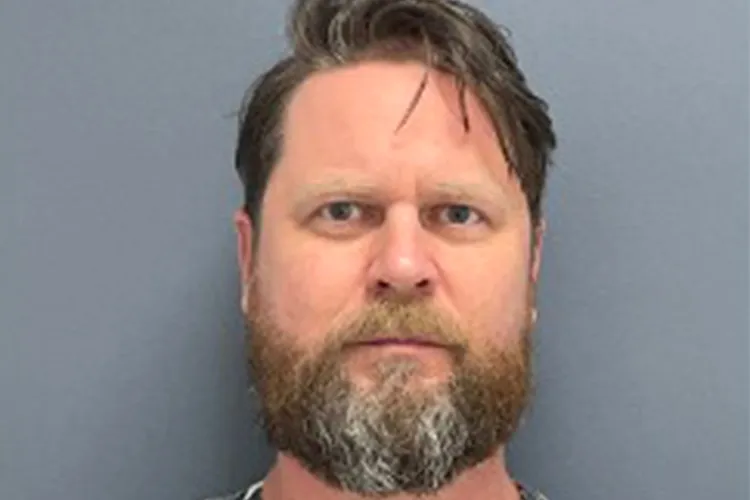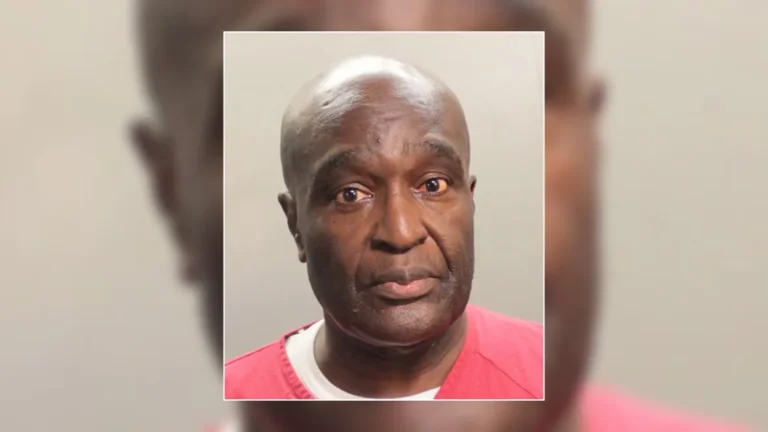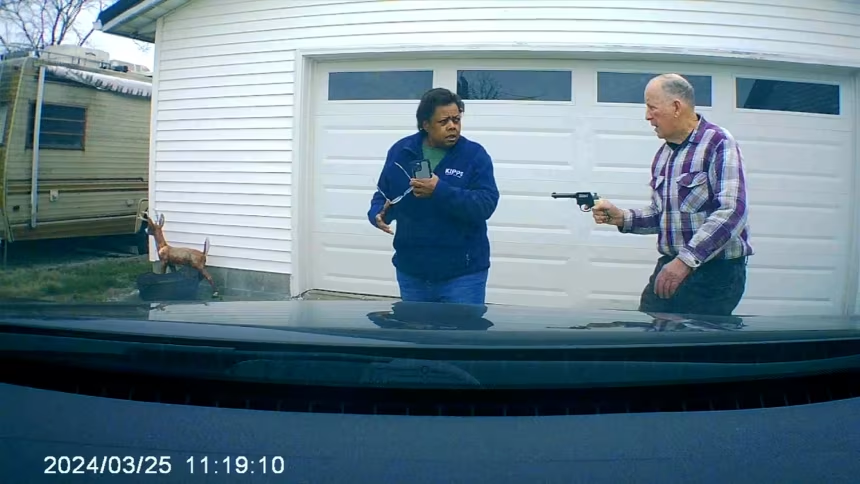
William Brock holds a weapon to Uber driver Lo-Letha Hall outside his home in South Charleston, Ohio, in March 2024, in this image taken from Uber dashcam video. (The Clark County Sheriff’s Office)
William Brock was 81 years old and living alone near Springfield, Ohio, when he picked up a phone call that would end two lives: the one belonging to Loletha Hall, a 61-year-old Uber driver and grandmother, and his own as a free man. In January 2024, Brock shot Hall six times in his driveway after scammers convinced him she was coming to rob him. She was there to pick up a package. In February 2026, a Clark County judge sentenced the now-83-year-old to 21 years to life in prison, a term he is unlikely to outlive.
The case has drawn national attention because it sits at the intersection of two growing problems: sophisticated phone fraud targeting older Americans and the gig-economy workers who can be unwittingly pulled into dangerous situations by strangers manipulating ride-hailing apps.
How the scam worked
According to court testimony and police records, the scheme followed a pattern the FBI calls a “courier fraud” or “government impersonation” scam. A caller posing as a federal agent told Brock he was under investigation and needed to hand over a large amount of cash to avoid arrest. The caller instructed him to package the money and leave it for a courier who would arrive at his Clark County home, located between Dayton and Columbus.
What made this variant especially dangerous is what happened next: the scammer used a ride-hailing app to dispatch a real Uber driver to Brock’s address. Loletha Hall, working a routine shift, accepted the trip request on her phone. She had no idea the pickup involved cash, a frightened elderly man, or a fraud scheme. To her, it was just another stop.
The FBI’s Internet Crime Complaint Center reported that Americans over 60 lost more than $3.4 billion to fraud in 2023, a figure the agency called a significant undercount because many victims never report. Courier scams, in which victims are told to hand cash or valuables to a person who comes to their door, have been flagged repeatedly by federal law enforcement as a growing threat.
Six shots in a driveway
When Hall pulled into Brock’s driveway on the afternoon of January 3, 2024, she stepped out of her car expecting to collect a package. Brock emerged from his home armed with a handgun. Prosecutors said he fired six times, striking Hall repeatedly. She was rushed to a Kettering-area hospital, where she died following surgery.
Neighbors told local reporters they heard the gunfire and saw emergency vehicles flood the normally quiet residential street. Brock remained at the scene and was arrested by Clark County deputies. He told investigators he believed the person arriving at his door was part of a criminal operation and that he was about to be robbed.
There was no evidence Hall had any connection to the scammers. Law enforcement confirmed that the people behind the phone calls have not been arrested or publicly identified as of March 2026.
The trial and conviction
Brock was charged with murder. At trial, prosecutors argued that whatever fear Brock felt did not justify shooting an unarmed woman who posed no physical threat. They presented evidence showing he had time to call 911 but chose instead to confront the driver with a loaded weapon.
Ohio law does include a Castle Doctrine provision that allows homeowners to use force against intruders under certain circumstances. But prosecutors noted that Hall never entered Brock’s home, never threatened him, and was standing in or near her own vehicle when she was shot. The defense did not mount a formal Castle Doctrine or self-defense claim at trial.
Instead, Brock’s attorneys focused on his age, his lack of prior criminal history, and the sophistication of the scam that manipulated him. They described an elderly man living alone, overwhelmed by a caller who deliberately stoked his fear.
The jury found Brock guilty of murder in early 2026. The conviction carried a mandatory prison term under Ohio sentencing guidelines.
21 years to life
At the February 2026 sentencing hearing, Hall’s family delivered emotional statements. Relatives described a 61-year-old woman who had worked as an Uber driver to support herself and her family, someone who loved her grandchildren and never came home from what should have been an ordinary shift. They emphasized that Hall had been manipulated by the same scammers who deceived Brock, yet she was the only one who paid with her life.
Brock, leaning on the courtroom lectern, spoke briefly. He said he felt remorse and insisted he had been terrified at the moment he fired. His family asked the judge for leniency, citing his age and declining health.
The judge imposed a combined sentence of 21 years to life. For an 83-year-old man, the term amounts to a life sentence. Brock was remanded to the custody of the Ohio Department of Rehabilitation and Correction.
The scammers are still out there
Perhaps the most unsettling detail in this case is that the people who engineered the fraud, the callers who impersonated federal agents, who directed Brock to package his cash, and who dispatched an innocent driver to his doorstep, remain unidentified. No arrests have been announced. Investigators have not disclosed whether the callers operated domestically or from overseas, though the FBI has noted that many government-impersonation scams originate from foreign call centers.
Uber declined to comment on the specifics of the case when contacted by reporters after the sentencing. The company has not announced any policy changes related to package-pickup requests in the wake of Hall’s death.
For families trying to protect older relatives from courier fraud, the FBI recommends a simple rule: no legitimate government agency will ever demand cash handed to a courier. Anyone who receives such a call should hang up and contact local police or the agency directly using a verified phone number.
Loletha Hall’s family has said they hope her story prevents another driver from being put in the same position and another frightened person from making an irreversible choice.
About the Author