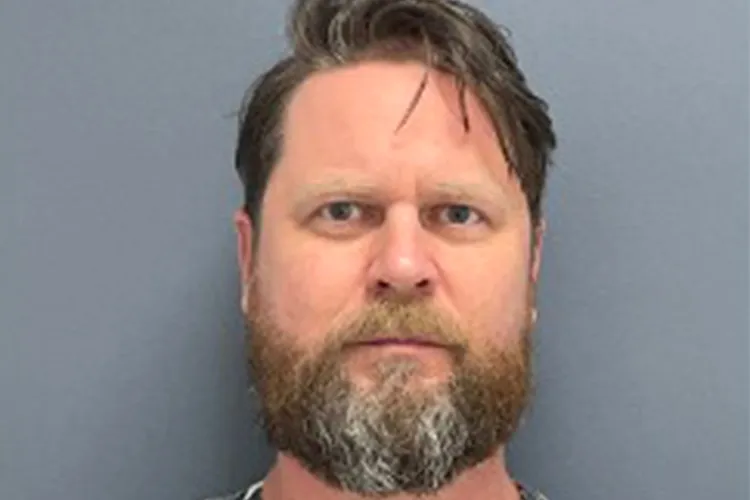
Tyler Thomas is in custody in Franklin County, facing charges related to her disappearance and death, including pandering obscenity and tampering with evidence. (Franklin County Jail)
Hailey Buzbee was 17 when she walked out of a relative’s home in Vermilion, Ohio, in early January 2026 carrying a bag. She never came back. Within weeks, what the Fishers, Indiana, police department had classified as a missing-juvenile case became a multi-state homicide investigation, and a 39-year-old man named Tyler Thomas was in custody facing charges that prosecutors say may only be the beginning.
The night Hailey disappeared
Hailey had been staying with family in Vermilion, a small city on Lake Erie about 35 miles west of Cleveland, after earlier concerns prompted a move from her home base in Fishers, a suburb northeast of Indianapolis. Fishers police confirmed she was reported missing in early January 2026 and that detectives initially treated the case as a possible runaway, a classification that held for several days.
That changed as investigators reviewed digital evidence pulled from devices and accounts linked to Hailey. Witness interviews and phone records pointed not to a teenager striking out on her own but to a planned extraction organized by an adult she had been communicating with online for more than a year, according to affidavits filed by Fishers police and later detailed in search warrant filings obtained by ABC6.
A search across state lines
Detectives followed Hailey’s trail from Indiana into rural southeastern Ohio, focusing on short-term rental properties and wooded land near Wayne National Forest. The Hocking County Sheriff’s Office, working alongside Fishers police and federal agents, confirmed in late January 2026 that remains believed to be Hailey’s were recovered from a secluded area and transported to the Licking County Coroner’s Office for forensic examination. As of early March 2026, authorities have not publicly announced a confirmed identification or an official cause of death.
Investigators say the key location was a short-term rental in Ohio’s Hocking County area where, according to court filings, Thomas brought Hailey after arranging her travel from Indiana. License plate readers, cell tower data, and rental agreements allowed detectives to reconstruct Thomas’s movements to and from the property, according to court records reported by 10TV. Those records indicate Thomas drove to the rental with Hailey and returned alone.
More than a year of online contact
Court filings paint a picture of a relationship that escalated over months. According to documents reviewed by Fox59, Hailey and Thomas communicated for more than a year before her disappearance, starting on more mainstream platforms before migrating to an encrypted messaging app as the conversations grew more secretive.
In affidavits cited in the search warrant filings, Thomas reportedly told detectives that he orchestrated Hailey’s plan to leave Vermilion and arranged her transportation through that app. Investigators allege he later deleted access codes and account credentials tied to the platform, a move prosecutors describe as a deliberate effort to destroy evidence. While the deletions complicated the reconstruction of Hailey’s final hours, detectives have recovered partial data through device backups and forensic imaging of seized electronics.
Charges filed so far
Tyler Thomas faces charges in Franklin County Municipal Court in Columbus, Ohio, including pandering sexually oriented material involving a minor and tampering with evidence. The tampering count is tied to the alleged deletion of encrypted communications. Prosecutors have indicated that additional charges connected to Hailey’s death could follow once forensic analysis of the recovered remains is complete.
Thomas has not yet entered a public plea on the current charges. No attorney of record for Thomas has made a public statement as of early March 2026.
FBI and multi-agency coordination
Because the case crossed state lines and involved the suspected online exploitation of a minor, federal authorities joined the investigation early. In a February 4, 2026, statement, FBI Cincinnati confirmed that its agents were working alongside FBI Indianapolis, the Fishers Police Department, and multiple Ohio sheriff’s offices to process evidence and evaluate potential federal charges.
The bureau said the investigation remained active and that agents were still analyzing data from phones, laptops, and the encrypted messaging app. The statement also included a public appeal: anyone who had online contact with either Hailey or Thomas was urged to come forward, a signal that investigators are examining whether Thomas targeted other minors.
A community confronts hard questions
Fishers Police Chief Ed Gebhart acknowledged publicly that the department initially weighed the runaway theory before evidence forced a reassessment. In remarks included in a timeline compiled by Yahoo News, Gebhart described how digital forensics shifted the investigation’s direction and noted broader concerns about how adults use online platforms to access teenagers.
In both Fishers and Vermilion, the case has intensified debate over parental monitoring tools, platform accountability, and the speed at which encrypted apps can move a conversation beyond the reach of guardians and law enforcement. Indiana legislators had already been considering measures to restrict teen social media use before Hailey’s case became public; her disappearance and death have added urgency to those discussions.
What remains unknown is substantial. Investigators have not disclosed a confirmed cause of death, have not said whether Thomas has a prior criminal record, and have not revealed the specific app used in the communications. Hailey’s family has not made extended public statements. The answers to those questions will shape both the criminal case ahead and the policy conversations it has already set in motion.
About the Author