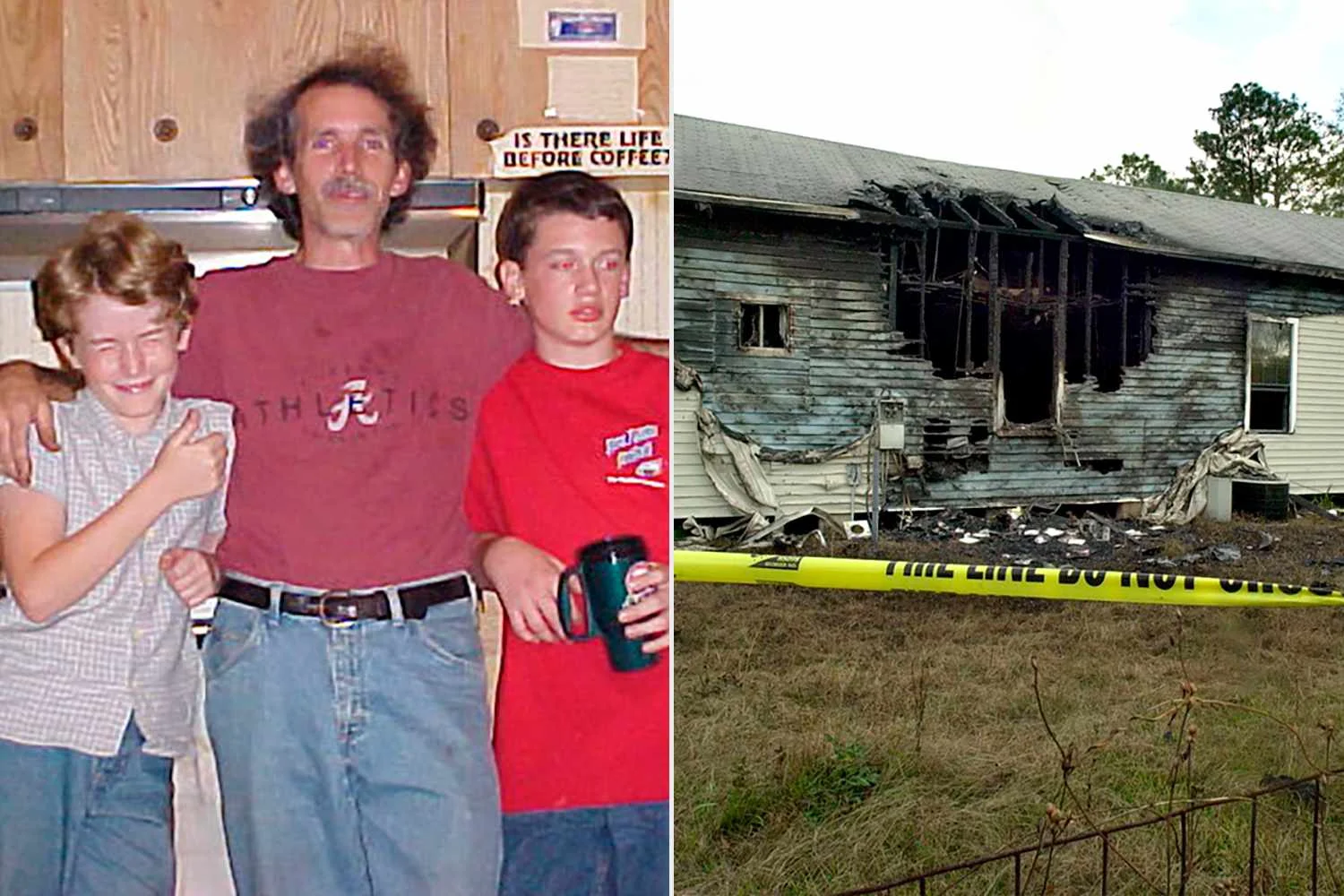
Terry, center, Alex, left, and Derek King Karena Cawthon-USA TODAY NETWORK via Imagn Images
Karena Cawthon-USA TODAY NETWORK via Imagn Images
On the night of November 26, 2001, firefighters in Cantonment, Florida, responded to a house fire and found 40-year-old Terry King dead in his recliner. His two sons, 13-year-old Derek and 12-year-old Alex, were missing. What looked at first like a tragic accident quickly became one of the most disturbing criminal cases in Escambia County history: both boys would eventually confess to beating their father to death with an aluminum baseball bat as he slept, then setting the fire to cover it up.
But the confessions were only the beginning. Behind them lay a troubled household, a manipulative adult outsider, and a legal saga that forced courts to wrestle with a question no one wanted to answer: how do you hold children accountable for a killing that adults around them may have set in motion?
A single father struggling to keep his family together
Terry King had fought through the court system to regain custody of Derek and Alex after years in which the boys lived with relatives. By 2001, he was raising them alone in a small rented home in Cantonment, a rural community just north of Pensacola. Neighbors and family members described him as a strict, old-school disciplinarian who kept the television off, limited the boys’ contact with friends, and believed firm rules were the way to keep them out of trouble.
Derek and Alex later told investigators and mental health professionals that their father’s discipline sometimes crossed into physical punishment and that life in the house felt suffocating. At the same time, people close to the family acknowledged that Terry was a single parent with limited income and no real support network, doing what he believed was right for two boys who had already experienced years of instability.
The night everything changed
When Escambia County fire crews arrived at the King home that November night, the blaze had already done significant damage. Terry’s body was in his recliner, but the cause of death was not the fire. The medical examiner determined he had been struck repeatedly in the head with a blunt object while he slept. Investigators identified the weapon as an aluminum baseball bat. The fire, set afterward, appeared to be an attempt to destroy evidence.
“I can’t recall seeing another case quite like it,” one law enforcement official involved in the investigation later said.
Derek and Alex were not in the house. Their absence immediately made them persons of interest, and the Escambia County Sheriff’s Office launched a search.
Ricky Chavis and the boys’ disappearance
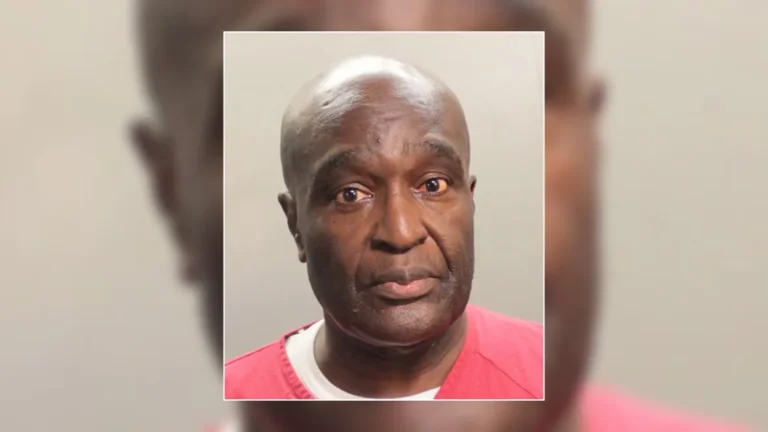
The search ended the following day when a local man named Ricky Chavis brought Alex to the sheriff’s station. Derek was also found to have been staying with Chavis. On the surface, Chavis looked like a helpful neighbor. He was a handyman who had befriended the boys and let them spend time at his home, something Terry King had objected to.
Investigators quickly grew suspicious. Chavis had a prior criminal record, and his relationship with the brothers went well beyond casual friendship. Prosecutors would later allege that Chavis had committed lewd and lascivious acts against at least one of the boys and that he had actively manipulated them in the period leading up to the killing.
The confessions and what came after
Questioned by Escambia County detectives, Derek and Alex confessed. They described taking the baseball bat, striking their father while he slept in his recliner, and then setting the house on fire. The confessions were detailed enough to convince investigators, but the boys’ accounts would shift in the months that followed.
As the case moved toward trial, both brothers began pointing to Chavis as the driving force behind the crime. They said he had encouraged them to kill Terry, told them life would be better without their father, and provided a place for them to flee afterward. Defense attorney David Rimmer argued that the boys had been groomed and manipulated by a predatory adult who exploited their unhappiness at home.
Three trials and a tangled legal outcome
The case produced three separate trials that played out in Escambia County courtrooms. Derek and Alex were initially charged as adults with first-degree murder, a charge that carried the possibility of life in prison. Chavis was tried separately.
In Chavis’s trial, a jury convicted him of second-degree murder. But the legal picture was more complicated than a single verdict. Because both the boys and Chavis had been found responsible for the same killing in separate proceedings, the court faced a logical contradiction. The resolution came through a negotiated plea agreement: the boys pleaded guilty to third-degree murder and arson, receiving sentences of seven years and one year respectively, to be served in juvenile detention. Chavis’s murder conviction was vacated as part of the deal, and he ultimately pleaded guilty to lesser charges.
The outcome satisfied almost no one. Prosecutors felt the boys had gotten off lightly for a brutal killing. Defense advocates argued that children who had been abused and manipulated should not have been prosecuted as harshly as they were. And Terry King’s extended family was left with the knowledge that no single person had been held fully accountable for his death.
What happened to Derek and Alex King
Both brothers served their sentences in Florida’s juvenile system. After their release, they largely disappeared from public view. Occasional media follow-ups have reported that the brothers attempted to rebuild their lives, though the details of their post-release years remain mostly private. A detailed feature by People magazine revisited the evidence, the family history, and the conflicting accounts from everyone involved, connecting the case to broader questions about how the justice system handles children who commit violent crimes under the influence of predatory adults.
Why this case still unsettles people
More than two decades later, the killing of Terry King resists easy conclusions. A single father trying to hold his household together with the limited tools he had. Two boys who felt trapped and found what seemed like an escape with an adult who, by multiple accounts, was exploiting them. A crime that looked like an accident, then like patricide, then like something shaped by outside manipulation.
The case remains a reference point in discussions about juvenile justice, the grooming of minors, and the failures that can accumulate when a struggling family has no safety net. It is uncomfortable precisely because there is no clean villain or innocent victim. Terry King was both a flawed parent and a murder victim. His sons were both perpetrators and, in significant ways, victims themselves. And Ricky Chavis, the adult who inserted himself into a vulnerable family, walked away with lesser consequences than almost anyone involved in the case thought he deserved.
About the Author