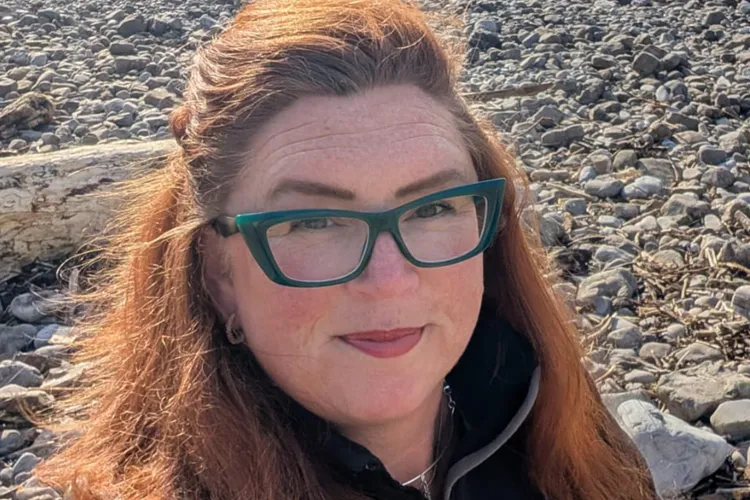
Sian Chathyoka. Credit : Sian Chathyoka/Anthony Nolan
Credit : Sian Chathyoka/Anthony Nolan
Before her diagnosis, single mom of two Sian Chathyoka was the kind of person who swam in the sea year-round and barely sat still. Now, at 44, she is living with an aggressive blood cancer and has been told that only one known person on the planet is a match for the stem cell transplant she needs. Her story is both brutally specific and uncomfortably universal, because it exposes how much a stranger’s decision to join a donor register can decide whether a parent gets to watch their kids grow up.
Sian’s life has narrowed to hospital appointments, fatigue and waiting for news about a person she has never met but who holds her future in their hands. Her experience, and those of other families hunting for a compatible donor, shows how a rare diagnosis collides with the gaps in global stem cell registries, especially for patients from mixed or minority ethnic backgrounds.
The single mom, the rare cancer and the one-in-the-world match
Mother-of-two Sian, who lives in Wales, used to pride herself on being the energetic one, the parent who would drag everyone out for a cold-water swim or a long coastal walk. According to detailed accounts of her illness, she went from that active routine to struggling with “extreme fatigue” and sudden weight loss that made it hard to get out of her chair, a shift that friends initially chalked up to stress before tests revealed something far more serious linked to Sian Chathyoka. Doctors eventually diagnosed her with aggressive myelofibrosis, a rare form of blood cancer that scars the bone marrow and disrupts the body’s ability to make healthy blood cells, leaving patients exhausted, vulnerable to infections and at risk of life-threatening complications.
For Sian, the diagnosis landed on top of the everyday pressures of raising two children, aged 18 and 13, as a single parent. Reports describe her sitting in a clinic and being told that chemotherapy could only buy time and that her best shot at long-term survival was a stem cell transplant from a genetically compatible stranger, a prospect that quickly turned from hopeful to terrifying when registry searches showed there was only one known person in the world who matched her tissue type. That stark reality, laid out in coverage that identifies her as a mother of two teenagers in Wales and credits reporter Eleri Griffiths, is the reason she now talks so bluntly about how a stranger’s decision could decide whether her kids lose their mom while they are still in school.
From diagnosis to transplant: a race against an aggressive disease
The medical path from that first wave of exhaustion to a transplant has been anything but straightforward. Earlier this year, Sian was told that her myelofibrosis was not only rare but also particularly aggressive, with specialists warning that the disease was advancing quickly and that delays in finding a donor could close the window for a successful transplant. In interviews, she has described how the fatigue became so overwhelming that simple tasks like climbing the stairs or making dinner left her wiped out, a pattern echoed in separate coverage that notes she was experiencing extreme tiredness before tests confirmed an aggressive form of myelofibrosis and that her doctors stressed how fast the disease is aggressive.
Once the search identified a single compatible donor somewhere in the global registry, the story shifted from whether a match existed to whether that person would actually go through with the procedure. Sian has spoken about the surreal feeling of knowing that her life depends on someone she cannot contact or thank directly, a stranger whose cells could reboot her immune system. Detailed reporting on her case notes that she was diagnosed with myelofibrosis and that registry checks found only one donor in the world whose tissue markers lined up closely enough for a transplant, a discovery that has since been cited as an example of how powerful, and how fragile, modern transplant medicine can be when it hinges on a single matching donor.
Why one stranger’s choice matters for families everywhere
As personal as Sian’s story is, it sits inside a much bigger pattern that plays out in hospitals from Wales to Fort Worth. In Texas, a Fort Worth family has been speaking publicly about their 8-year-old son’s rare cancer diagnosis and their own search for a bone marrow match, describing how they are taking it “day by day” while doctors test relatives and strangers in the hope that someone’s tissue type will line up with their child’s, a struggle captured in a widely shared Fort Worth video. Their experience mirrors Sian’s in one crucial way: both families are learning in real time that the odds of finding a donor are shaped by who has already signed up to donate, and that patients from underrepresented ethnic backgrounds often face the longest odds.
About the Author