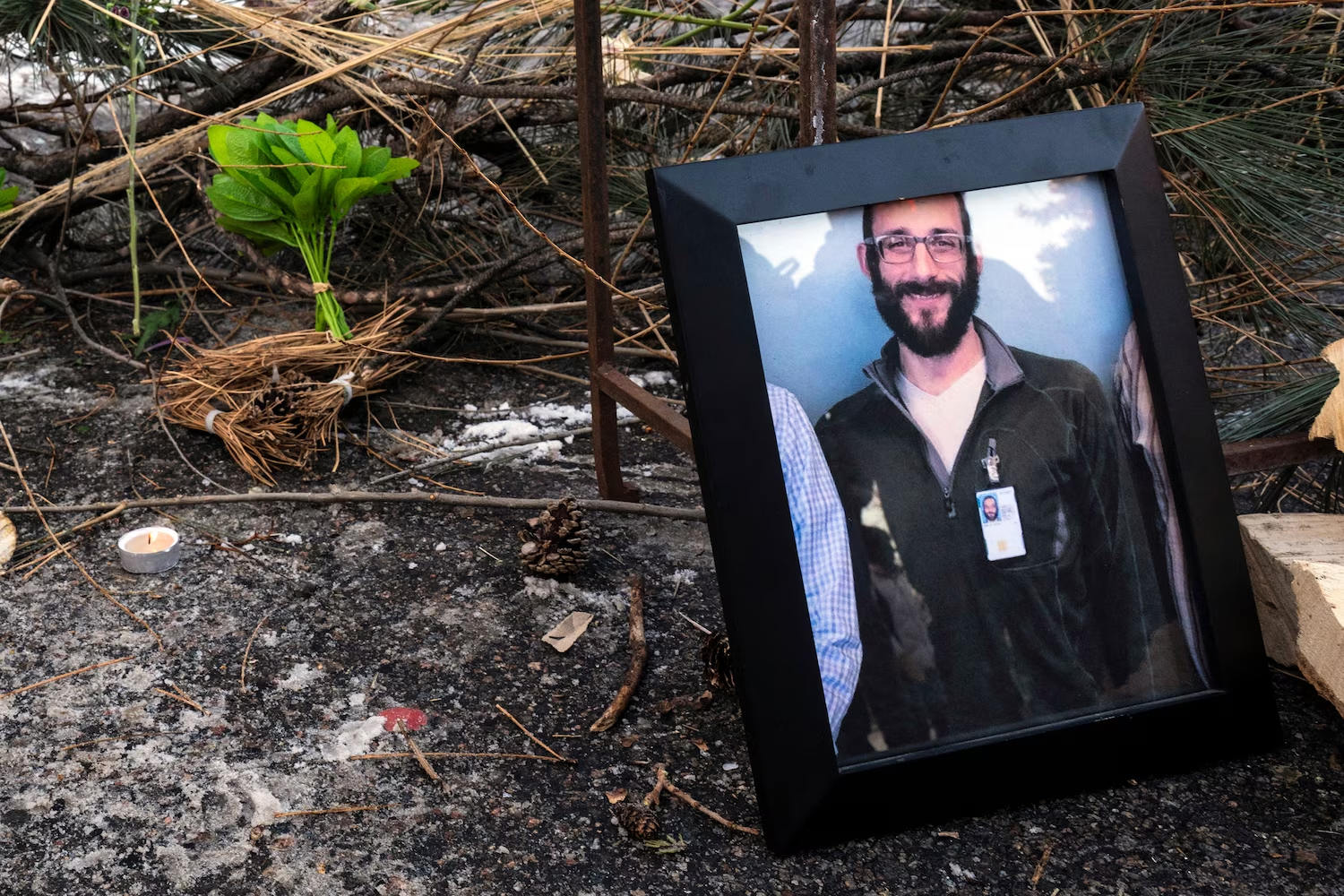
A photograph of 37-year-old Alex Pretti can be seen at a makeshift memorial in the area where he was shot dead by federal immigration agents earlier in the day in Minneapolis, Minnesota, January 24, 2026. Roberto Schmidt/AFP via Getty Images
Roberto Schmidt/AFP via Getty Images
Witnesses say Alex Jeffrey Pretti died in a Minneapolis street not as a threat, but as a bystander trying to help a woman who had just been shoved to the ground. Their accounts, backed by video and sworn statements, collide head on with the early official story that framed him as a man who reached for a gun. That gap is now driving a national fight over truth, power, and who gets believed when federal agents open fire.
At the center is a 37-year-old intensive care nurse, a licensed gun owner who had come out to document immigration enforcement and ended up dead within seconds of approaching a chaotic scene. The people who say they stood just feet from him insist the government narrative is not just incomplete, but flatly wrong, and they are putting their names on the line to say so.
What Witnesses Say Happened On The Street
According to multiple bystanders, the confrontation that ended in gunfire started with Alex Pretti filming immigration officers as they detained a man in Minneapolis. One protester who says he was standing about five feet away recalls that an agent suddenly shoved a woman observer to the pavement, prompting Pretti to move toward her with his phone still in his hand. In that account, he was “trying to help a woman” stand up when agents turned on him, a description that directly challenges the idea that he was charging officers with a weapon, and that same witness now says bluntly that “they are not telling the truth” about those moments, as reflected in a detailed protester account.
Another observer, whose sworn statement has circulated widely, describes the same basic sequence: agents confronting a man, a woman pushed down, and Pretti stepping in with a camera, not a firearm. That witness says the man “did not approach the agents with a gun” and instead had his phone raised as he tried to help the woman, before officers opened fire and then blocked efforts to provide medical aid, a version laid out in both a formal witness statement and separate court filings. A short video clip posted online appears to back up key pieces of that narrative, showing Pretti recording ICE agents, a woman being pushed, and a scramble that ends with shots, as described in the shared phone footage.
The Official Story, And How It Fell Apart
Federal officials initially painted a very different picture, suggesting that Alex Pretti posed an imminent threat because he was armed. The Department of Homeland Security statement leaned on the fact that he was a licensed gun owner and implied he reached for a weapon, a framing that quickly shaped early coverage of the Killing of Alex. Yet people on the ground say that while he did legally carry, his firearm stayed holstered and out of his hands, and that he approached with a phone, not a gun, a point echoed in a summary of sworn accounts.
That clash between narrative and evidence only sharpened once investigators began reviewing bystander clips. Analysts who examined several angles of the shooting say the videos show Pretti filming agents with his phone, then moving toward the fallen woman with his arm outstretched, and only later does an officer appear to notice a holstered gun on his hip, a sequence laid out in a detailed reconstruction. A separate breakdown of the footage notes that his hand, which was previously empty, does not appear to reach for the weapon before shots ring out, a key point highlighted by video analysts. An internal review has already started to undercut the government’s early claims, with officials privately acknowledging that “multiple bystander videos and witness testimony” contradict the quick characterization of the incident, according to an internal assessment.
A Nurse, A Previous Run-In, And A Family That Is Not Backing Down
To the people who knew him, Alex Pretti was not a faceless protester but a 37-year-old intensive care nurse who worked for the United Stat health system and spent his off hours volunteering and showing up at demonstrations. Friends say he had already crossed paths with immigration agents earlier this month, when he filmed a tense encounter and watched officers drive away after a heated exchange, an episode captured in earlier video. That history helps explain why he was out again with his phone when agents moved in on another man in Minneapolis, and why he instinctively stepped toward a woman who had just been knocked down, as described in a broader overview of the. A separate profile of who he was underscores that he was not some anonymous agitator but a health worker with deep local ties.
About the Author