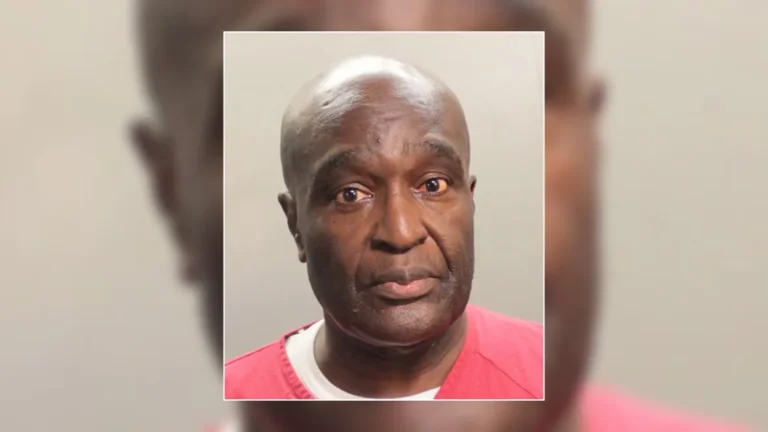
Abdul Wright walks into the Hennepin County Government Center on Aug. 25, 2025, for his bench trial on charges that he sexually abused a student when she was 14. Credit: Dymanh Chhoun | Sahan Journal
The story sounds almost too jarring to be real: a celebrated educator, lifted up as a model for kids and colleagues, accused of sexually abusing a student not long after being honored as Teacher of the Year. The contrast between the glossy award photos and the grim criminal charges has rattled parents and educators who trusted the system that put this teacher on a pedestal.
As details have emerged through court records and victim testimony, the case has become a stark example of how a polished public image can hide serious harm. It has also raised uncomfortable questions about how schools vet their stars, how quickly institutions rally around them, and how hard it can be for young victims to be believed when the accused adult is the one everyone else calls a hero.
The rise of a celebrated educator
Before any allegations surfaced, Abdul Jameel Wright was exactly the kind of educator school leaders love to showcase. He worked at Harvest Best Academy, a charter school in Minneapolis, and was praised for his rapport with students and his ability to connect with kids who did not always see themselves reflected in the classroom. That reputation culminated in a statewide honor when he was named Minnesota Teacher of the Year, a recognition that put him on stages, in photos with dignitaries, and in front of cameras as a symbol of what public education could be at its best, according to profiles that later resurfaced when the case went to trial.
Coverage of his career highlighted how Wright, as a Black male educator, was seen as a powerful role model in a city still grappling with racial inequities in schools. He was celebrated for mentoring students beyond the classroom and for speaking publicly about the importance of representation and high expectations. That carefully built image, amplified in features and award ceremonies, made the later accusations feel like a gut punch to families who had trusted him with their children and to colleagues who had pointed to him as proof that the system could produce transformative teachers.
Allegations that shattered the image
The public story flipped when a 14-year-old student reported that Wright had sexually abused him, turning the former honoree into a criminal defendant almost overnight. Prosecutors in Hennepin County charged Wright with multiple counts of criminal sexual conduct, alleging that he used his position as a trusted teacher to groom and then assault the boy. The student, who had known Wright through Harvest Best Academy, described a pattern that started with attention and mentorship and escalated into sexual contact that he said he felt powerless to refuse, according to detailed accounts presented in court and summarized in coverage of the sex abuse trial.
As the case moved forward, more specifics emerged about where and how the abuse allegedly took place, including encounters that prosecutors said happened off campus, away from other adults. Reporting on the criminal complaint and subsequent hearings described how the student eventually disclosed the abuse, triggering an investigation that pulled in school administrators, child protection workers, and law enforcement. The charges laid out a stark narrative: a teacher who had been trusted with shaping young lives instead accused of exploiting that trust in the most intimate and damaging way.
From courtroom testimony to sentencing
Inside the courtroom, the polished award speeches were replaced by raw testimony. The student took the stand to describe what he said had happened, while Wright’s defense team tried to cast doubt on his account and on the timeline of events. Jurors heard about text messages, meetings outside school, and the power imbalance between a middle school student and a celebrated adult authority figure. Coverage of the proceedings captured how the trial forced the community to sit with two competing images of the same man: the charismatic Teacher of the Year and the defendant facing serious sex crime charges tied to a 14-year-old boy from his school, as outlined in reports on the rape charges.
The jury ultimately convicted Wright of criminal sexual conduct, a verdict that cleared the way for sentencing and brought some measure of legal closure, even as emotional fallout lingered. At sentencing, a judge weighed the seriousness of the abuse, the breach of trust, and the impact on the victim, imposing a prison term that reflected the gravity of exploiting a child under a teacher’s care. Coverage of the hearing noted that Wright, once held up as a model educator, was now a former Teacher of the Year being formally sentenced for criminal sexual conduct, a transformation that underscored how far he had fallen from the pedestal the education community had built for him.
How the case exposed gaps in school safeguards
Beyond the courtroom, the case forced a hard look at how schools and award committees vet and monitor star educators. Parents and advocates questioned how someone later convicted of abusing a student could have been elevated as a statewide role model without red flags surfacing earlier. Reporting on the trial and its aftermath highlighted concerns about whether Harvest Best Academy and other institutions had robust systems for tracking boundary violations, responding to early complaints, or limiting one-on-one access between staff and students, particularly when off-campus contact was involved, as described in coverage of the school’s response.
The case also raised questions about how quickly institutions rally around their stars when allegations first appear. In many communities, a Teacher of the Year is treated almost like local royalty, which can make it harder for a teenager to be believed if their story clashes with the adult everyone else admires. Advocates for survivors pointed to this dynamic as a reason to strengthen mandatory reporting rules, tighten policies on staff-student contact, and ensure that investigations are handled by independent professionals rather than by colleagues who may be biased by a teacher’s glowing reputation. The Wright case became a cautionary tale about the danger of assuming that public accolades and private behavior always line up.
The broader reckoning around “Teacher of the Year” scandals
Wright’s downfall did not happen in a vacuum. In recent years, several high-profile educators who had been honored with Teacher of the Year titles or similar awards have faced accusations of sexual misconduct with students, prompting a broader reckoning about how such honors are bestowed and what they really guarantee. One widely shared story involved a woman who was celebrated as Teacher of the Year and then, only months later, accused of sexually abusing a student, a case that drew national attention as details of the alleged relationship surfaced in court documents and in coverage of the abuse allegations.
Social media has amplified the shock factor of these cases, with clips and commentary spreading quickly whenever a once-lauded educator is arrested or charged. Video segments shared online have described a “twisted teacher” accused of abusing a student shortly after being crowned with a major award, turning what had been a feel-good local story into a viral symbol of betrayal, as seen in a widely circulated social clip. In that environment, each new scandal feeds public skepticism about whether awards and glossy profiles say anything meaningful about how safe a teacher is for kids behind closed doors.
About the Author