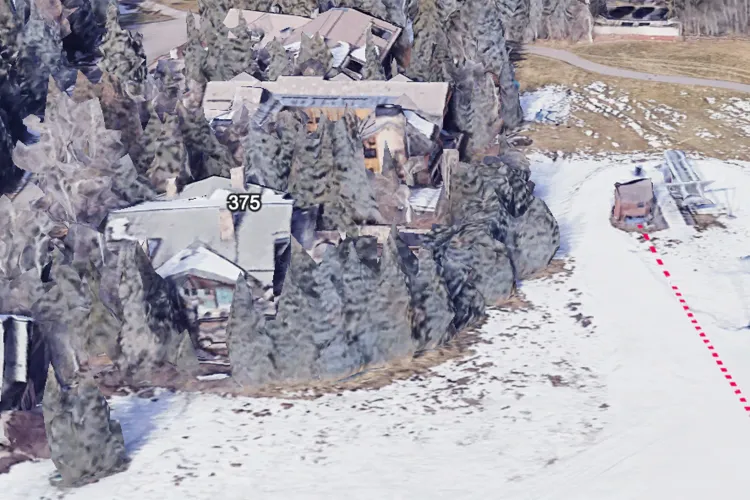
The estate in Colorado that Jeffrey Epstein owned. Credit : Google Earth
Credit : Google Earth
Jeffrey Epstein’s reach into the lives and fortunes of the ultra rich keeps surfacing in new and unsettling ways. The latest example centers on a $24 million Colorado ski chalet and a powerful New York family, with fresh reporting detailing how a Johnson & Johnson heiress shifted control of the property after falling into Epstein’s orbit. The story adds another layer to the picture of a financier who mixed social charm with financial maneuvering to gain leverage over the people around him.
At the heart of the case is a Vail lodge that most people only ever see on glossy real estate sites, not in court filings or investigative timelines. Yet the path that chalet took, from a personal asset to a trust structure tied to Epstein, shows how easily wealth, trust, and influence can blur when a predator is allowed inside elite circles.
The heiress, the chalet, and Epstein’s quiet influence
The woman at the center of the story is Johnson & Johnson heiress Elizabeth Ross “Libet” Johnson, a member of the family behind the healthcare giant and a fixture in New York’s moneyed world. According to reporting, Libet Johnson transferred the deed of her Vail ski lodge, valued at about $24 million, into a trust that listed two trustees, one of them Jeffrey Epstein, effectively giving him a formal role in the ownership structure of the home. The move meant that a property that had been hers alone, a sprawling Colorado ski chalet in Vail, was suddenly wrapped in a legal arrangement that put Epstein in a position of power over it, a shift documented in records tied to the Elizabeth Ross “Libet” estate.
That transfer did not happen in a vacuum. Libet Johnson had known Epstein since at least the late 1990s, part of a social and financial network that treated him as a fixer and adviser long before his crimes became widely known. She was also one of the wealthy New Yorkers who relied on him for guidance on how to structure assets, a pattern that shows up again and again in accounts of his dealings with the rich. In this case, the trust arrangement that moved the deed of the Vail chalet into a vehicle with Epstein as a trustee illustrates how he converted personal relationships into concrete control, a dynamic laid out in detail in coverage of how a wealthy New York ceded control of her mountain home.
Inside the $24 million Vail retreat and the trust that held it
The chalet itself is the kind of property that signals status from the driveway. Set in Vail, the Colorado resort town that draws CEOs and celebrities, the home was marketed as a luxury ski lodge with high end amenities, including multiple bedrooms, expansive entertaining spaces, and a private sauna, according to the real estate listing cited in coverage of the transfer. The price tag, roughly $24 million, put it in the upper tier of the local market, a trophy asset even by Vail standards and the sort of place that would normally sit comfortably on the balance sheet of a Johnson & Johnson heiress without outside entanglements. Instead, it became part of a trust structure that gave Epstein a formal say over a property that was both a family retreat and a major slice of Libet Johnson’s personal wealth, a setup described in reports on how he got her to transfer the deed.
Trusts are common tools for the ultra wealthy, used to manage taxes, shield assets from public view, and plan for inheritance. What stands out here is not the existence of a trust, but who sat in the trustee chair. By placing the Vail chalet into a trust with two trustees, including Epstein, Libet Johnson effectively invited him into the decision making around one of her most valuable properties. That arrangement, detailed in accounts of the Colorado ski chalet, shows how Epstein’s influence was not just social, but baked into legal and financial documents that could shape what happened to the property for years.
Epstein’s pattern with wealthy women and the lingering fallout
The Vail chalet story fits into a broader pattern that has emerged as more of Epstein’s dealings come to light. He cultivated relationships with wealthy women, including socialites and heiresses, presenting himself as a savvy adviser who could streamline their finances or protect their privacy. In practice, those arrangements often gave him leverage, whether through shared accounts, overlapping business entities, or, in this case, a trustee role over a multimillion dollar home. Reporting on how a wealthy New York ended up with him on the deed of her ski lodge underscores how those personal ties translated into hard power over assets.
About the Author