Former Sangamon County sheriff’s deputy Sean Grayson was sentenced to 20-years in prison for the second-degree murder of Sonya Massey, who had called 911 for help.Illinois State Police/AP
Nearly two years after former sheriff’s deputy Sean Grayson shot and killed Sonya Massey inside her home, the basic question still hanging in the air is simple: where is he now, and what kind of accountability did the system actually deliver. The answer, at least on paper, is that Grayson is no longer in uniform but in a prison cell, serving a lengthy sentence for second-degree murder. The path from the night Massey dialed 911 to report a possible prowler to that prison term has reshaped conversations about race, policing, and what justice looks like when the person who pulls the trigger is the one who was called for help.
To understand where things stand today, it helps to rewind to that July night in Woodside Township, Sangamon County, Illinois, and follow the case forward through the trial, the sentencing, and the public reaction. Only then does the reality of Grayson’s current situation, and the lingering anger around it, really come into focus.
From 911 call to fatal shot inside a Springfield home
The story starts with a call for help. Massey picked up the phone and dialed 911 because she believed there was a possible prowler outside her home in Woodside Township, Sangamon County, Illinois, expecting trained officers to secure the scene and reassure her. Instead, the encounter inside her Springfield-area house ended with former deputy Sean Grayson firing the shot that killed her, turning a routine welfare call into a killing that would soon be known nationwide as the Murder of Sonya. The fact that she had reached out for protection, not confrontation, is a core reason her death struck such a raw nerve.
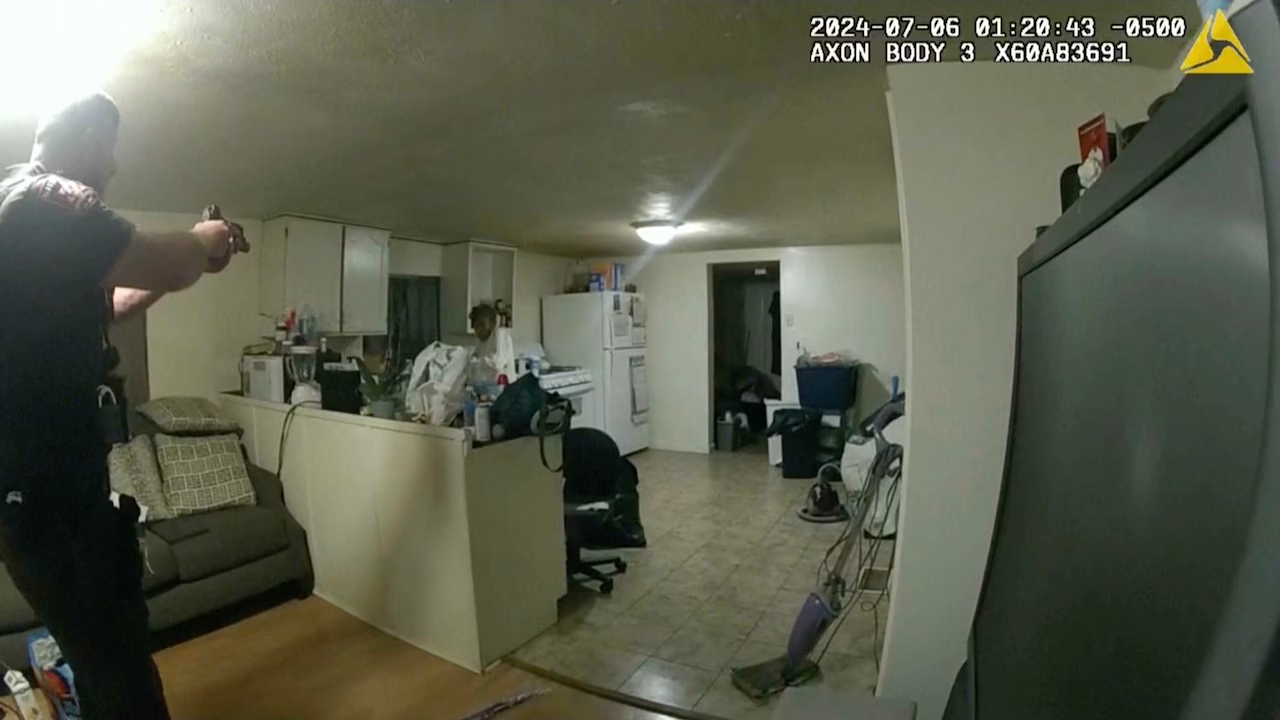
Body camera footage later shown in court captured the surreal, intimate seconds before the gunshot. Inside her kitchen, Massey was holding a pot of hot water, responding with religious language as officers barked commands, a moment that should have been defused rather than escalated. According to reporting on the trial, that Body camera footage became a central piece of evidence, undercutting any claim that she posed a deadly threat and reinforcing the sense that the power imbalance in that kitchen was as stark as it gets.
Who is Sean Grayson, and how did he end up behind bars
Before his name became shorthand for a high-profile killing, Sean Grayson was a Sangamon County sheriff’s deputy, one of the people residents expected to see when they called for help in the middle of the night. That changed quickly once investigators and prosecutors began piecing together what happened in Massey’s home, and a jury later found him guilty of second-degree murder for pulling the trigger on a woman who had invited officers in after calling for help. Coverage of the case has consistently identified him as a former sheriff’s deputy, with Sean Grayson now defined more by his conviction than by his badge.
The legal process moved through the familiar beats of a modern police killing case: public outrage, official statements, and eventually a criminal trial that put an officer, not a civilian, at the defense table. Jurors heard about the 911 call, watched the footage, and weighed whether Grayson’s use of force could be squared with his training or with basic common sense. Their verdict made clear that, in their view, it could not, and that decision set the stage for a sentencing hearing that would determine where he would spend the next chapter of his life.
Inside the sentencing: 20 years, the maximum allowed
The key development for anyone asking where Massey’s killer is now came when a judge handed down a prison term measured in decades, not months. Grayson was sentenced to 20 years in state prison after being found guilty of second-degree murder in the fatal shooting of Sonya Massey, with the court stressing that he would serve the maximum sentence allowed for that conviction. Reporting on the hearing notes that Grayson received the full 20 years, a detail that has become a shorthand answer when people ask what consequences he actually faced.
Advocates who had followed the case closely pointed out that the sentence, while significant by the standards of prosecutions involving law enforcement, still means Grayson will eventually walk free, while Massey will not. A social media post that circulated widely underscored that on January 29, former Sangamon County sheriff’s deputy Sean Grayson was sentenced to 20 years in state prison in connection with the killing, emphasizing both his prior role and the length of the term. That post, which highlighted the date and the jurisdiction, framed the punishment as a milestone in local accountability, noting that On January 29 the system finally put a number on his punishment.
Where Grayson is now and how long he could stay there
So where is Sonya Massey’s killer today. The short answer is that he is in state custody, serving that 20 year sentence handed down after his second-degree murder conviction. Coverage of his status has described him as a former Sangamon County deputy now housed in an Illinois prison, with his life defined by cell blocks and correctional counts rather than patrol shifts and radio calls. A detailed breakdown of his current situation notes that nearly two years after the shooting, NEED TO KNOW details about his incarceration have become part of how the public tracks accountability in the case.
Exactly how much of that 20 year term Grayson will actually serve will depend on Illinois law, parole rules, and his behavior behind bars, but the headline fact is that he is no longer free to move through the community where Massey once lived. Social media commentary reacting to the sentencing captured the mix of relief and frustration, with one widely shared post bluntly stating that Sonya Massey’s Killer Gets 20 YEARS Behind Bars After Fatal Police Encounter and then asking, in the same breath, Why he is still breathing when she is not. That tension, between a concrete prison term and a permanent loss of life, shapes how many people hear the number 20 when they think about this case.
The broader fallout: faith, fear, and a push for change
Beyond the courtroom, the killing of Massey has become part of a larger conversation about how Black women are treated when they call for help, and whether police training truly prepares officers to handle mental health, fear, and faith in high stress moments. In the footage from her kitchen, Massey’s religious responses and the pot of hot water in her hands were interpreted by many as signs of a woman trying to cope with fear, not someone preparing to attack armed officers. Reporting on the trial has emphasized how that context, captured on Massey in the Body camera footage, undercut the narrative that lethal force was the only option.
The case has also fed into ongoing debates about how 911 systems and patrol responses should be redesigned so that a call about a possible prowler does not end in a funeral. In Springfield and beyond, activists have pointed to the details of the prowler call outside her Springfield home as a textbook example of why unarmed crisis teams, better de escalation training, and clearer use of force rules are not abstract policy ideas but life and death questions. For many, knowing that Grayson is in prison answers only part of the story; the rest is whether the next person who dials 911 in fear will actually live to see the morning.
About the Author