Win McNamee/Getty; US Department of Veteran Affairs
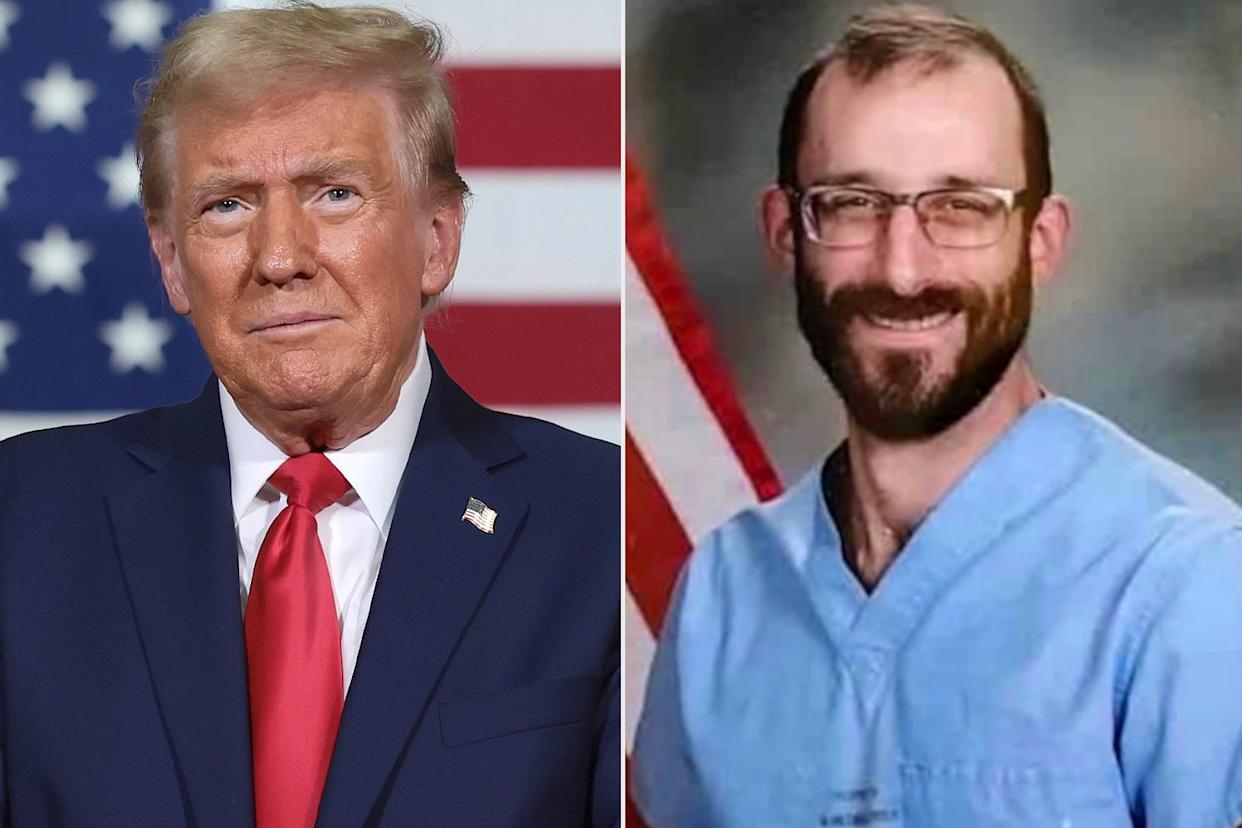
President Donald Trump is publicly breaking with his own Department of Homeland Security over how Alex Pretti was described in the hours after federal agents shot and killed him in Minneapolis. Instead of backing the claim that Pretti was acting like an assassin, Trump is now saying he does not buy that characterization and is signaling discomfort with how aggressively his team framed the case. The shift is landing right in the middle of a heated fight over guns, protest, and how far the administration will go to defend its own officers.
The clash is not just about one word. It is about whether the White House is willing to walk back its most explosive language when video, witnesses, and political blowback start to pile up. It is also about how Trump balances loyalty to his security agencies with his instinct to distance himself when a story turns toxic.
Trump’s break with the “assassin” label
Trump’s new line on Alex Pretti is blunt: he says he does not think Pretti was “acting as an assassin” when Border Patrol agents opened fire in Minneapolis. In public comments, President Donald Trump has stressed that he does not believe Pretti was behaving like a contract killer stalking federal officers, even though that is how his own Department of Homeland Security initially framed the threat. He has instead leaned on a more cautious description, saying he wants to see more information before accepting that Pretti was trying to carry out a targeted killing, a position reflected in his remarks about Alex Pretti.
That stance cuts directly against the early narrative from The Department of Homeland Security, which told Congress that Pretti approached U.S. Border Patrol officers with a 9 mm semi-automatic handgun and that “the suspect violently resisted.” In that version, Pretti was portrayed as a would-be killer who forced agents to respond with lethal force, a framing that helped justify why two federal officers fired the shots that ended his life. Trump’s refusal to echo the “assassin” label puts him at odds with the same security apparatus that initially insisted Pretti was a deadly aggressor in Minneapolis.
How DHS and top aides painted Pretti
Inside the administration, the rhetoric around Alex Pretti escalated quickly. Homeland Security Secretary Kristi Noem did not just call Pretti dangerous, she said he “attacked” law enforcement and suggested he was a domestic terrorist, part of a broader push by Trump allies to frame him as someone intent on mass violence. Similar claims from other senior figures, including Deputy Chief of Staff Stephen Miller and Patel, cast Pretti as a man who wanted to “massacre” agents, language that helped cement the idea that he was more than just an armed protester and that he was instead a deliberate threat, as detailed in accounts of how Homeland Security Secretary and others spoke about Pretti.
Those talking points did not stay confined to closed briefings. They filtered into public comments and shaped how conservative media and some Republican lawmakers described the shooting. The Department of Homeland Security told lawmakers that Pretti had approached Border Patrol officers with a handgun and that the suspect violently resisted, reinforcing the idea that agents were facing an imminent attack. That narrative, repeated in early briefings about Department of Homeland, set the stage for the “assassin” and “domestic terrorist” language that Trump is now publicly walking away from.
Video, witnesses, and a growing credibility gap
The problem for the administration is that the public record does not neatly match the most extreme claims. Video from the scene in Minneapolis shows Alex Pretti near federal agents, but it raises questions about whether he was actually pointing a gun at officers in the way early statements suggested. In some footage, several officers can be seen surrounding Pretti, and shots are fired about a second later, a sequence that has fueled doubts about whether he had time to “attack” in the way officials described. Witnesses have also told investigators that they did not see Pretti holding a weapon of any kind, a sharp contrast with the image of a man advancing with a 9 mm semi-automatic handgun, as highlighted in reporting that examined the gap between what Trump officials said and what video shows.
At the same time, the Department of Homeland Security has told Congress that two federal agents involved in the shooting have been placed on administrative leave since Saturday, a standard step in high profile use-of-force cases but one that underscores how serious the internal review has become. Those agents, both tied to the Border Patrol operation that confronted Pretti, are now under scrutiny as investigators sort through conflicting accounts and the footage from multiple angles. The fact that DHS has already sidelined the officers while lawmakers press for answers about 2 federal agents only adds to the sense that the original “assassin” storyline may have gotten ahead of the facts.
Second Amendment politics collide with the case
Layered on top of the factual disputes is a fierce fight over gun rights. The fatal Minneapolis shooting of Alex Pretti has scrambled the usual Second Amendment script for Trump, who has long cast himself as a defender of gun owners. Pretti was described as an armed individual who had a legal permit to carry a concealed weapon, a detail that has gun rights advocates asking why a man exercising a licensed right was so quickly branded a domestic terrorist. The backlash has been intense enough that some conservatives are openly questioning why the administration is not giving more benefit of the doubt to a permit holder in Minneapolis.
Kristi Noem, who has built a brand around staunch support for gun rights, captured the tension when she said, “I don’t know of any peaceful protester that shows up with a gun and ammunition rather than a sign.” That line, meant to defend the officers, landed awkwardly with some in the gun community who heard it as a swipe at open carry culture. The White House has also had to navigate comments from Trump himself, who, when pressed about the case, said “you can’t have guns,” a remark that critics seized on as a rare moment where the president seemed to side with tighter restrictions. Those words, delivered while he was trying to explain his reaction to the killing of Alex Pretti, have been replayed repeatedly in coverage of how the shooting has scrambled Second Amendment politics for Trump.
Trump’s shifting tone and the political fallout
Trump’s own comments on Pretti have moved noticeably over just a few days. In one exchange with reporters, President Donald Trump said he felt “terrible” about Alex Pretti but “even worse” about Renee Good, a separate victim whose parents he described as tremendous Trump fans, a comparison that drew criticism from those who saw it as grading tragedies based on political loyalty. He has also emphasized that agents believed they were under threat and that “a lot of shots” were fired at Pretti, even as he insists he does not think Pretti was acting as an assassin, a balancing act captured in his evolving remarks about feeling terrible about Pretti.
Pressed again by reporters at the White House, Trump went a step further and said he disagreed with Deputy Chief of Staff Stephen Miller, who had called Pretti a domestic terrorist. While speaking with reporters at the White House, Trump made clear he did not share Miller’s assessment and repeated that he did not think Pretti was acting as an assassin, a rare public rebuke of one of his closest advisers. Those comments, delivered as he fielded questions about why his administration had used such charged language, were reported in coverage of how Trump handled the fallout.
About the Author