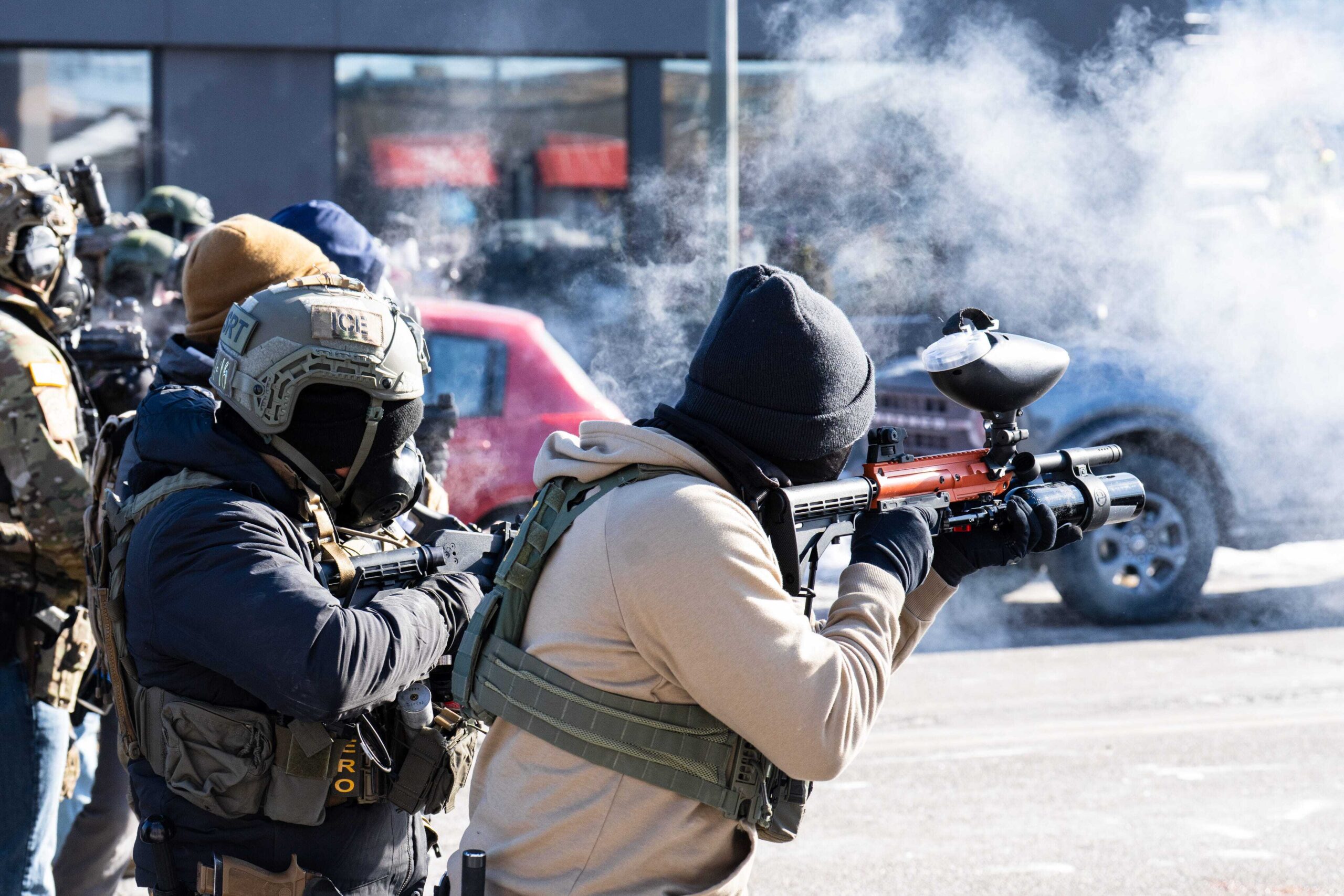
ICE and Border Patrol agents shooting less lethal munitions at protestors in Minneapolis Photo: Chad Davis/Uncloseted Media
Immigration enforcement in the United States is facing a reckoning. At least 32 people died in federal custody last year, and now the fatal shootings of two Minneapolis residents by immigration agents have pushed long‑simmering anger into the streets. What had been a debate over policy and budgets has turned into a raw argument about who is allowed to survive an encounter with the government.
The deaths of intensive care nurse Alex Pretti and driver Renee Nicole Good, both killed during encounters with federal officers in Minneapolis, have become a shorthand for a system that critics say is out of control. Their names are now being invoked alongside those 32 people who never made it out of detention, turning a once‑bureaucratic acronym into a symbol of fear and, for many, outright rage.
From 32 people in custody to a 37-year-old nurse on the street
The scale of loss inside immigration detention is staggering on its own. Reporting shows that at least 32 people died in ICE custody in 2025, a toll that advocates say reflects chronic medical neglect and dangerous conditions. A detailed timeline of deaths describes how Thirty Immigration and Customs detainees, plus two people who had technically been released but were still under ICE responsibility, died over the year, making it the agency’s deadliest stretch in more than two decades. A separate breakdown of the same period notes that ICE facilities across the country have faced allegations of human rights abuses and unsafe environments, even as the agency insists it provides safe and humane custody for those in its care, a claim repeated in the same NEED to KNOW briefing.
That grim backdrop is why the killings of Minneapolis residents have landed with such force. Earlier this year, the 37-year-old Alex Pretti and were shot dead by federal agents in separate incidents, turning local streets into national flashpoints. A video‑driven reconstruction of Pretti’s final moments shows how BBC Verify analysts reviewed multiple clips of the encounter, finding that They captured Pretti filming ICE agents with his mobile phone before he was shot, a sequence that has fueled demands for an independent Verify investigation. For many watching, the line between what happens inside detention blocks and what happens on city sidewalks suddenly looks very thin.
Minneapolis shootings put ICE and CBP on the defensive
On the streets of Minneapolis, the details of the shootings have become a running indictment of federal tactics. In Pretti’s case, US Customs and Border Protection has confirmed that two agents were involved in the fatal shooting of an American citizen in Minneapolis and that both were placed on leave while the incident is reviewed, a step the agency outlined in its own description of Customs and Border procedures. Local television coverage has echoed that account, noting that the two immigration officers involved in the deadly shooting of Alex Prey in Minneapolis have been put on administrative leave pending the outcome of the inquiry, a move that has done little to calm protests captured in that Alex Prey segment. At the same time, federal descriptions of how people are handled during operations stress that Sometimes migrants are temporarily held and then released after questioning, while in other circumstances ICE will detain and transfer them, a pattern that was cited in the same narrative that ends with two agents shooting a man who had been filming them in the street, according to the Sometimes account.
Good’s killing has triggered its own wave of scrutiny. The Committee in the House, led by Democrats on the Homeland Security panel, has formally demanded records from the Department of Homeland Security as it investigates the killing of Renee Nicole Good by an ICE officer in Minneapolis and the January shooting of Pretti, arguing that the public deserves answers about use of force and internal discipline, a demand spelled out in the The Committee letter. A separate social media post from a local station framed the two deadly shootings over the past few weeks by ICE agents in Minneapolis as a controversial flashpoint, quoting Federal officials who say an ICE agent acted in self‑defense even as the same post highlights the grief and anger of residents, a tension captured in that Federal dispatch. Together, the two cases have turned Minneapolis into a test of how far immigration agents can go before political leaders, and the public, say enough.
About the Author