US Department of Justice
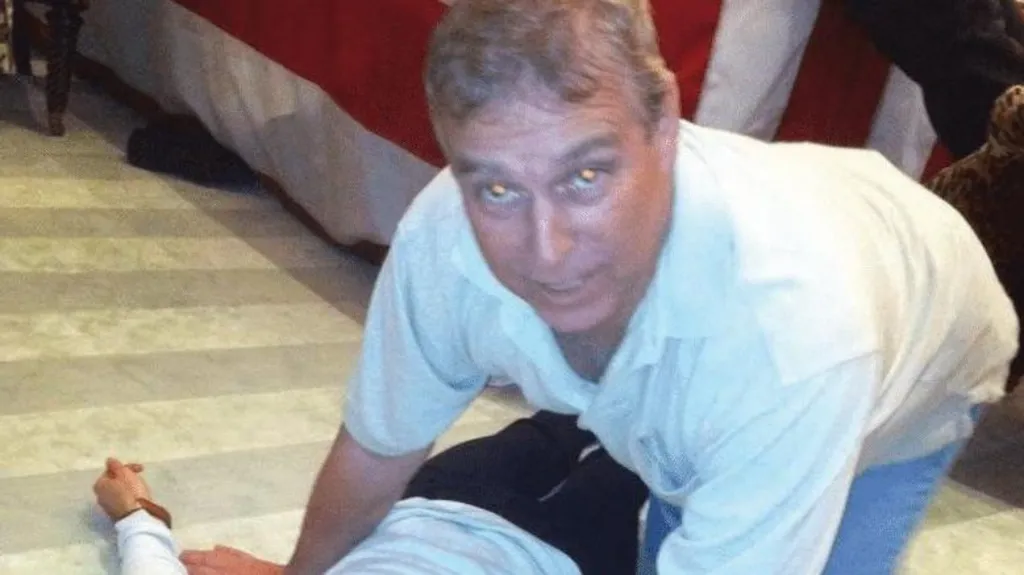
The latest batch of Epstein files has delivered a jarring new image into the already toxic debate around Andrew Mountbatten-Windsor. In a photo that has quickly ricocheted around social media, the former prince appears to be on all fours over a woman on the floor, adding a fresh layer of scrutiny to a man who has long denied any wrongdoing linked to Jeffrey Epstein.
Coming after years of legal battles, settlements, and public attempts at damage control, the image lands less like a revelation and more like confirmation of why the story has never really gone away. It is not a criminal charge, and it is not proof of a specific offense, but it is a vivid, unsettling snapshot that crystallizes the questions still hanging over Andrew Mountbatten-Windsor and his ties to Epstein.
The photo that stopped people scrolling
At the center of the latest uproar is a set of photographs released as part of material handled by the US Department of Justice, which appear to show Andrew Mountbatten-Windsor on all fours over a woman on the floor in a private setting. The images, which sit among files tied to the late sex offender Jeffrey Epstein, are not accompanied by a detailed narrative, but the posture alone has been enough to reignite public anger and curiosity about what exactly was happening in that room. According to reporting on the release, the photographs are part of a broader trove that investigators compiled while examining Epstein’s network.
Crucially, Andrew Mountbatten-Windsor has always denied any wrongdoing in relation to Epstein, and nothing in the newly surfaced images changes that legal reality on its own. What the photo does, however, is supply a stark visual that undercuts the carefully managed distance he has tried to put between himself and Epstein’s world. The woman in the image has not been publicly identified, and there is no allegation in the files that this specific moment depicts a crime, but the optics of a senior royal figure crouched over a woman on the floor in an Epstein-linked property are politically and morally explosive in their own right.
Inside the massive Epstein files release
The image of Andrew Mountbatten-Windsor is only one frame inside a sprawling archive that is still being unpacked. Journalists are combing through what has been described as 3.5 m documents and images, a volume that helps explain why new details keep surfacing in waves rather than all at once. Within that mountain of material, the photo of Andrew crouched over a woman appears alongside other references to his interactions with Epstein and Epstein’s close associate Ghislaine Maxwell, including material tied to a meeting with the convicted conspirator Ghislaine Maxwell in 2006. The scale of the release has been highlighted by journalists who are still sorting through what the files reveal about Epstein’s network and the powerful people who moved through it.
That context matters because it shows the photo is not some isolated tabloid leak but part of a formal evidentiary universe that investigators and lawyers have been working through for years. The fact that Andrew Mountbatten-Windsor appears in this material at all, and in such a compromising pose, reinforces how deeply his name is woven into the story of Epstein’s social circle. It also raises the stakes for any future disclosures from the same cache, since each new document or image has the potential to either corroborate or complicate the narrative he has tried to maintain about the nature of his relationship with Epstein.
The older “iconic” photo and a new email twist
The newly surfaced crawling image lands on top of an already infamous photograph that has haunted Andrew Mountbatten-Windsor for years, the shot of him standing with his arm around Virginia Giuffre, with Ghislaine Maxwell in the background. That earlier picture has been described as “quite iconic” and “almost the start of his downfall,” not because of any artistic quality but because it visually anchored allegations that he has consistently rejected. For a long time, Andrew’s camp suggested that the image might be fake, or at least unreliable, but an email uncovered in the Epstein files appears to shed more light on that debate. In coverage of the new material, a Maxwell email is described as seemingly confirming the authenticity of the photo that Andrew once cast doubt on.
That kind of documentary corroboration matters in the court of public opinion, even if it does not automatically translate into new legal exposure. If an email linked to Ghislaine Maxwell is read as validating the older image, it chips away at one of the key defenses Andrew Mountbatten-Windsor has leaned on, namely that the most damaging visual evidence against him could not be trusted. It also sets a precedent for how other pieces of the Epstein archive might be used to cross-check or undercut public statements made by figures in Epstein’s orbit. When a man who once held the title Prince Andrew is already on the defensive, each new confirmation like this tightens the narrative trap around him.
Fresh emails, fresh scrutiny
The email trail in the Epstein files does not stop with that single reference to the older photograph. Another message, highlighted in recent coverage, appears to offer additional context on how that image of former Prince Andrew came to be understood inside Epstein’s circle. In one broadcast, an anchor explained that an email uncovered in the files appears to shed more light on the infamous photo of former Prince Andrew, before turning to correspondent Josh Babis for further detail. That segment, which framed the email as a significant new piece of the puzzle, underscored how the written record inside the archive is now being mined as aggressively as the images themselves, with Josh Babis walking viewers through what the correspondence suggests.
For Andrew Mountbatten-Windsor, the risk is that each new email or memo not only revives old allegations but also exposes inconsistencies between his public narrative and what people around Epstein were saying at the time. The fact that the files explicitly reference “Prince Andrew” in connection with that earlier photo keeps his royal identity front and center, even as he has stepped back from official duties and lost the “His Royal Highness” style. When those references are paired with fresh images like the one of him on all fours over a woman, the cumulative effect is to make his insistence on total innocence harder for the public to square with the documentary trail that continues to emerge.
Life after titles and a move out of Windsor
All of this is unfolding as Andrew Mountbatten-Windsor’s personal circumstances shift in ways that would have been unthinkable a decade ago. Earlier this week, reports surfaced that the ex-prince is moving out of his longtime home, a property that had symbolized his enduring place within the royal fold even after he stepped back from public duties. The move coincides with the latest wave of Epstein-related allegations and the release of the new files, which again tie his name to a convicted sex offender who died in custody after being found guilty of child sex crimes. In covering the relocation, one report noted that Andrew Mountbatten-Windsor has long denied any wrongdoing, even as the fallout from his association with Epstein continues to reshape his life in Windsor and beyond, a point underscored by police comments about separate allegations involving a woman said to have been taken to an address in Windsor in 2010 for sexual purposes.
About the Author