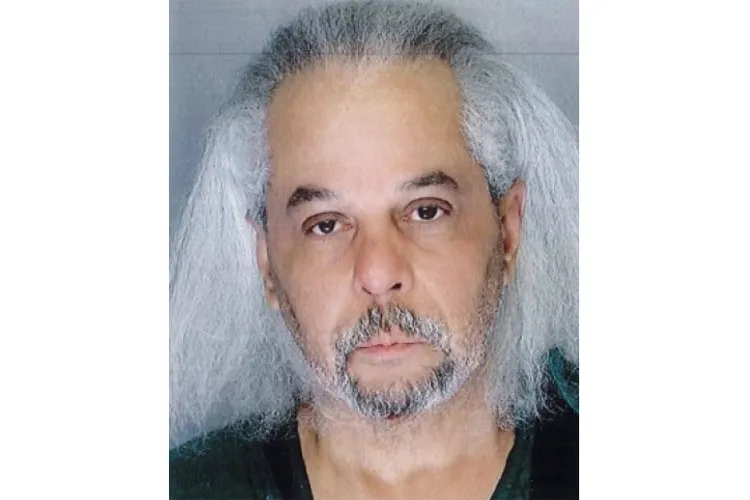
Santiago Payano-Sanchez. Credit : West Hempfield Township Police
Credit : West Hempfield Township Police
A routine question about who would make dinner spiraled into a deadly family tragedy in Pennsylvania, leaving an estranged wife and her aunt dead and another relative wounded. Prosecutors say a 64-year-old man opened fire inside his own home during the argument, then later admitted to killing the two women. Now he is set to spend the rest of his life in prison, with a judge stressing that no one in that house should have died over something so ordinary.
The case has stunned even veteran investigators, not because domestic disputes are rare, but because the trigger here was so painfully mundane. Relatives had gathered for what should have been a simple evening meal, and within minutes, two generations of women were gone, a son was injured, and an entire family was left trying to understand how a conversation about cooking turned into a double murder.
The Dinner Dispute That Turned Deadly
According to investigators, the violence unfolded inside a home in West Hempfield Township after a family gathering shifted from casual to tense. The man at the center of the case, identified as Santiago Payano-Sanchez, 64, was living apart from his wife but still sharing family space when relatives came over. At some point, the conversation turned to who would cook dinner, and what should have been a minor disagreement quickly escalated into a serious argument. Witnesses later told authorities that tempers flared as the discussion grew more heated, with the estranged couple clashing in front of other family members.
Prosecutors said that instead of walking away, the 64-year-old man went to retrieve a gun and brought it back into the middle of the dispute. In the crowded home, where his estranged wife used a wheelchair and her aunt was also present, he chose to answer a domestic argument with bullets. The confrontation that began over a shared meal ended with multiple shots fired, leaving his wife and her aunt fatally wounded and another family member injured, a sequence of events that investigators later described as a senseless eruption of violence rooted in a trivial fight over dinner plans.
Victims, Family Ties, and a Home Turned Crime Scene
The victims were not strangers or distant acquaintances, but the people closest to the shooter. His estranged wife, who relied on a wheelchair, was shot at close range inside the home they once shared. Her aunt, who had come into the house as part of the extended family circle, was also gunned down during the same burst of violence. A son who was present tried to intervene and was shot in the stomach, surviving but left with serious injuries and the trauma of watching his mother and great-aunt die in front of him, according to court records.
Details shared in court painted a picture of a home that had already been strained by separation and health challenges before it became a crime scene. The estranged wife’s disability meant she depended on others for mobility, and relatives had gathered to help with everyday tasks, including cooking. Instead, they found themselves in the middle of a deadly confrontation. Investigators later described how the argument over who would cook dinner spiraled so quickly that the family had no real chance to de-escalate before the first shot was fired, turning an ordinary evening into a permanent loss for multiple generations.
Inside the Shooting and Immediate Aftermath
Witness testimony and investigative reports describe a chaotic few minutes once the gun appeared. During the trial, prosecutors said the argument over who would cook dinner escalated until the 64-year-old man pulled the trigger multiple times, striking his estranged wife in her wheelchair and killing her aunt as she tried to move away. The son who was shot in the stomach was hit while attempting to protect his mother, a detail that prosecutors highlighted to show how quickly the situation deteriorated once the gun was introduced, according to trial testimony.
After the shooting, the home filled with panic as surviving relatives called for help and tried to provide aid. Emergency responders arrived to find two women beyond saving and the son in critical condition. The shooter himself was later taken to a hospital with self-inflicted injuries, according to investigators who detailed how he was found after the attack in West Hempfield Township. Authorities from Lancast County later described the scene as one of the more disturbing domestic crime scenes they had encountered, not because of its complexity, but because of how quickly a family argument had turned into a double homicide.
The Guilty Plea and Life Sentence
Once he recovered from his own injuries, Santiago Payano-Sanchez faced a long list of charges. Earlier this year, he pleaded guilty to criminal homicide, attempted criminal homicide, aggravated assault, and related offenses tied to the shootings of his estranged wife, her aunt, and his son. Prosecutors emphasized that he was 64 at the time of the plea, a detail that underscored how his decision had effectively traded the rest of his life for a few minutes of rage. The plea, entered in Jan, spared the surviving family members a full trial but locked in his responsibility for the killings, according to filings from the Lancaster County District.
At sentencing, Judge Jeffrey Conrad did not hold back. He ordered two consecutive life sentences without the possibility of parole, plus an additional 20 to 40 years for the attempted homicide and assault counts, making it clear that the 64-year-old man would never walk free again. In court, the judge described the killings as senseless and avoidable, stressing that no one should lose their life over a dispute about dinner. The sentence reflected not only the loss of two lives, but also the lasting impact on the son who survived and the broader family that will carry the weight of that night indefinitely, according to sentencing records.
How Prosecutors and the Community Are Framing the Case
For prosecutors, this case has become a stark example of how quickly domestic tensions can turn lethal when firearms are within reach. During the trial phase, they repeatedly returned to the idea that the entire chain of events started with a simple question about who would cook dinner, arguing that the decision to grab a gun instead of stepping away showed a complete disregard for the safety of everyone in the home. In their statements to the court, they described the shootings as a heinous act that shattered a family over an argument that should have ended with someone picking up a pan, not a weapon, a framing reflected in sentencing summaries.
Community reaction has followed a similar line, with neighbors and local officials pointing to the case as a reminder that domestic disputes rarely come out of nowhere. Advocates note that the couple’s estrangement, the stress of caregiving for a wheelchair user, and the presence of extended family all formed a tense backdrop long before the argument about dinner. Still, they say, the choice to escalate to deadly force was entirely on the shooter. Commentators have also highlighted how the case fits into a broader pattern of domestic violence incidents that begin with everyday disagreements, a point echoed in coverage by Alex Stone and other observers who have focused on the need for earlier intervention when family tensions start to boil.
About the Author