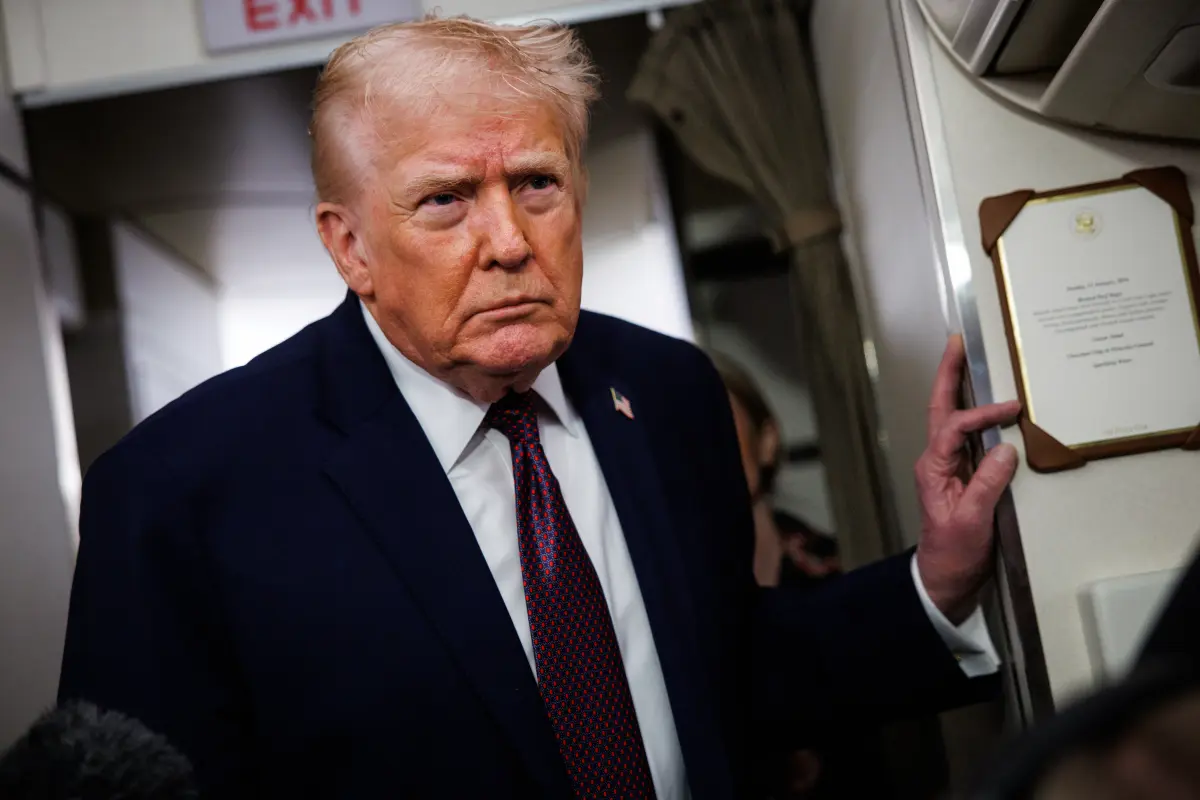
President Trump said he had a “very good” phone call with Minneapolis Mayor Jacob Frey on Jan. 26, 2026. Getty Images
Getty Images
Federal immigration agents are finally starting to pull back from Minneapolis, and the shift traces straight to a tense phone call between the city’s mayor and the White House. Minneapolis Mayor Jacob Frey says President Trump agreed to start moving some personnel out after weeks of protests, national scrutiny and a local outcry over how the crackdown has played out on city streets. The drawdown is limited for now, but it marks the first concrete sign that the standoff between Minneapolis and Washington is giving way to a fragile, highly conditional truce.
Frey is treating the moment as both a win and a warning. He is telling residents that some relief is on the way while urging other city leaders around the country to push back before similar deployments land in their neighborhoods. The message is simple: if it can happen in Minneapolis, it can happen anywhere.
The call that cracked the stalemate
The breakthrough started with a direct conversation between Minneapolis Mayor Jacob Frey and President Trump, which Frey’s office says led to a commitment that some federal agents would leave the city as soon as Tuesday. Local officials in MINNEAPOLIS describe the call as focused on dialing down tensions that had been rising since federal immigration teams arrived under an aggressive enforcement push. According to Frey, the two men agreed to keep talking, with the mayor saying they would “further discuss next steps” after the initial departures. Trump, for his part, publicly described it as a “very good” conversation and touted “progress” in the city, signaling that the White House wanted to frame the shift as a joint decision rather than a retreat.
Behind that choreography sits a much larger operation. Some of the agents now set to leave are part of Operation Metro Surge, a federal initiative that flooded the Minneapolis area with immigration personnel earlier this year. City leaders say the surge has strained trust with immigrant communities and poured fuel on already volatile protests after demonstrators were shot during clashes with federal teams. In a live briefing from Minnesota, Frey said some officers would start leaving the Minneapolis region and stressed that he had spoken directly with the President to secure that step, while also making clear that more talks would be needed “to continue the discussion” about what comes next.
A conditional drawdown and a bigger political fight
Even as Frey celebrates a partial pullback, the Trump administration is making it clear that the drawdown comes with strings attached. Tom Homan, the White House’s border czar, has said the federal government is shifting strategy and working on a plan to reduce the footprint of Immigration and Customs Enforcement and Customs and Border Protection in Minneapolis if state and local leaders cooperate on immigration enforcement. In a briefing highlighted by Tom Homan, the White House tied any long term reduction to access to state prisons and county jails, effectively telling Minnesota officials that fewer agents on city streets will depend on more collaboration behind the scenes. Homan has also talked up “massive changes” in Minnesota’s enforcement landscape, a phrase that underscores how much leverage Washington still holds even as it talks about easing off.
That conditional tone surfaced again when Homan told reporters that the withdrawal of federal agents “is dependent upon cooperation,” a line captured in coverage of the shift in strategy. A separate account of the same message quoted him outlining how a drawdown of federal agents in Minneapolis would follow only if local officials met federal expectations, reinforcing that the administration sees the current pause as leverage, not surrender, in its broader immigration agenda. Another detailed look at the plan described how the White House’s border czar is preparing to draw down agents in the city while keeping pressure on Minnesota to open more doors to federal custody.
Frey’s warning to other cities
For Jacob Frey, the fight is no longer just about Minneapolis. He has started using his platform to urge other mayors to push back early if they see similar deployments headed their way, arguing that silence will only invite more aggressive tactics. In interviews, Jacob Frey has accused the Trump administration of staging what he calls an “invasion” of his city and pursuing a “might is right” approach to immigration enforcement. He has also warned that “your city is next” if local leaders do not “speak up” against what he sees as unlawful operations, a message echoed in reporting that framed Minneapolis as a test case for how far the federal government is willing to go. Another account of his comments noted that Trump is at the center of his criticism, with Frey casting the President’s approach as a direct challenge to local democracy.
About the Author