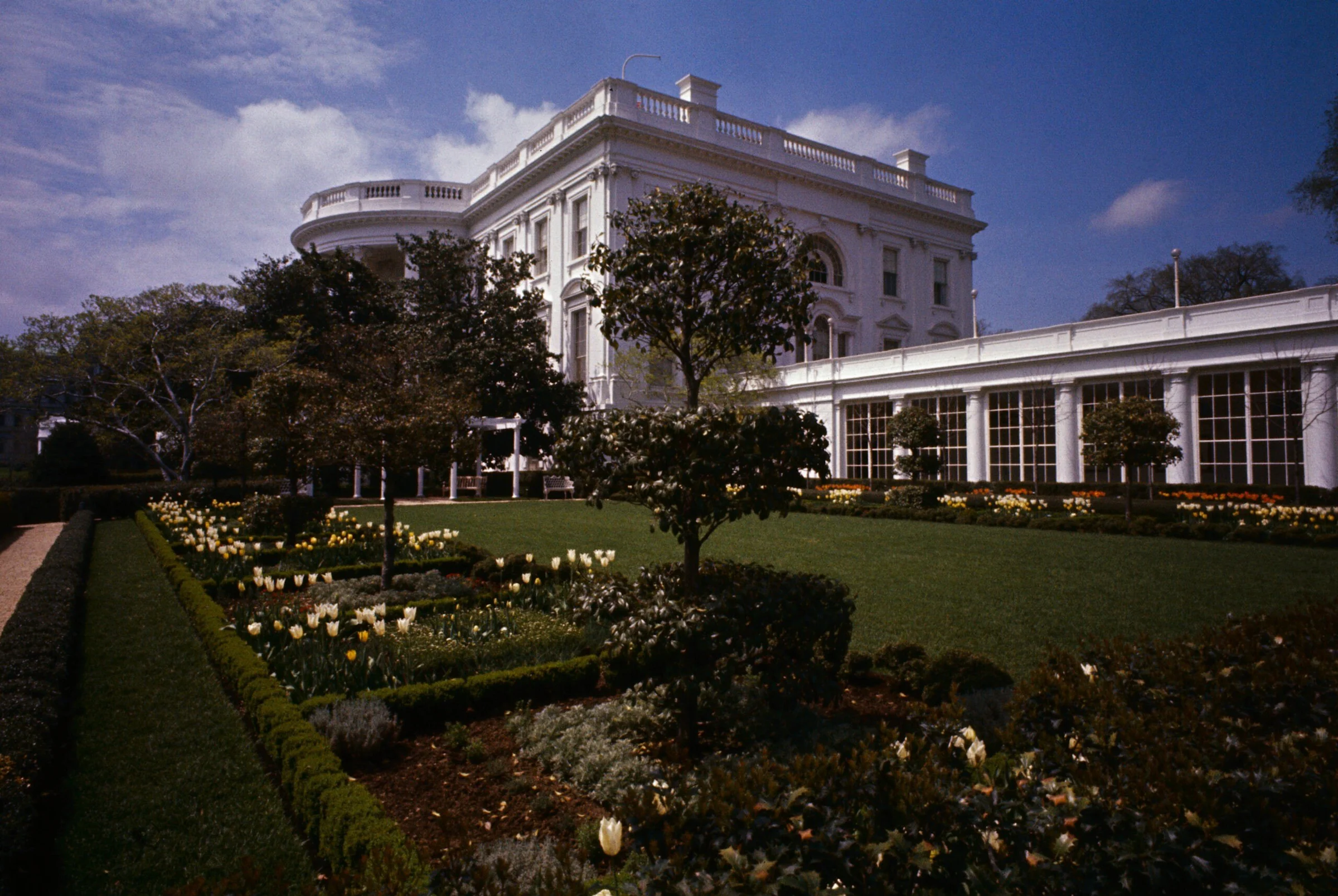
The garden was named for Jackie in 1965 during a dedication ceremony. (Getty Images)
The Jacqueline Kennedy Garden, a memorial space that carried decades of White House history, has reportedly vanished in the dust of the East Wing construction site. As crews push ahead with a major expansion project, the quiet removal of Jacqueline Kennedy’s namesake garden has stirred a mix of nostalgia, anger, and unease about how far a renovation should go when it touches a former first lady’s legacy.
What was once a carefully composed rectangle of lawn, flower beds, and sculpture just off the East Colonnade is now described as bare ground and construction equipment. The change did not come with a formal announcement, leaving historians, former staffers, and Kennedy admirers to piece together what happened and what, if anything, will replace the space that once honored Jacqueline Kennedy’s imprint on the White House.
The garden that carried Jackie’s legacy
Long before demolition crews arrived, the area that became the Jacqueline Kennedy Garden was part of a broader effort to make the White House grounds feel like a lived-in home rather than a fortress. The space sits on the east side of the Executive Mansion, mirroring the Rose Garden on the west and framing the house within a pair of outdoor rooms that presidents, first ladies, and staff have used for everything from photo calls to quiet walks. Public tours do not typically pass through this corner, but satellite imagery and official photos have long documented its layout tucked beside the East Wing and the East Colonnade.
The garden’s identity as a tribute to Jacqueline Kennedy dates back to work that began under President Lyndon B. Johnson. His wife, Lady Bird Johnson, championed beautification projects across Washington and, in 1965, the White House held a formal dedication that renamed the space the Jacqueline Kennedy Garden. The gesture recognized Jacqueline Kennedy’s sweeping restoration of the mansion’s interiors and her push to treat the grounds as an extension of the historic fabric, not just a security buffer.
From sculpture garden to construction zone
Over the decades, first ladies put their own stamp on the space while keeping Jacqueline Kennedy’s name on the plaque. Under first lady Hillary Clinton, the garden was reimagined as a small sculpture park, with contemporary American works placed among the plantings to show how modern art could live comfortably beside the White House’s classical lines. That shift turned the area into a kind of outdoor gallery, a curated corner where guests could encounter American artists framed by the same hedges and paths that earlier administrations had walked, a history later detailed in accounts of Hillary Clinton and her approach to the grounds.
More recently, the garden’s fate became entangled with President Donald Trump’s push to enlarge the White House’s event footprint. Plans for a new ballroom and expanded East Wing facilities set the stage for a clash between preservation and practicality. By the time construction fencing went up, satellite photos and flyover images were already hinting that the garden’s days were numbered, with satellite shots showing bare soil where hedges and a pergola once stood. Those visuals lined up with on-the-ground descriptions that the garden had been ripped out to clear space for the East Wing expansion.
A quiet demolition and a promise to rebuild
The actual removal of the garden appears to have happened with little fanfare, folded into the broader East Wing demolition work. Reporting on the project describes how crews tore out the beds, trees, and hardscape that defined the memorial, leaving only construction staging where the garden once framed the East Colonnade. One detailed account of the demolition notes that the entire east side of the complex is being reshaped, with the Jacqueline Kennedy Garden effectively sacrificed in the process. Another report on the reported demolition describes the garden as “gone,” replaced by heavy equipment and foundation work for the new structure.
Inside the White House, officials have tried to calm the backlash by insisting that Jackie’s memorial is not gone for good. A spokesperson told one outlet that the plan is to rebuild the garden once the East Wing project is complete, framing the loss as temporary and tied to a larger modernization effort. That reassurance, relayed in coverage of the East Wing work, has not fully settled nerves among preservation advocates who note that designs, plant material, and sightlines are hard to recreate once bulldozers have moved through.
Outside critics have been blunter, accusing the current project of treating a memorial garden like disposable landscaping. One commentator, quoted in coverage of the controversy, contrasted Jacqueline Kennedy’s careful attention to flowers and historic detail with a president who, in their words, “poured concrete” where she once planted. That sharp line surfaced in reporting on how garden has reportedly, and it captures the emotional charge around the decision. For Kennedy loyalists, the idea that a space created in the shadow of the violence of JFK’s assassination could be flattened for a ballroom feels like a betrayal of the careful stewardship Jackie once brought to the house, a sentiment echoed in retrospectives on Jackie and her grief.
About the Author