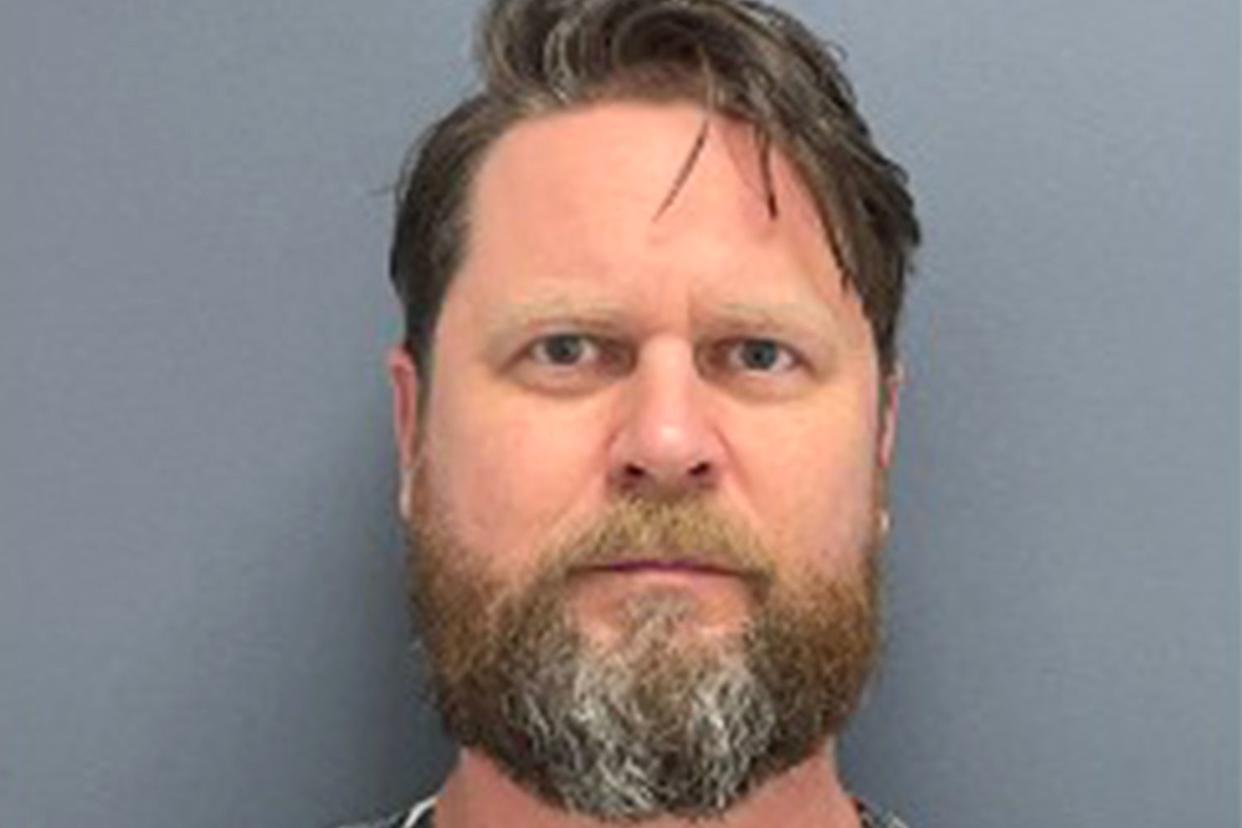
Ryan Dodd Oswego Police Department
Oswego Police Department
An ordinary evening in a quiet Illinois subdivision turned into a crime scene after a woman’s ex-husband allegedly chased her into her garage and stabbed her to death. Police say the attack, captured on home security video and seen in real time by her current husband, has now led to a murder charge against an Illinois man who had already been the subject of a protective order. What unfolded in that garage is now at the center of a case that blends domestic violence, technology, and questions about how warning signs are handled.
Investigators in Oswego, Ill., say the victim’s ex, identified as Ryan Dodd of Aurora, is accused of ambushing his former wife outside the home she shared with her new husband and children. Prosecutors have charged him with first degree murder and a slate of related offenses, alleging he turned a family’s safe space into the setting for a fatal confrontation that played out in front of cameras and, indirectly, in front of the man who tried to save her.
The attack in the garage and the chilling video trail
Police in Oswego, Ill., say the chain of events started when the victim’s husband checked their home security feed and saw his wife’s ex-husband sprinting after her into their attached garage. According to Police, he immediately dialed 911 after watching the horrifying footage, but by the time officers reached the house, they found the woman unresponsive. Paramedics pronounced her dead at the residence, and an early review pointed to multiple sharp force injuries consistent with a brutal stabbing inside that garage space.
Investigators say the suspect had already left by the time first responders arrived, turning the quiet Oswego neighborhood into the staging ground for a manhunt. A preliminary investigation, described by Security camera reports, indicated that the ex-husband had approached the home on foot, confronted the woman in the driveway, and then chased her into the enclosed garage where the attack continued out of view of the street. The video, which has not been publicly released, is now a key piece of evidence that prosecutors say shows the deliberate nature of the assault.
Who is the suspect and what charges is he facing?
Authorities have identified the accused attacker as Ryan Dodd of Aurora, Ill., describing him as the victim’s former spouse who allegedly ignored court orders meant to keep him away. According to charging details linked to Ryan Dodd, prosecutors say he drove to Oswego, parked away from the home, and approached on foot before the confrontation. The Oswego Police Department has said that Dodd was known to the family and that the victim had previously sought legal protection, a detail that now hangs heavily over the case.
Police in Illinois say the man has been arrested and charged with the murder of his ex-wife after her new husband saw the attack unfold on video. In addition to first degree murder, authorities have cited counts tied to multiple sharp force injuries, as outlined in a statement shared by Police in Illinois. Another summary of the case notes that he is also accused of residential burglary and aggravated stalking, reflecting prosecutors’ view that this was not a spontaneous encounter but a targeted intrusion into a home where he no longer lived.
How police tracked him down after the killing
Once officers realized the suspect had fled, they quickly shifted from rescue mode to pursuit. Oswego Police said they broadcast a description of the vehicle and suspect to surrounding agencies and began canvassing nearby roads. A report on the search by Ethan Illers notes that officers used the home’s surveillance footage and witness accounts to piece together a likely escape route, then coordinated a traffic stop that brought the chase to an end.
Illinois police later confirmed that they had taken a man into custody after he allegedly murdered his ex-wife, with one account describing how a traffic stop was executed on a vehicle matching the suspect’s car. A social media update framed the case starkly, with a banner reading “EX ALLEGEDLY KILLS WIFE, WITNESSED ON VIDEO,” underscoring how central that footage has become to the public understanding of what happened. Once in custody, Dodd was booked into jail to await a court appearance, with investigators stressing that the case is still active even as the core narrative appears grimly clear.
Inside the home: a family caught in the middle
Behind the legal language and police statements is a family that, according to investigators, had already tried to put distance between themselves and the accused attacker. Reports tied to Illinois authorities say the victim lived in Oswego with her new husband and young children, and that the garage where she was killed was part of a home meant to be a fresh start. The husband’s 911 call, made as he watched the chase unfold on his phone, captures the surreal collision of domestic life and digital surveillance that now defines so many modern emergencies.
Police say the investigation determined that Dodd had contact not only with his ex-wife but also with her new partner and the children in the period leading up to the killing, a detail highlighted in a focused update on how the investigation determined his movements. That contact, combined with the alleged stalking and burglary, paints a picture of a man who refused to accept boundaries, even as the family tried to build a new life. For neighbors and relatives, the idea that a garage, a minivan, and a security app could become the setting for such violence is a reminder of how thin the line can be between everyday routine and catastrophe.
Domestic violence, tech, and the limits of protection
As the case moves into the courts, it is already raising familiar questions about how the system handles domestic violence when a relationship ends but the danger does not. Advocates often point to situations like this one, where a victim has separated, moved, or remarried, yet an ex-partner allegedly continues to track, harass, or threaten them. In Oswego, Ill., the fact that the woman’s husband could watch the attack unfold in real time on his phone shows how home cameras and apps can both empower families and confront them with trauma they can do little to stop in the moment, a tension that has been noted in coverage of the Oswego killing.
At the same time, the case highlights how quickly law enforcement can move when technology provides a clear trail. From the moment the husband called 911 to the traffic stop that ended the search, officers leaned on surveillance footage, license plate details, and coordinated radio calls to track the suspect’s car, a sequence echoed in summaries that describe how Man charged with murder in Oswego was located. Yet for the victim and her children, that speed was not enough to prevent the worst outcome, leaving a community to wrestle with the uncomfortable reality that even in a world of cameras, alerts, and court orders, a determined attacker can still turn a family’s garage into a crime scene.
About the Author