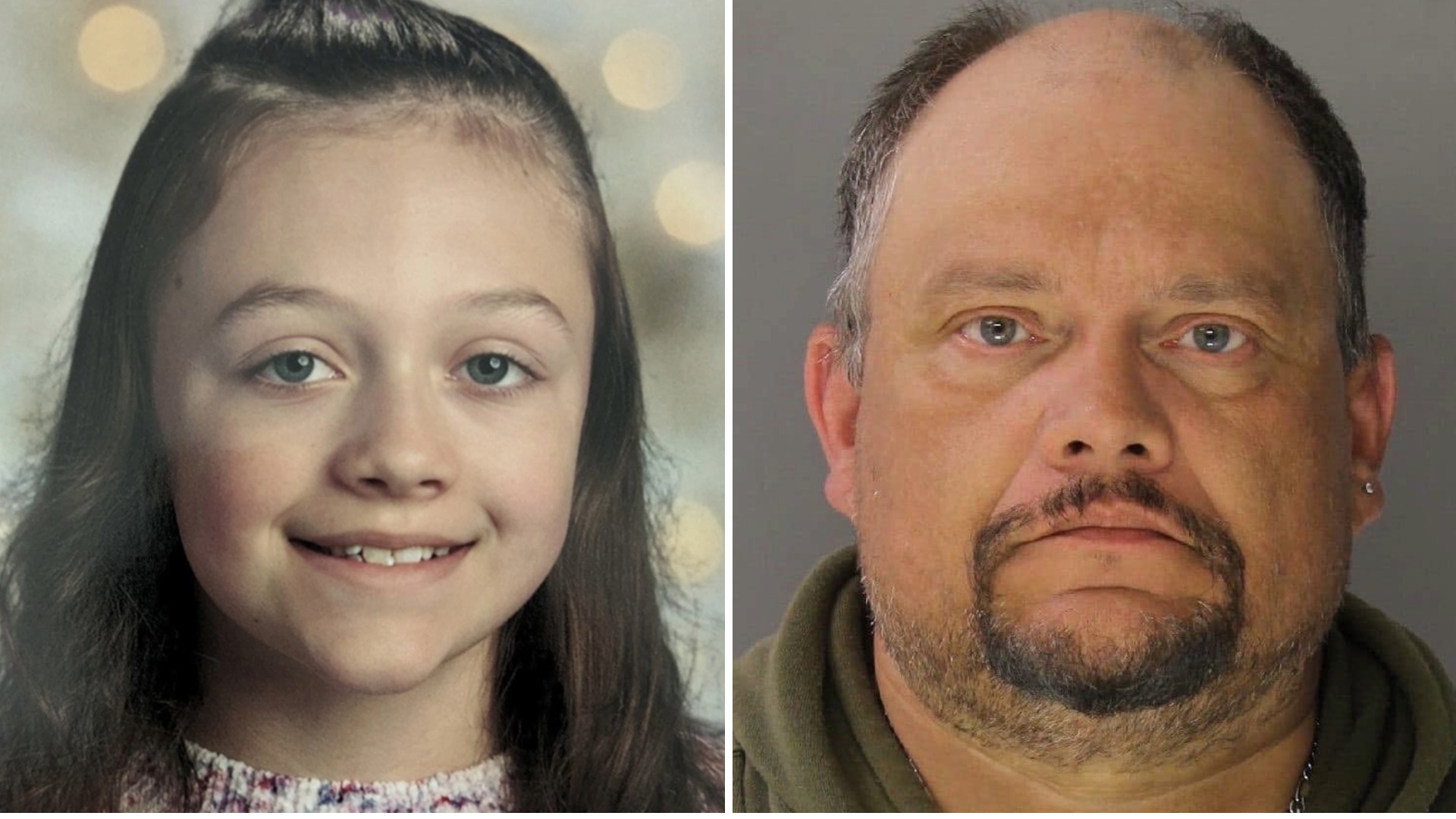
Malinda Hoagland / Rendell Hoagland
A Pennsylvania father has admitted in court that he murdered his 12-year-old daughter after years of starving, shackling, and terrorizing her inside the family home. The girl, identified in charging documents as Malinda, weighed just 50 pounds at the time of her death, a detail that captures how long the abuse had gone on and how completely adults around her failed to intervene.
The guilty plea spares the family a trial but does not soften the facts: a child was systematically tortured in plain sight of everyday life. The case has become a grim touchpoint in a growing pattern of prosecutions where parents are accused of turning their homes into cages and their children into prisoners.
The plea that finally named the abuse for what it was
Prosecutors in Chester County say the father did not call for help until his daughter was already beyond saving, reporting that she was unresponsive in the family’s home in WEST CALN TWP, Pennsylvania. By then, investigators allege, the damage from years of starvation and physical abuse was obvious, from her frail frame to the injuries that told a story her father had tried to hide. The plea entered in Jan finally forced him to acknowledge that this was not an accident or an illness but a killing.
In court, 54-year-old Rendell Hoagland accepted a life sentence as part of a negotiated deal that took the death penalty off the table. Prosecutors described how he systematically tortured and murdered his daughter, Malinda, 12, over a period of Years, turning routine discipline into a campaign of terror. The agreement means he will spend the rest of his life in prison, with no realistic path back to freedom, and it locks in a legal record that labels what happened as first-degree murder, not some lesser tragedy.
Inside a house of restraints, rules, and starvation
Investigators say Malinda’s world shrank to a few pieces of furniture and a set of shackles. After her death, authorities discovered that she had been restrained to beds and other fixtures, sometimes for hours, and was not allowed to go to the bathroom without permission, according to one detailed account. The rules were so strict that normal childhood behavior became a punishable offense, and the punishments were designed to humiliate and weaken her.
At the time of her death on May 4, 2024, Malinda weighed only 50 pounds, a stark number for a 12-year-old that medical examiners linked directly to starvation. An autopsy documented multiple broken bones and other injuries that lined up with what prosecutors later described as repeated and systematic beatings. In separate charging documents, officials said the father admitted to repeatedly and systematically abusing her, a pattern that stretched over Years and turned the home into a private detention center.
“Acts” that triggered torture and the warped logic of control
The cruelty, according to prosecutors, was not random. It followed a twisted logic in which minor “Acts” by the child were treated as major offenses. One report describes how infractions that would barely register in a healthy household, such as not smiling during online classes, could lead to severe punishment. In one summary of the case, officials said that not smiling during Zoom cyber school or urinating while she was secured to furniture could trigger new rounds of restraints or food deprivation.
That kind of rulebook is familiar to child abuse investigators, who often see parents use arbitrary standards to justify escalating control. In Malinda’s case, the pattern allegedly started with smaller restrictions and grew into full-blown torture, with the father tightening his grip every time she failed to meet impossible expectations. By the time authorities intervened, the line between discipline and sadism had long since disappeared, and the phrase “Murder After Starving” used in charging documents captured how the starvation itself became the weapon.
A pattern of starvation cases that is hard to ignore
Malinda’s death is not an isolated horror. In another recent case, a former fighter identified as Robert S. Buskey Jr, 35, of Schenectady, pleaded guilty in Jan to second-degree murder and a felony drug charge after his young daughter starved to death. Prosecutors said he let the girl waste away while he played video games, and investigators found that her brother had been locked in a cage. The details are different, but the throughline is the same: a parent with total control over food, movement, and access to help used that power to destroy a child’s body.
In another case flagged by child welfare advocates, a Father was charged with murder after his 11-year-old daughter allegedly starved to death while the rest of the family ate full meals. Prosecutors say the girl was singled out for deprivation, forced to watch others eat while her own plate stayed empty. In Taylor County, a separate report describes a Taylor County father being held without bond in another alleged starvation case involving an 11-year-old, underscoring how often food is weaponized inside homes that are supposed to be safe.
How Malinda’s case fits into a broader failure to protect kids
For child advocates, the details of Malinda’s death read like a checklist of missed opportunities. Neighbors, teachers, and medical professionals are often the first to notice when a child is wasting away or covered in unexplained injuries, yet in this case, the abuse stretched over Years before anyone with power to intervene stepped in. One detailed summary notes that the father’s conduct in WEST CHESTER was so extreme that local officials described it as systematic torture, a phrase that rarely appears in family court filings but was used here in connection with What prosecutors laid out.
On social media, one post about the case bluntly stated that Pennsylvania resident Malinda weighed only 50 pounds and that her father admitted to repeatedly and systematically abusing her. Another report on the plea deal highlighted that prosecutors in WEST CHESTER described how Getting a guaranteed life sentence was the only way to ensure he would never harm another child. The language is clinical, but the subtext is clear: the system is reacting after the fact, not preventing these cases in the first place.
About the Author