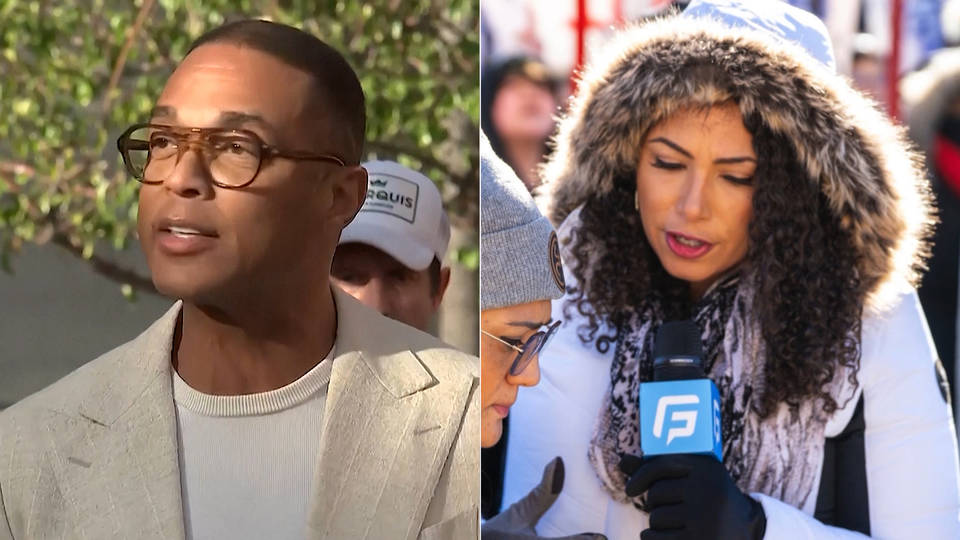
Image Credit: Georgia Fort (photo right)
Don Lemon is out of federal custody, but his legal fight is only getting started. The former CNN anchor is staring down serious civil rights charges tied to his coverage of an anti-ICE protest at a church in St. Paul, Minnesota, even as he walks free without posting bail. The case drops a high-profile media figure into the middle of a clash over protest, religion, and the limits of press freedom under President Donald Trump.
Prosecutors say Lemon crossed a criminal line, while he insists he was doing his job as a journalist. The result is a showdown that could shape how aggressively the federal government can pursue reporters who embed with activists and faith leaders in politically charged standoffs.
The charges, the church protest, and a contested arrest
According to an unsealed grand jury indictment, federal prosecutors have charged Lemon with two crimes, including conspiring to violate someone’s civil rights at the St. Paul church where the anti-ICE protest unfolded, a move that places him at the center of a sweeping civil rights case. Court documents say Lemon and eight co-defendants were indicted on one count each of conspiracy against religious freedom, tying their alleged conduct directly to the church setting and its protection as a religious space, according to those filings. The Trump administration has framed the case as a straightforward enforcement of federal law, but the fact pattern, centered on a protest and a sanctuary, has made it instantly political.
Supporters of the protest describe the event as a faith-based stand against immigration enforcement, while federal officials characterize it as a coordinated effort that interfered with protected religious practice and civil rights. Reporting on the case notes that the Department of Homeland Security and its investigative arm were involved in the broader operation, with FBI and Homeland helping build the case that ultimately landed Lemon in front of a federal judge in Minneapolis. For critics of the prosecution, that level of federal muscle aimed at a journalist covering a protest looks less like routine law enforcement and more like a warning shot to the press.
From Beverly Hills lobby to federal courtroom
Lemon’s arrest did not happen in Minnesota, or even near the church at the center of the indictment. Instead, he was in Los Angeles to cover the Grammy Awards and was taken into custody after 11 p.m. local time in a hotel lobby in Beverly Hills, a detail that has fueled questions about why agents chose such a public and theatrical moment to move in, according to accounts of how Lemon was in. On a late-night appearance, he later described returning to his hotel with a swag bag from the event, pressing the elevator button, and suddenly finding himself surrounded by federal agents, recounting that surreal scene in detail when he told Jimmy Kimmel, “I got back to the hotel. I had my swag bag from the (event), and I was walking up to the room, and I pressed the elevator button,” before the arrest unfolded, as he explained on that show.
Lemon has been blunt about what he thinks of that choice. He has said he offered to turn himself in and argued that sending a team of agents to grab him in Beverly Hills was unnecessary and performative, calling it “a waste, Jimmy, of resources” and suggesting it was meant to send a message to both protesters and the press, as he told Jimmy Kimmel. In another interview, he said agents were dispatched despite his offer to surrender, again framing the arrest as an overreaction by law enforcement that went beyond what a judge’s orders required, a criticism he repeated when speaking to an interviewer. The optics of a high-profile journalist being arrested in a luxury hotel lobby, while in town for the Grammy Awards, have only intensified the debate over whether the government is trying to enforce the law or make an example out of him.
Release conditions, legal strategy, and the press freedom stakes
Despite the dramatic arrest, a federal judge in Los Angeles allowed Lemon to walk out of custody without posting bail, releasing him on his own recognizance and setting his next hearing in Minneapolis, a decision that underscored the court’s view that he was not a flight risk, according to the order that Lemon was released. He was barred from contacting known witnesses, victims, or co-defendants, and must appear in federal court in Minneapolis, conditions that match the restrictions described in his release terms. Another report notes that he does not have to wear an ankle monitor but must stay away from witnesses and co-defendants, a detail that reflects the balance the judge tried to strike between supervision and normal life, as laid out in those conditions.
About the Author