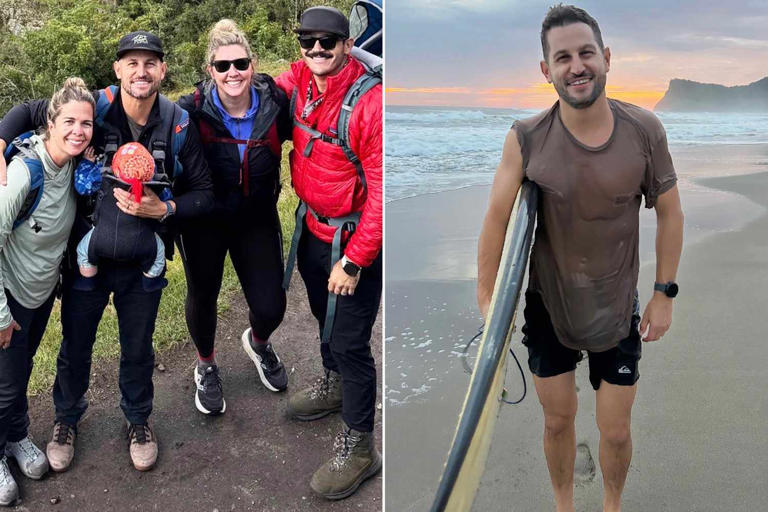
The Fernandez family with Kelsey Skoog and Yuri Botehlo; James Fernandez. Courtesy of the Fernandez Family (2) © Courtesy of the Fernandez Family (2)
© Courtesy of the Fernandez Family (2)
The mountain bike trail in Peru was supposed to be the highlight of a family trip, a brag-worthy story for a dad who loved the outdoors. Instead, it turned into a split-second catastrophe, with a sudden flash of light, a broken neck, and a friend who never made it home. What began as a vacation ride ended as a rare and brutal reminder of how unforgiving nature can be.
According to relatives and friends, the dad remembers only that blinding burst before everything went dark. When he finally woke up, he was in a hospital bed, his neck fractured, and he was told that the friend riding beside him had been killed by the same lightning strike that knocked him off his bike.
The Ride, the Flash, and the Moment Everything Changed
Family members say the trip to Peru had been months in the making, a chance for the dad to combine travel, mountain biking, and time with people he loved. He and his friend, identified in fundraisers and social posts as Yuri Botehlo, set out on a mountain route that locals and tourists ride all the time. The weather did not look especially menacing, according to accounts shared with Dad and others, but storms in the Andes can build fast and hit harder than visitors expect.
Somewhere along that trail, the sky made the decision for them. The survivor later described seeing a single, searing burst of light, a sudden flash that erased the trail, the bike, and everything else. When he regained consciousness, he was immobilized, his neck broken, and his friend was already gone. Later reporting tied that instant to a direct lightning strike that hit both riders as they were still on their bikes, turning a shared adventure into a scene of chaos and emergency rescue.
Who Yuri Botehlo Was, and What His Family Lost
In the days after the strike, the name that kept surfacing in tributes and fundraisers was Yuri Botelho, a 36-year-old dad whose life revolved around his children and the outdoors. Friends described him as the kind of person who would sign up for a tough climb or a long ride and then be the first to help someone else up the hill. A Facebook post cited by supporters laid out the bare facts: he had been mountain biking with a friend in Peru when lightning struck both of them, killing him and leaving the other rider badly hurt.
Fundraisers organized through GoFundMe and shared widely online talked about the logistics no family wants to think about: getting his body home, covering medical costs for the injured rider, and making sure his children had some financial cushion. One campaign framed it bluntly as something people “NEED TO KNOW,” a phrase echoed in coverage that tried to balance the raw grief with practical details about what happened in Per.
The Survivor’s Long Road Back and the Bigger Lightning Risk
For the dad who lived, survival came with a brutal price. He woke up to learn his neck was fractured, his mobility uncertain, and his friend dead. Detailed accounts of the incident, including one that framed the story under the phrase NEED TO KNOW, describe him facing surgery, a neck brace, and a long rehabilitation while also processing survivor’s guilt. Another version of the story, shared as an exclusive look at how he remembered the Sudden Flash, underscored how quickly a routine ride on Vacation terrain can turn into a fight to stay alive.
The Peru strike was not an isolated freak event. Earlier coverage highlighted a middle school science teacher from Palm Harbor who was also mountain biking in Peru when lightning hit, leaving him badly injured and in need of extensive care. Another report on the same family trip that ended with a broken neck and a death framed the story as a dad who When He Woke had to be told that his friend was gone. A related piece, shared through a separate Dad Saw feature, walked through the same sequence of events from slightly different angles, but the core message stayed the same: lightning on high, exposed terrain is a risk that even experienced riders underestimate.
Experts often remind people that if thunder is close enough to hear, lightning is close enough to hit, and the stories from Peru drive that home in the harshest way. The combination of metal bikes, open ridgelines, and fast-changing mountain weather created a perfect setup for disaster for both the dad with the broken neck and for Dec, the teacher from Florida. Together, their stories, echoed across multiple When and While Biking accounts, read like a quiet warning to anyone who thinks a storm is just background scenery on their next big ride.
About the Author