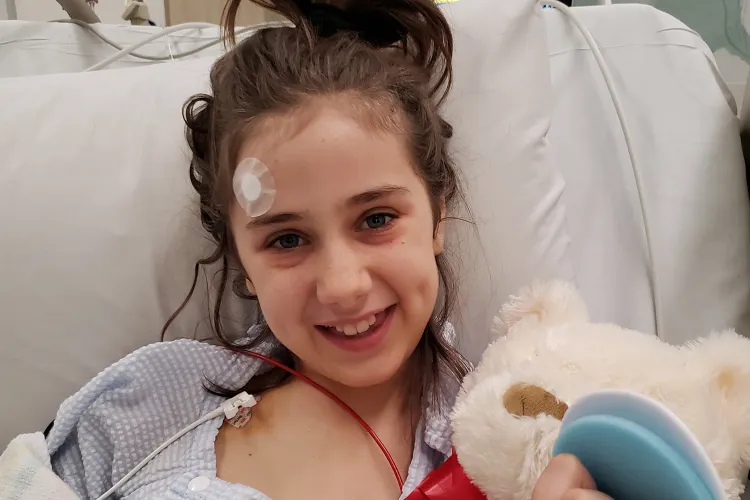
Abbey Barrett, who died in 2024. Credit : Courtesy of Justine Barrett
Credit : Courtesy of Justine Barrett
By the time an Australian couple heard the words “terminal brain cancer” about their 11-year-old daughter, Abbey, they were already deep into a nightmare they had not known to look out for. Looking back, they can now see the early clues, the questions they wish they had asked, and the support they wish had arrived sooner. Their story is heartbreaking, but it also doubles as a quiet, urgent guide for other families who never want to stand where they are standing now.
Abbey’s parents are now speaking out about the subtle symptoms, the emotional whiplash of treatment, and the reality of end-of-life decisions for a child. They are not trying to scare anyone. They are trying to give other parents what they did not have: a clearer sense of when to push for answers, what to expect from the system, and how to protect a child’s joy even when the odds are brutal.
Abbey’s story, and the moment everything changed
Abbey was 11, living in Australia, and by all accounts a typical kid, when her parents started noticing that something was off. It was not one dramatic collapse, but a slow build of small changes that were easy to chalk up to growth spurts, school stress, or just a rough patch. Only later did her family understand that those scattered moments were the first signs of a brain tumor that would eventually take her life, a loss her mother has described as feeling like “going through a war” in interviews about NEED and what they wish they had known.
Once doctors finally identified the cancer, the family’s world shrank to hospital corridors, scan results, and treatment schedules. Abbey’s parents have said that they were suddenly expected to absorb complex medical information while also trying to keep life feeling normal for their daughter in Australia, a balancing act that left them exhausted and, at times, unsure what questions to ask. That sense of being overwhelmed is part of why they are now so determined to talk openly about the warning signs and the choices that followed.
The subtle symptoms parents tend to miss
One of the hardest truths Abbey’s parents have had to sit with is that childhood brain tumors rarely announce themselves with a single, unmistakable symptom. Instead, they often show up as a mix of headaches, nausea, or changes in behavior that can look like anything from anxiety to clumsiness. Specialists who track the Common Symptoms of a Brain Tumor in Children note that warning signs can include persistent morning headaches, vomiting that is not tied to a stomach bug, balance problems, or “staring spells” that may actually be seizures.
Doctors who focus on Childhood brain tumor symptoms also point out that tumors can quietly affect hearing, memory, learning, sight, smell, or even bowel and urinary habits, depending on where they sit in the brain. That means a child who suddenly struggles in school, seems unusually forgetful, or starts bumping into things more often is not necessarily “just distracted” or “going through a phase.” Abbey’s parents now say they wish they had understood how a cluster of small changes, especially when they persist or worsen, can be a reason to push for imaging or a referral to a pediatric neurologist instead of waiting to see if things improve on their own.
What Abbey’s parents wish they had asked sooner
Looking back, Abbey’s family has been candid about the questions they wish had been on their radar from the first appointment. They talk about wanting clearer explanations of what each scan was looking for, what specific type of tumor doctors suspected, and what the realistic range of outcomes might be. In their retelling, they describe feeling like they were always one step behind the information curve, reacting to news instead of steering the conversation about NEED and next steps.
They also say they wish they had been encouraged earlier to ask about quality of life, not just survival odds. That includes practical questions like how treatments would affect Abbey’s ability to attend school, see friends, or keep up with hobbies, as well as when it might make sense to bring in palliative care alongside active treatment. In their view, understanding those trade-offs sooner could have helped them shape a plan that protected more of their daughter’s day-to-day joy, instead of learning about options like home-based support and end-of-life care only when the cancer was already advanced and choices felt painfully limited.
Holding on to childhood in the middle of cancer
Even in the thick of treatment, Abbey’s parents tried to keep her world bigger than her diagnosis, a goal that many families of kids with serious illness share. They have spoken about the importance of small, ordinary moments, like movie nights or visits from friends, as a way to remind Abbey that she was still an 11-year-old girl, not just a patient. That instinct echoes what other families have done, including those who have rallied communities to send letters, videos, or messages to an Apr 11-year-old cancer patient who received floods of motivating letters from strangers near and far, turning mail delivery into a daily burst of encouragement.
For Abbey’s family, that focus on normalcy also meant letting her be part of age-appropriate decisions, like choosing which friends to see on harder days or what activities were worth the fatigue that followed. They have said that giving her that agency, even in small ways, helped her feel less like things were just happening to her. It is a reminder that while medical teams handle the scans and treatment plans, parents and loved ones are often the ones protecting the pieces of childhood that cancer tries to steal, from silly jokes in hospital rooms to birthday celebrations that might look different but still matter.
The hardest conversations, and why they matter
One of the most painful lessons Abbey’s parents share is about timing the hardest conversations. They have reflected on how long it took for anyone to talk with them about what end-of-life care could look like for a child, and how much they wish those discussions had started earlier, when there was still room to plan calmly instead of in crisis. In their words, learning about options like hospice, home-based support, and symptom management only at the very end left them feeling like they were scrambling to understand KNOW at the same time they were trying to say goodbye.
They now encourage other parents facing a serious pediatric diagnosis to ask directly, even if it feels brutal, about what happens if treatments stop working, what comfort-focused care can offer, and how to make sure a child’s final months or weeks are shaped by their personality and wishes as much as possible. That might mean planning special outings while a child still feels strong enough, or setting up support so siblings are not left adrift. For Abbey’s family, sharing these details is not about reliving their grief, but about giving other parents permission to raise the questions that too often sit unspoken in the background until it is too late to fully act on the answers.
About the Author